
PRP for hair loss can work, but not for everyone and not by as much as some clinics suggest. Across more than 40 randomised trials, people treated with platelet-rich plasma gained on average around 20 to 28 extra hairs per square centimetre compared with control groups. That is a real, measurable change, but the research behind it is still graded as low certainty, and results vary widely from person to person. This guide explains what the evidence actually shows, who tends to benefit, and how to decide whether it is worth trying.
The short version
- It helps some people. Pooled trial data show a modest average gain in hair density; hair thickness has not reliably improved.1,2
- Early thinning responds best. PRP works on follicles that are still alive. It cannot restore hair where follicles have gone.
- It is not a replacement for proven medicines. In a 27-trial comparison, PRP on its own ranked below 5% minoxidil on its own.3
- Results need maintaining. In the best-known trial, some men began losing their gains again 12 to 16 months later.4
- It is not available on the NHS and is offered privately.12
What is PRP for hair loss, and how is it meant to work?
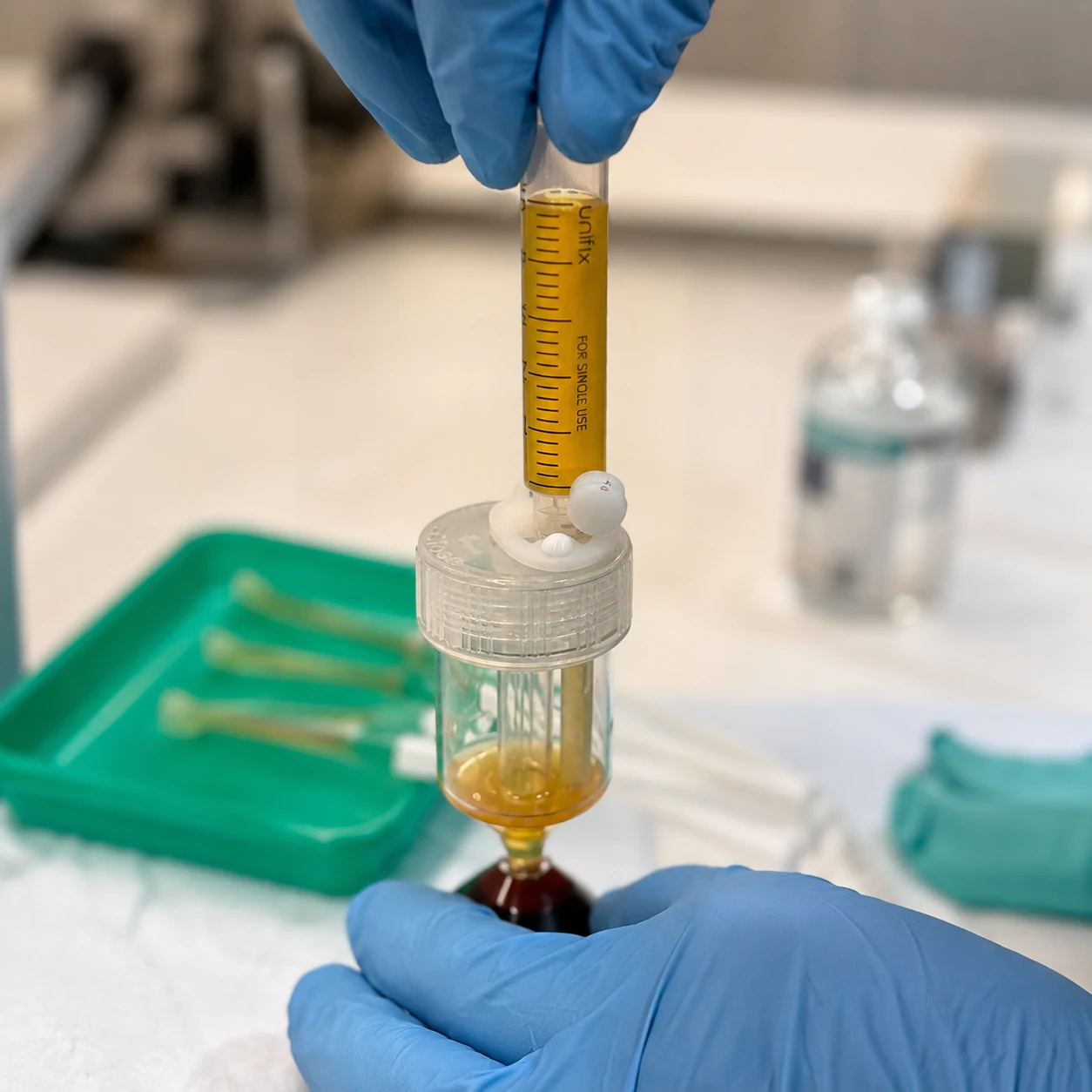
Platelet-rich plasma (PRP) is a concentrate made from a small sample of your own blood. The blood is spun in a centrifuge so that the platelets separate from the red cells, and the platelet-rich layer is injected into thinning areas of the scalp. Platelets carry growth factors, the signalling proteins the body uses for repair, and the idea is that delivering them to the scalp supports follicles that are struggling.
To see why that might help, it is worth understanding what is going wrong in the first place. Every hair grows from a follicle, a small and surprisingly busy structure with a cluster of cells at its base called the dermal papilla. Dr Nick, our Medical Director, describes the dermal papilla as the follicle’s control centre: it regulates growth, blood supply and the conversation with nearby stem cells.
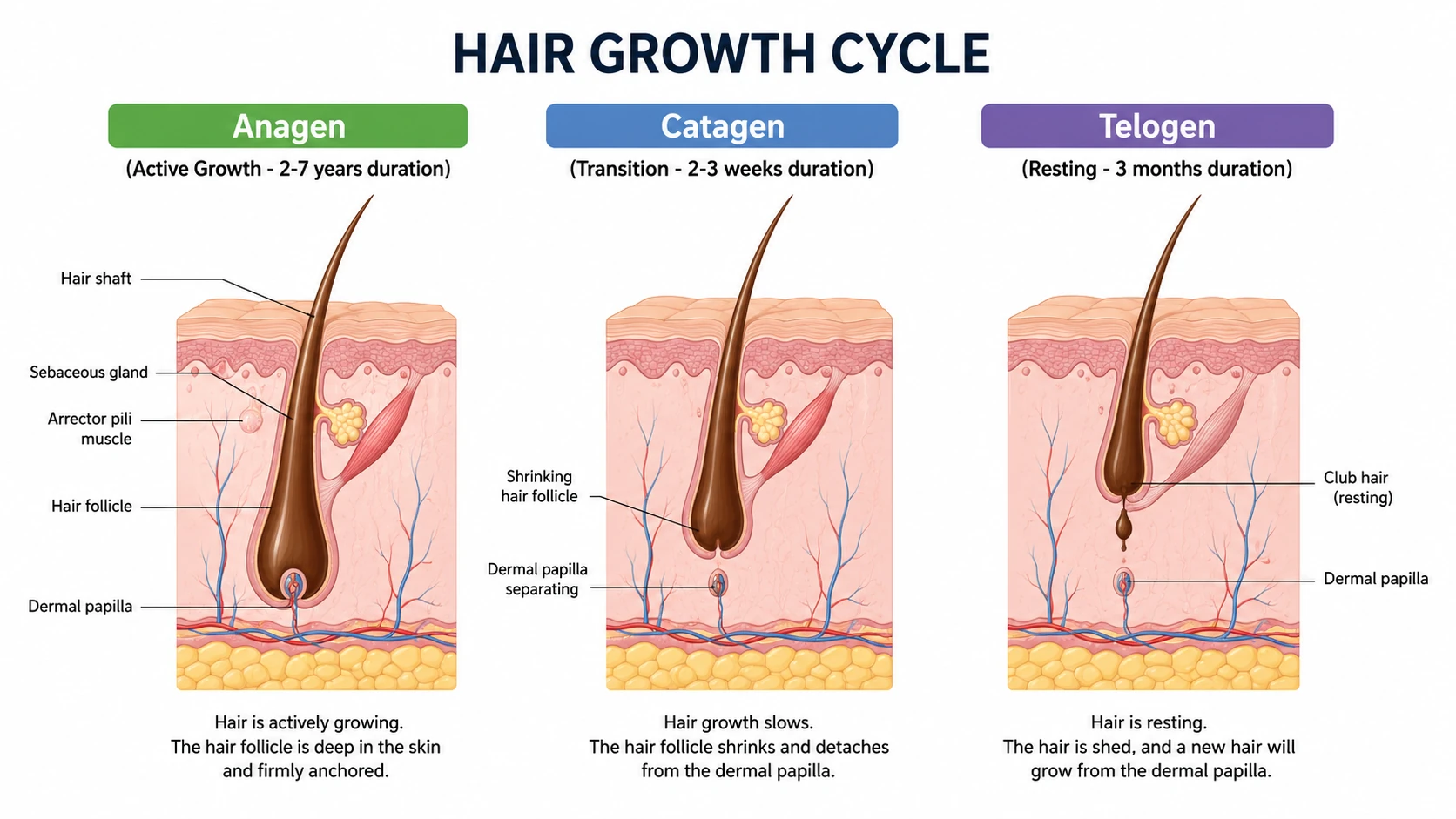
Hair grows in cycles. The growth phase (anagen) lasts several years on the scalp, followed by a short transition (catagen) of about two weeks and a resting phase (telogen) of two to three months, after which the hair falls out and a new one starts.14 Losing 50 to 100 hairs a day is normal.15
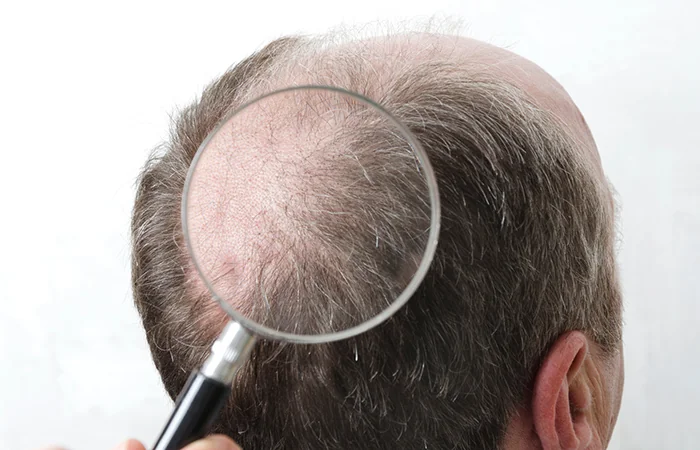
In androgenetic alopecia, the common inherited pattern of hair loss in both men and women, that cycle gradually changes. Follicles spend less time growing and become “miniaturised”, producing shorter, finer hairs until some produce barely any visible hair at all.13 It is extremely common: by the age of 70, at least 80% of men and around half of women are affected to some degree.13
PRP does not create new follicles, and it does not switch off the hormonal process behind pattern hair loss.13 What it aims to do is improve the environment around follicles that are still alive, so they stay in the growth phase for longer and produce stronger hairs.
Does PRP work for hair loss? What the research shows
Yes, on average, but the effect is modest and the quality of the evidence is still limited. The two largest recent analyses both found that PRP increases hair density compared with placebo or control treatments. Neither found a clear improvement in the thickness of individual hairs, and both noted very large differences between studies.
Here is what the strongest studies found:
- A 2024 meta-analysis of 13 placebo-controlled trials found an average gain of 27.6 hairs per cm² with PRP. The authors rated the certainty of that finding as low, because the studies were small, used different preparation methods and showed signs of publication bias. Hair diameter did not change significantly.1
- A 2025 review of 43 randomised trials involving 1,877 people found an average gain of 19.6 hairs per cm² overall and 28.4 compared with placebo. Again, hair thickness did not improve significantly.2
- The most quoted single trial, from Italy in 2015, treated one half of each man’s scalp with PRP and the other with placebo. Twenty men were analysed. After three monthly sessions the treated areas showed an average increase of 33.6 hairs in the target area and 45.9 hairs per cm² in density, compared with where they started.4 That result is often repeated, but two details rarely are: it was a small study of men only, and four of the men saw their hair loss progressing again by around 16 months, so they were retreated.
So what does 20 to 28 extra hairs per square centimetre look like in practice? A healthy scalp typically has a few hundred hairs per square centimetre, so this is not a transformation. For someone in the early stages of thinning, it can be the difference between a parting that is starting to show and one that looks fuller again. For someone with advanced loss, it is unlikely to be noticeable.
Why do PRP results vary so much?
One reason is that “PRP” is not a single product. As one review put it, “there is still no standardized method of preparation and application of PRP”.5 Trials have used different blood volumes, centrifuges, spin speeds, platelet concentrations, activation methods, injection techniques and treatment schedules, and the 2025 review could not even assess the effect of white-cell content because most studies did not report it.2
This is the point Dr Nick makes on our PRP hair treatment page: PRP is a biological product, and the way it is prepared changes what you end up injecting. It is a fair point, and it is why we chose a standardised system and protocol. It is also worth being honest about what is not yet known. One double-blind study found that patients’ gains did not correlate with their platelet counts or growth-factor levels,6 and no trial has yet shown that a particular device produces better hair outcomes than another. A consistent, careful protocol removes avoidable variation; it cannot guarantee a result.
PRP for hair loss in women: does it work?
The evidence on PRP for hair loss in women is smaller and more mixed than for men, but several trials show benefit. Female pattern hair loss usually looks different, a widening parting and diffuse thinning over the crown rather than a receding hairline, and it often has hormonal contributors that need assessing first.
- A 2020 trial in 30 women found that hair density rose by about 106 hairs per cm² at 24 weeks in the PRP group while the placebo group declined. It is worth knowing that the trial was funded by the manufacturer of the PRP system it tested.7
- A 2016 placebo-controlled pilot study in women found no significant difference in hair count between PRP and placebo.8
- A review of eight studies in 197 women concluded that PRP was well tolerated and “may be proposed” for women who have not responded to, or cannot tolerate, minoxidil.9
The British Association of Dermatologists’ patient information for women says the research is still too limited to show when and how PRP works.12 In practice, we see PRP for hair loss in women as one option within a wider plan, ideally after other causes such as iron deficiency, thyroid problems or a recent stressful event have been considered. Our guide to menopause hair loss goes through those checks in more detail.
How does PRP compare with minoxidil and finasteride?
Minoxidil and finasteride are the established medical treatments for pattern hair loss, and NHS guidance lists them as the main options.11 Neither works for everyone, and both only work for as long as you keep using them. Finasteride is not suitable for women.
A 2023 network meta-analysis of 27 trials compared the options head to head. Minoxidil combined with microneedling ranked best, followed by minoxidil with PRP, then minoxidil alone, with PRP on its own ranking lower.3 The evidence suggests PRP for hair loss works best as part of a combination rather than as a replacement, and that is how most dermatology reviews describe it.5,13
| Treatment | How it works | Strength of evidence | What to know |
|---|---|---|---|
| Minoxidil (topical) | Prolongs the growth phase | Strong; licensed for hair loss | Needs daily use; 6 to 12 months to judge |
| Finasteride (men only) | Reduces the hormone DHT | Strong; licensed for male hair loss | Prescription-only; not for women |
| PRP | Growth factors from your own platelets | Moderate trial numbers, low certainty | Average density gain, not thickness; needs maintenance |
| PRF | Platelet concentrate in a fibrin matrix | Early; one randomised comparison | Promising but not yet proven better than PRP |
| Microneedling | Controlled micro-injury to the scalp | Good as an add-on to minoxidil | Ranked first when combined with minoxidil |
PRP vs PRF: what’s the difference?
PRP and PRF both come from your own blood; the difference is how the platelets are held and released. PRP is a liquid concentrate, usually prepared with an anticoagulant, so the platelets release their growth factors fairly quickly once injected. Platelet-rich fibrin (PRF) is prepared without an anticoagulant at lower spin forces, so it forms a soft fibrin network that holds the platelets and white cells together.10
Laboratory work shows that fibrin acts as a reservoir, with growth-factor release continuing over the first day or so, which is why PRF is often described as “slow release”.10 Whether that translates into better hair growth is only beginning to be tested. The first multicentre randomised trial comparing them, published in 2026 in women with pattern hair loss, found larger increases in hair count with injectable PRF (about 27%) than with PRP (about 15%) after 24 weeks, with no difference in hair diameter.16 That is encouraging, but it is one trial in women, so it does not yet prove PRF is better.
At Rejuvena, Dr Nick often uses the two together: PRP for an immediate signal and PRF for a more sustained one, sometimes alongside microneedling. Microneedling has its own evidence base. In a 100-man trial, adding weekly microneedling to minoxidil produced far more new hair at 12 weeks than minoxidil alone.17 Exosome treatments are newer still; the human studies so far are small and short, no direct comparison with PRP exists, and no exosome product has regulatory approval for hair loss in the US.18,19 We discuss these honestly at consultation rather than presenting them as proven.
Who is a good candidate for PRP, and who isn’t?
The people most likely to benefit are those with early to moderate pattern hair loss whose follicles are still producing hair, even if it is finer than before. In the research, men with milder loss (Norwood grades II to III) did better than those with advanced loss,5 and a 2025 clinic cohort found that severe cases improved far less than mild ones.20 Our guides to a receding hairline and crown thinning explain how to tell which stage you are at.
PRP may suit you if
- Your hair has been thinning gradually in a typical pattern
- Your parting has widened or the crown is less dense
- You still have fine hairs in the thinning areas
- You want to add to, or can’t tolerate, medical treatment
- You can commit to a course and maintenance sessions
See a doctor first if
- Hair is falling out suddenly or in clumps
- You have round bald patches
- The scalp is red, scaly, itchy or scarred
- You have a blood or platelet disorder, or take anticoagulants
- You are pregnant, breastfeeding or having cancer treatment
Sudden shedding, patchy loss and scarring conditions have different causes and need a diagnosis rather than PRP. Areas that have been completely bald for a long time have usually lost their follicles, and PRP cannot bring those back; our comparison of PRP vs hair transplant covers the options for those areas. If you are not sure whether you are shedding or thinning, start with how much hair shedding is normal. This is why every plan at Rejuvena starts with a doctor’s assessment of the type of hair loss, your medical history and your scalp. Our hair loss treatment guide compares PRP, PRF, exosomes and medical therapy side by side.
PRP hair results: what to expect and when
Hair responds slowly because it follows its natural cycle. Based on the trial timelines and what we see in clinic, a typical course looks like this:
- Weeks 1 to 4. Nothing visible yet. Some people notice shedding begins to settle.
- Months 2 to 3. Follicles move back into the growth phase. Fine new hairs may appear, and hair can feel stronger.
- Months 4 to 6. Changes in density become visible in photos. Most trials measure results at around 6 months.7
- Beyond 6 months. Results keep maturing, but the underlying hair loss carries on. Periodic maintenance sessions are usually needed to keep the gains.4,13
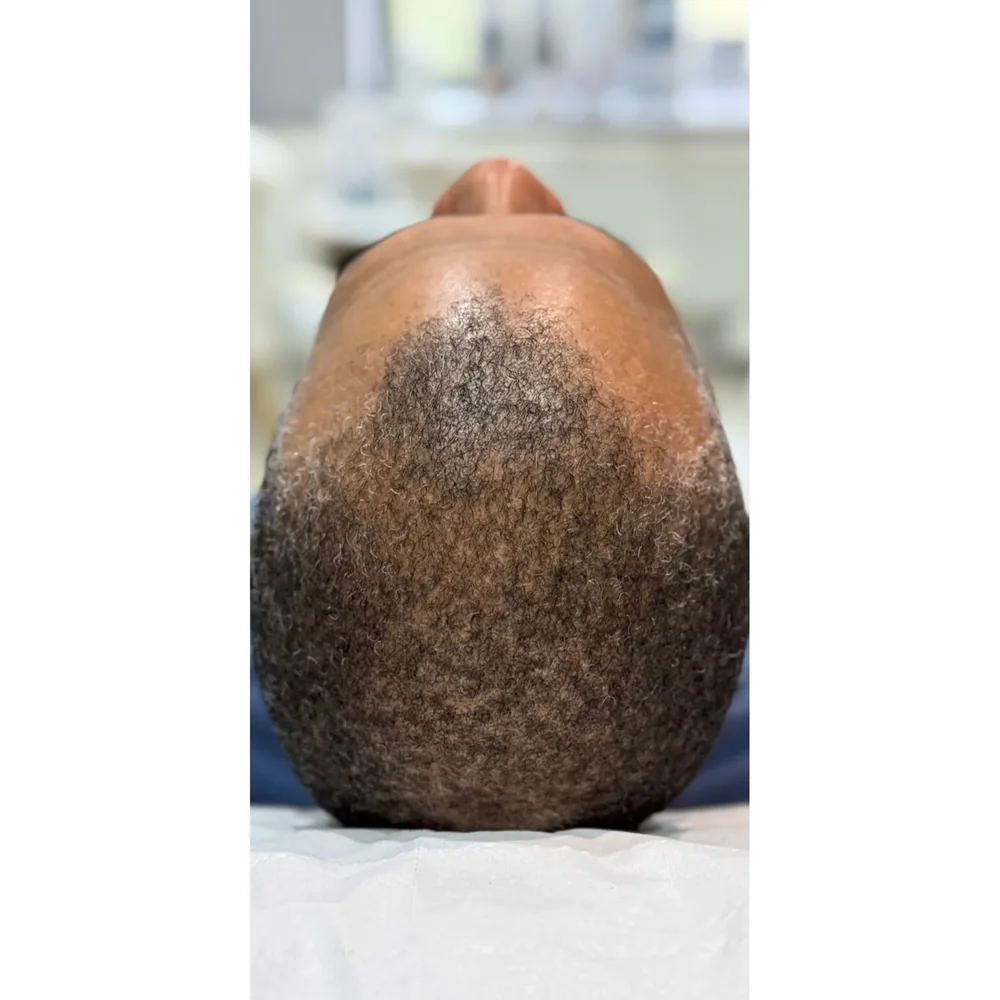
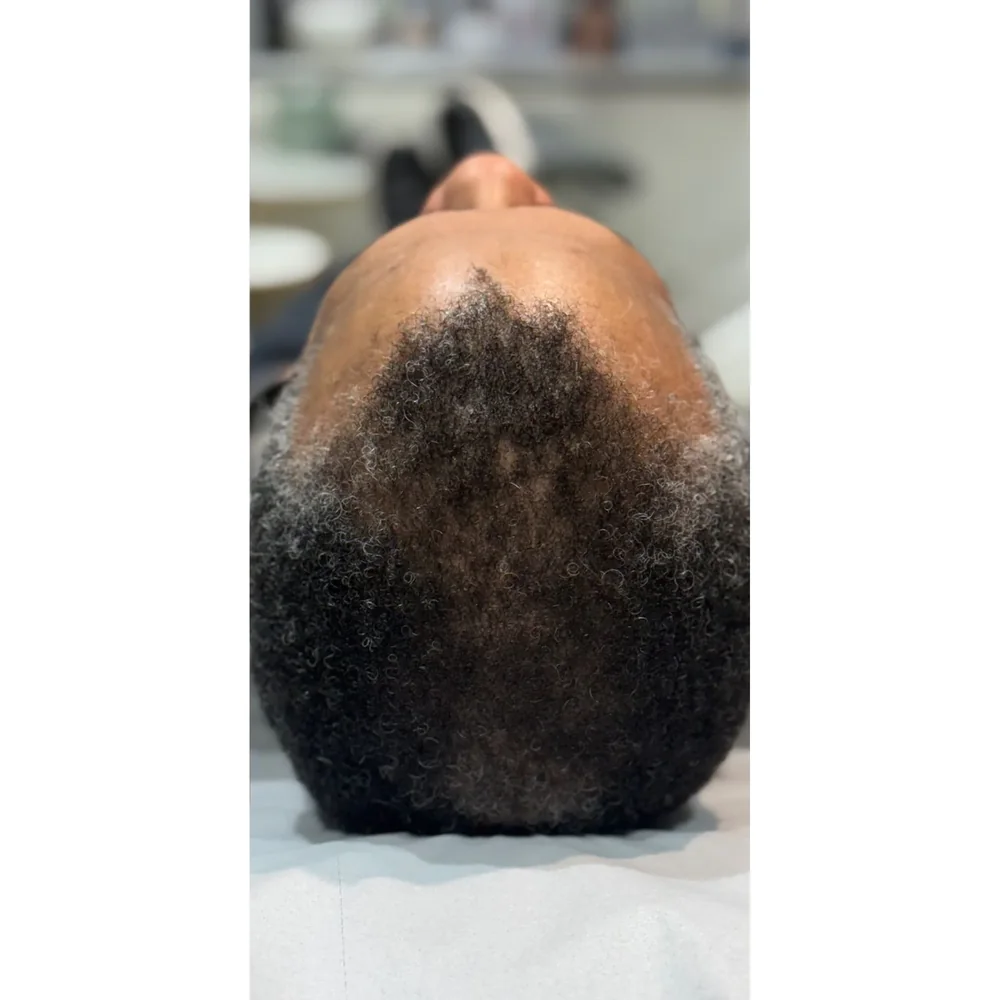
Most published protocols use three to four sessions about a month apart, followed by maintenance every few months.5 Interestingly, the 2025 review found no clear link between the number of sessions and the size of the result,2 which is one reason we tailor the course to how each person responds rather than selling a fixed package as the answer.
What PRP injections for hair loss involve
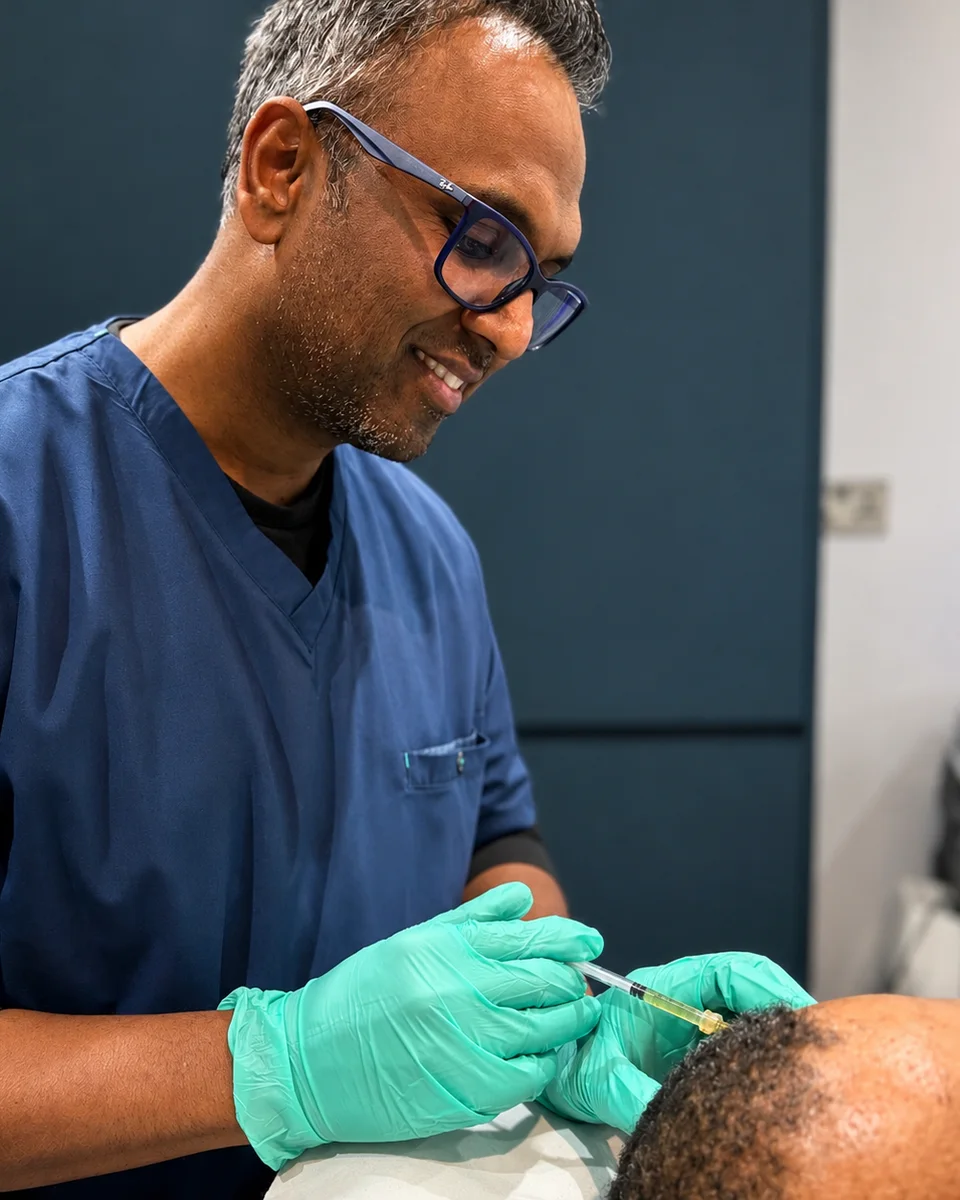
A session at Rejuvena takes 45 to 60 minutes. We take a 25 ml blood sample from your arm and process it in the WorldPRP® system, which the manufacturer describes as using a patented hourglass-shaped tube to separate the plasma and platelets from the red cells. The concentrate is then placed into the thinning areas with very fine needles. A topical anaesthetic can be used if you would like it.
Because PRP comes from your own blood there is no risk of an allergic reaction to a foreign substance, but it is not entirely free of side effects. The most common are short-lived: tenderness during injection, redness, mild swelling or bruising, a tight feeling in the scalp and occasionally a headache.2,7 Some people notice a little extra shedding in the early weeks. Most people return to normal activities the same day and we advise leaving the hair unwashed until the next morning.
How much does PRP for hair loss cost in the UK?
PRP for hair loss is not offered on the NHS, so it is paid for privately.12 Prices vary widely between clinics, partly because the preparation systems differ. At Rejuvena a single session is £400, a course of three is £1,125 (£375 per session) and a course of five is £1,750 (£350 per session). Your consultation comes first, and if PRP is not the right choice for your type of hair loss, we will tell you. Our PRP hair treatment cost guide sets out what a realistic first year costs and what to ask any clinic.
How we approach PRP at Rejuvena
Dr Nick designed our hair restoration protocol around a simple principle: the injection is the easy part. What matters is diagnosing the type of hair loss correctly, choosing the right people, preparing the plasma carefully and consistently, and being honest about what to expect. Every consultation and treatment is led by him, and he will tell you if you would be better served by medical treatment, a referral, or simply waiting and monitoring.
Free 2-minute check
Could PRP help your hair loss?
Answer seven quick questions about your hair loss pattern, how long it has been happening and what you have tried. Our Hair Growth Potential check shows what the clinical evidence suggests for someone with a similar profile, and flags if your hair loss needs a doctor’s assessment first.
Check your hair growth potential →Frequently asked questions
How many PRP sessions will I need?
Most people start with three or four sessions about four weeks apart, then a maintenance session every three to six months depending on how they respond. Because the underlying hair loss continues, maintenance is what protects the result.
Does PRP for hair loss hurt?
Most people describe it as uncomfortable rather than painful. Fine needles are used and a topical anaesthetic can be applied beforehand. Any tenderness usually settles within a day or two.
Are PRP hair results permanent?
No. PRP supports existing follicles but does not stop the genetic and hormonal process behind pattern hair loss, so gains fade over time without maintenance. In one trial some men began to lose their gains around 12 to 16 months after treatment.
Can I use PRP alongside minoxidil?
Yes, and the evidence suggests combining them tends to work better than PRP alone. If you already use a hair loss medicine, keep using it unless your doctor advises otherwise, and tell us about it at your consultation.
Can PRP regrow hair on a completely bald patch?
Usually not. PRP acts on follicles that still exist. Where an area has been smooth and bald for a long time, or where there is scarring, the follicles have generally gone and PRP cannot replace them.
References
- Kieling L, Konzen AT, Zanella RK, Valente DS. Is autologous platelet-rich plasma capable of increasing hair density in patients with androgenic alopecia? A systematic review and meta-analysis of randomized clinical trials. An Bras Dermatol. 2024;99(6):847–862. doi:10.1016/j.abd.2024.01.002
- Anitua E, Tierno R, Alkhraisat MH. Platelet-rich plasma in the management of alopecia: a systematic review and meta-analysis of clinical evidence. Dermatol Ther (Heidelb). 2025;15(11):3213–3252. doi:10.1007/s13555-025-01542-8
- Gupta AK, Wang T, Bamimore MA, Polla Ravi S, Talukder M. Relative effects of minoxidil 5%, platelet-rich plasma, and microneedling in pattern hair loss: a systematic review and network meta-analysis. Skin Appendage Disord. 2023;9(6):397–406. doi:10.1159/000534196
- Gentile P, Garcovich S, Bielli A, Scioli MG, Orlandi A, Cervelli V. The effect of platelet-rich plasma in hair regrowth: a randomized placebo-controlled trial. Stem Cells Transl Med. 2015;4(11):1317–1323. doi:10.5966/sctm.2015-0107
- Stevens J, Khetarpal S. Platelet-rich plasma for androgenetic alopecia: a review of the literature and proposed treatment protocol. Int J Womens Dermatol. 2019;5(1):46–51. doi:10.1016/j.ijwd.2018.08.004
- Rodrigues BL, Montalvão SAL, Cancela RBB, et al. Treatment of male pattern alopecia with platelet-rich plasma: a double-blind controlled study with analysis of platelet number and growth factor levels. J Am Acad Dermatol. 2019;80(3):694–700. doi:10.1016/j.jaad.2018.09.033
- Dubin DP, Lin MJ, Leight HM, et al. The effect of platelet-rich plasma on female androgenetic alopecia: a randomized controlled trial. J Am Acad Dermatol. 2020;83(5):1294–1297. doi:10.1016/j.jaad.2020.06.1021
- Puig CJ, Reese R, Peters M. Double-blind, placebo-controlled pilot study on the use of platelet-rich plasma in women with female androgenetic alopecia. Dermatol Surg. 2016;42(11):1243–1247. doi:10.1097/DSS.0000000000000883
- Mercuri SR, Paolino G, Di Nicola MR, Vollono L. Investigating the safety and efficacy of platelet-rich plasma (PRP) treatment for female androgenetic alopecia: review of the literature. Medicina (Kaunas). 2021;57(4):311. doi:10.3390/medicina57040311
- Choukroun J, Ghanaati S. Reduction of relative centrifugation force within injectable platelet-rich-fibrin (PRF) concentrates advances patients’ own inflammatory cells, platelets and growth factors: the first introduction to the low speed centrifugation concept. Eur J Trauma Emerg Surg. 2018;44(1):87–95. doi:10.1007/s00068-017-0767-9
- NHS. Hair loss: treatments. nhs.uk/conditions/hair-loss/treatments
- British Association of Dermatologists. Male pattern hair loss and Female pattern hair loss (patient information). skinhealthinfo.org.uk (male); skinhealthinfo.org.uk (female)
- Devjani S, Ezemma O, Kelley KJ, Stratton E, Senna M. Androgenetic alopecia: therapy update. Drugs. 2023;83(8):701–715. doi:10.1007/s40265-023-01880-x
- Natarelli N, Gahoonia N, Sivamani RK. Integrative and mechanistic approach to the hair growth cycle and hair loss. J Clin Med. 2023;12(3):893. doi:10.3390/jcm12030893
- American Academy of Dermatology. Do you have hair loss or hair shedding? aad.org
- Li M, Bai Y, Ye Z, et al. Comparative efficacy and safety of platelet-rich plasma (PRP), injectable platelet-rich fibrin (i-PRF) and concentrated growth factors (CGF) for female pattern hair loss (FPHL): a prospective multicenter randomized clinical trial. J Dermatolog Treat. 2026;37(1):2659498. doi:10.1080/09546634.2026.2659498
- Dhurat R, Sukesh M, Avhad G, Dandale A, Pal A, Pund P. A randomized evaluator blinded study of effect of microneedling in androgenetic alopecia: a pilot study. Int J Trichology. 2013;5(1):6–11. doi:10.4103/0974-7753.114700
- Darwish R, Zakhary M, Wingate K, Ayoubi N, Ghafoor F, Ejaz B. From cells to strands: a systematic review comparing exosome therapy, platelet-rich plasma, and minoxidil for androgenetic alopecia treatment. Cureus. 2025;17(7):e87875. doi:10.7759/cureus.87875
- US Food and Drug Administration. Public safety notification on exosome products. 6 December 2019. fda.gov
- Batni K, Khetan D, Bhatnagar A, Chaudhary RK, Verma A. Novel method for preparation of autologous leucocyte rich platelet-rich plasma (L-PRP) under closed system and assessment of its clinical efficacy in androgenetic alopecia: a retrospective cohort study. J Plast Reconstr Aesthet Surg. 2025;103:128–139. doi:10.1016/j.bjps.2025.01.043
This article is for general information and does not replace a personal consultation. PRP results vary with the type and stage of hair loss, general health and how many viable follicles remain.