Acne: Causes, Scarring & When to See a Doctor
What acne is, what causes it, why severe acne belongs with your GP rather than a clinic, whether the NHS treats it, and what acne scarring involves, with an honest steer on isotretinoin.
Acne affects almost everyone at some point, around 95% of people aged 11 to 30 experience it. Most cases respond to a straightforward, NHS-funded stepped treatment pathway. Severe acne, or acne that may need isotretinoin, belongs with your GP and NHS dermatology (not a cosmetic clinic) because that medicine can only ever be started by a specialist-led team.
What is acne?
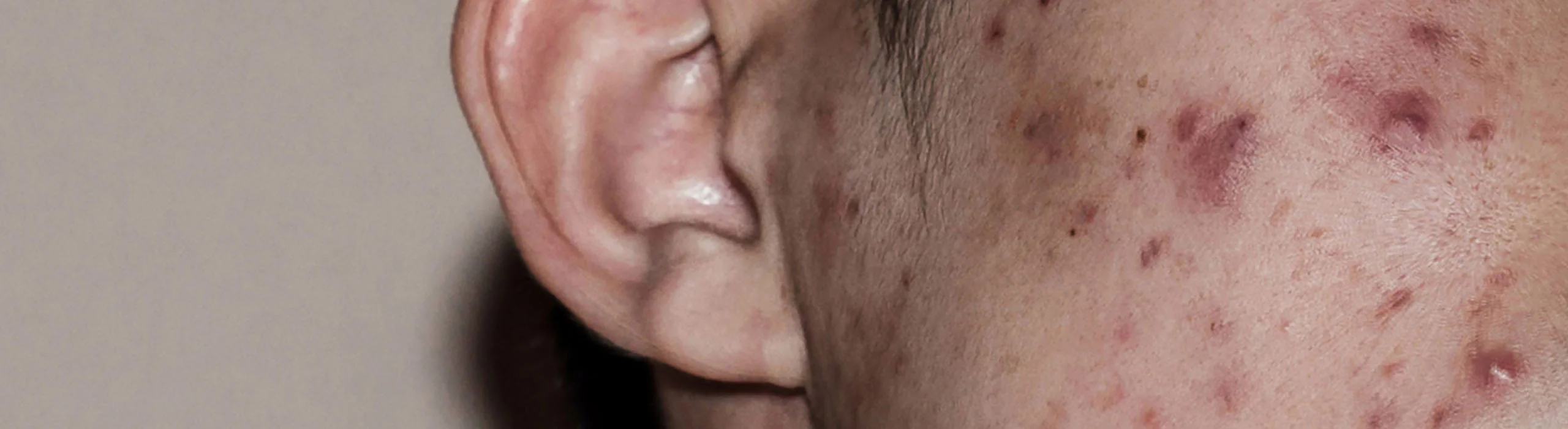
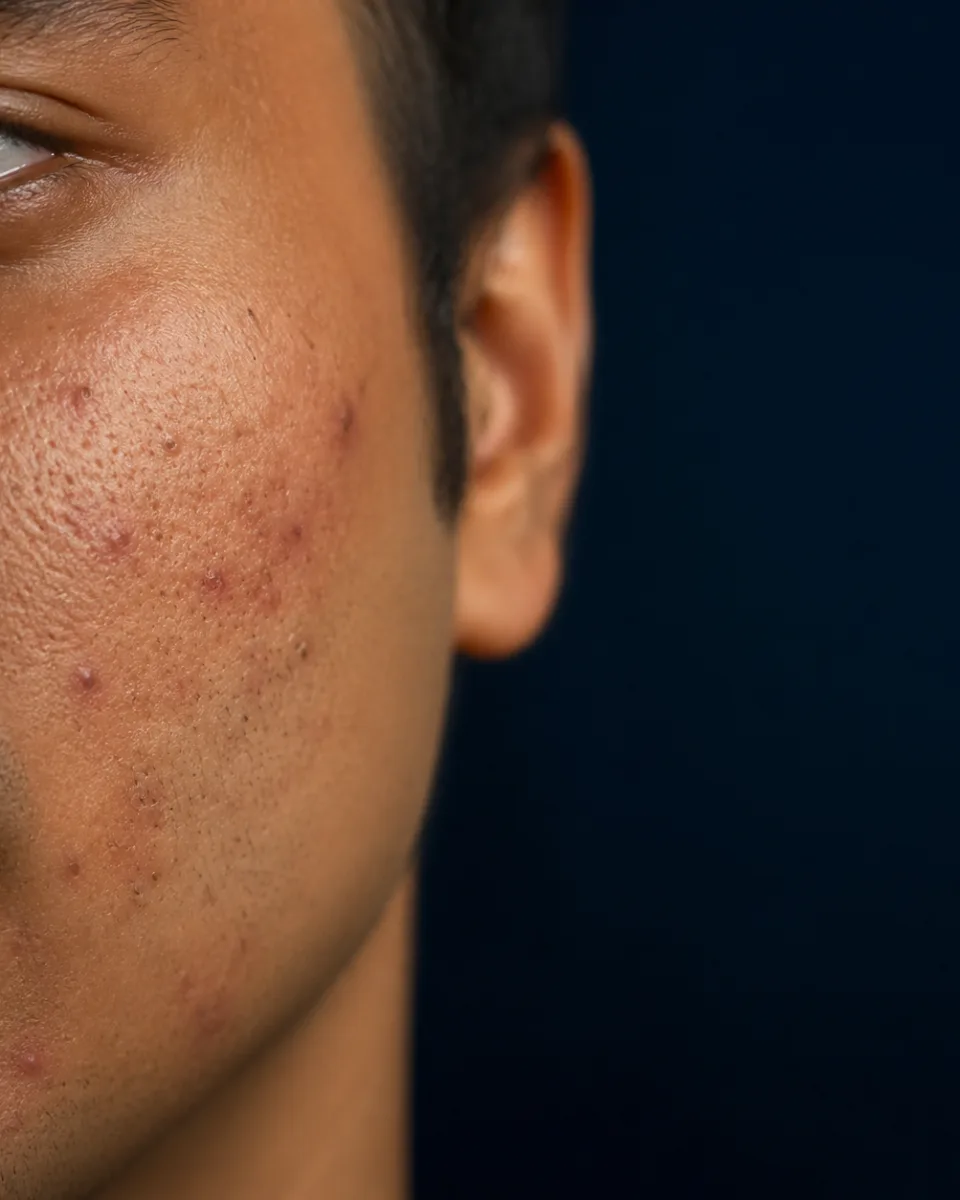
The NHS describes acne as “a common skin condition that affects most people at some point. It causes spots, oily skin and sometimes skin that’s hot or painful to touch.” It is genuinely common: about 95% of people aged 11 to 30 are affected to some extent, most often in girls aged 14 to 17 and boys aged 16 to 19, though around 3% of adults over 35 still have it.
Acne shows up almost everywhere on the body, but not equally: the face is affected in almost everyone with acne, the back in more than half, and the chest in around 15%.
There are several recognised lesion types, ranging from mild to severe:
- Blackheads and whiteheads (comedones): blocked pores, open or closed.
- Papules: small red, tender bumps.
- Pustules: papules with a white, pus-filled centre.
- Nodules: large, hard, often painful lumps beneath the skin.
- Cysts: the most severe type, and the one most likely to cause permanent scarring.
What causes acne?
Acne starts when hair follicles become blocked. The sebaceous glands attached to each follicle begin producing too much sebum (oil), which mixes with dead skin cells to form a plug. Normally harmless bacteria that live on the skin can then infect the blocked follicle, producing the redness and inflammation of papules, pustules, nodules or cysts.
Hormones drive a lot of this. Teenage acne is thought to be triggered by rising testosterone during puberty. In adults, acne is more common in women, and is often linked to hormonal changes around periods, pregnancy or conditions such as polycystic ovary syndrome (PCOS).
Genetics plays a real part too (acne can run in families) and oily skincare or hair products, greasy moisturisers, stress and certain medications can all make it worse.
When acne needs a GP, not a clinic
Acne is a genuine medical condition, and the NHS treats it through a defined, funded stepped pathway: topical treatments first (benzoyl peroxide, a topical retinoid, or azelaic acid if the others irritate your skin), then oral antibiotics for moderate-to-severe acne, then (for women) the combined contraceptive pill, then referral to a dermatology team for a large number of spots on the chest and back, painful nodules, a real risk of scarring, or significant psychological impact, and isotretinoin as a specialist last resort. If any of that describes you, your GP is the right and honest place to start, not a private cosmetic clinic.
Isotretinoin cannot simply be prescribed by a GP. It is a specialist-only medicine. Under current British Association of Dermatologists guidance, only a Consultant Dermatologist can act as the “Lead Prescriber” who decides to start it, or, within some services, a GP who is nationally accredited with an Extended Role or Special Interest and is working inside a pathway a consultant dermatologist has personally set up and continues to govern. There is no route by which a routine GP appointment leads straight to an isotretinoin prescription. Severe acne that may need it should go through NHS dermatology referral, never a private aesthetic clinic.
Don’t squeeze. Both the NHS and the British Association of Dermatologists advise against trying to “clean out” blackheads or squeeze spots: doing so can make acne worse and cause permanent scarring.
The psychological side is real, and is itself a reason to see a GP. A 2023 systematic review pooling nearly 7,800 participants found significantly higher rates of depression, anxiety and perceived stress among people with acne compared with people without it. If acne is affecting your mood or confidence, that alone is one of the NHS’s own criteria for referral.
Acne scarring
Scarring is the one part of this picture where private, cosmetic treatment plays an honest role because scar-revision treatments such as laser resurfacing and microneedling are not routinely available on the NHS. There are several recognised types: ice-pick scars (narrow, deep, and the most common, at 60–70% of cases), boxcar scars (wider, punched-out depressions), rolling scars (broad, with a sloping edge), and, less often, raised hypertrophic or keloid scarring. Scars form mainly because ongoing inflammation from active acne damages collagen in the deeper skin, which is also why treating active acne promptly, rather than waiting it out, helps limit how much scarring is left behind.
The evidence for scar treatments is genuinely mixed in quality. The strongest data found for microneedling combined with platelet-rich plasma (PRP) shows a real, statistically significant benefit over microneedling alone, but comes mostly from smaller, non-randomised, split-face studies rather than large controlled trials, and most people need more than one session for a worthwhile improvement.
Is acne treated on the NHS?
Yes. active acne is a medical condition the NHS treats through the stepped pathway described above, from topical treatments through to specialist referral and isotretinoin. This is different from most of the conditions on this site, where cosmetic treatment sits entirely outside NHS funding.
Where the NHS funding boundary sits is between active acne and its cosmetic aftermath. Active acne (the spots, the inflammation, the risk of scarring) is medically treated, free at the point of use, via your GP. Scar-revision treatments once the acne itself has settled, such as laser resurfacing or microneedling, are not routinely available on the NHS and are a private, cosmetic matter.
So the honest summary is this. If you have active or worsening acne (especially painful nodules, widespread chest/back involvement, or scarring risk) start with your GP; that route is free, appropriate, and the only route to isotretinoin if you need it. If your acne has settled and you are left with scarring you would like improved, that is where a private consultation is the right next step.
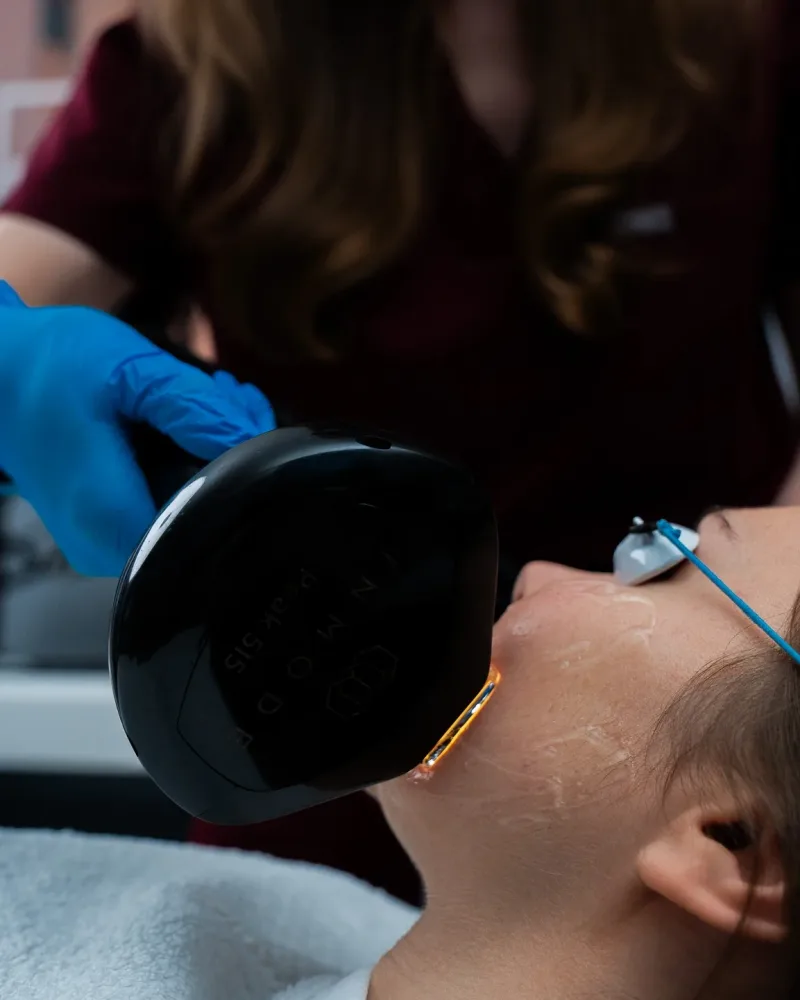
At Rejuvena, acne and acne-scarring support draws on personalised skincare, chemical peels, and laser or IPL facials, chosen for your skin type and the severity of what you’re treating. Because the right combination and number of sessions varies from person to person, your exact cost is confirmed at your consultation, with an honest plan up front.
If active or severe acne needs medical treatment, including isotretinoin, we will say so plainly and point you back to your GP rather than treat it cosmetically.
How acne & rosacea care works at Rejuvena
Every plan starts with an assessment by Dr Nick’s team, checking whether your skin is suited to cosmetic-adjacent skincare, chemical peels and laser/IPL support, or whether it needs referral back to your GP for medical treatment of active or severe acne. Suitable, settled skin can then follow a personalised regimen combining problem-specific skincare, chemical peels, and laser or IPL facials to calm redness, unclog pores and improve the appearance of scarring.
Why choose Rejuvena for acne care in Bedford?
Honest triage first
We tell you plainly when active or severe acne needs your GP and NHS dermatology, not a cosmetic clinic.
Diploma in Dermatology
Assessed by Dr Nick, a GMC-registered doctor, not a beauty therapist or nurse.
Personalised, not generic
Skincare, peels and laser/IPL are matched to your skin type and what stage your acne is at.
Local & welcoming
Based at 52 Thor Drive, Bedford, we care for patients from Kempston, Biddenham, Bromham and across Bedfordshire.
Verified Google reviews
What our patients say
5.0from 161 Google reviews
I went to see Rejuvena clinic few months ago after reading their reviews online. I was suffering with acne scars since many years and have tried few treatments from elsewhere. I had a consultation with Dr Nick who was very thorough during the consultation and he suggested me few different treatment options. At any time I never felt rushed or pushed to purchase treatments. 6 months fast forward I had laser skin resurfacing, injections and skin care and my skin has never been better. I am very thankful to the Rejuvena clinic to sort out my skin issue once and for all. Thank you very much
Rejuvena repliedThank you for your kind review Monish, glad your skin issue is sorted now 😊🙏
Read this review on Google (opens in a new tab)I finally found a clinic where I received the help I needed. I had been struggling for a very long time with acne and deep scarring on my face. After a few treatments, I can already see and feel a remarkable improvement. The couple who run the clinic are incredibly kind and welcoming — from my very first visit, I felt very comfortable opening up about my problem.
Rejuvena repliedThank you very much for your valuable review Judyta. We are very happy to have helped you with your skin condition and glad to hear you feel you were listened to and seen good impr
Read this review on Google (opens in a new tab)I have had the joy of being a client of Dr Nick and Lana’s for 2 years and have benefited enormously from their expertise, knowledge and love for skin care and treatments. Dr Nick is a consummate professional, ably assisted by Lana. Today I had the most innovative laser treatment available in the country. It took about 45 mins to treat my face. I was nervous but need not have been. The laser was not painful, and the soothing serum reduced the post treatment heat Also I had blemishes that were removed leaving my skin smooth. At the moment my face is red, like sunburn but I know by tomorrow that will fade. The aftercare has been thoroughly explained so I don’t have any concerns. I. now look forward to a more refreshed face without looking artificial. I love the fact that Dr Nick and Lana are always looking to offer the best treatments available. They love their craft and it shows in everything they do. Their approach to skincare is authentic and not motivated by financial reward. Rejuvenate Clinic is a real gem in Bedford and I have nothing but praise for Dr Nick and ‘Prof’ Lana. If you haven’t tried them, please do, you won’t be disappointed.
Rejuvena repliedThank you Gina for your kind words and feedback. “Prof Lana” 😂 and Dr Nick are always happy to see you at the Rejuvena Clinic. You bring us smiles and laughter with your presence
Read this review on Google (opens in a new tab)Love Dr. Nick & Lana, they’re such a wonderful team. I had Morpheus 8 & a gentle peel to help with my scars at the clinic and I’m really happy with the results !
Rejuvena repliedThank you very much for your kind words Guina. ☺️🙏
Read this review on Google (opens in a new tab)As a battle-scarred rugby veteran, I may be considered an unlikely candidate for aesthetic skin treatment. However after many years of suffering venous leg ulceration, treated at considerable time and cost to the NHS, a trusted health professional suggested I try laser treatment to supplement my body's own healing process. Soon after starting treatment at Rejuvena Clinic Bedford, I found remarkably rapid healing of stubborn chronic ulcers and have a very positive view of success over the course of my treatment. Thanks to you, Dr. Nick!
Rejuvena repliedThank you very much for taking the time to leave such a thoughtful review. I’m delighted to hear how much progress you’ve made, particularly after such a long and difficult journey
Read this review on Google (opens in a new tab)I had an amazing experience at Rejuvena Clinic. I recently went in for a laser treatment and a diamond-gold facial, and the results have been incredible. The clinic is spotless, modern, and calming from the moment you walk in. Dr. Nick and Lana are both exceptionally professional, friendly, and knowledgeable. They made me feel completely at ease and took the time to explain every step of the process thoroughly. The laser treatment was gentle but highly effective, my skin already feels smoother and looks noticeably clearer just a few days later. The diamond-gold facial was pure luxury, It left my skin glowing, soft, and deeply hydrated. I’ve honestly never seen such radiant results from a facial before. I highly recommend Rejuvena Clinic to anyone looking for top-tier skincare treatments in a clean, welcoming, and professional environment. I’ll definitely be returning for more. Thank you so much, Dr. Nick and Lana xx
Rejuvena repliedThank you very much for taking your time to leave such an elaborate review Lakshmi. We are delighted to know you had an amazing experience so far at the clinic and we will continue
Read this review on Google (opens in a new tab)Every review above is published on Google. Tap any card to read it there.
Acne FAQs in Bedford
Is acne treatment available on the NHS?
Can a GP prescribe isotretinoin directly?
Does squeezing spots make scarring worse?
Can acne scarring be treated?
Does acne go away on its own?
How much does acne and scarring treatment cost in Bedford?
Book your acne assessment in Bedford
Speak with Dr Nick’s team at Rejuvena Bedford for an honest assessment of your skin. Book online or call us.