Keloid Scars: The Honest Limits, Before Anything Else
Why keloid scars are notoriously hard to treat, why excision alone so often fails, the rare cancer that can be mistaken for one, and what genuinely realistic improvement looks like in Bedford.
Keloid scars are genuinely difficult to treat. Surgical excision on its own fails 45–100% of the time, often growing back larger than the original scar, and a rare cancer called DFSP can look just like one. That is why proper assessment always comes before any treatment plan here, not a quick promise of removal.
What is a keloid scar?
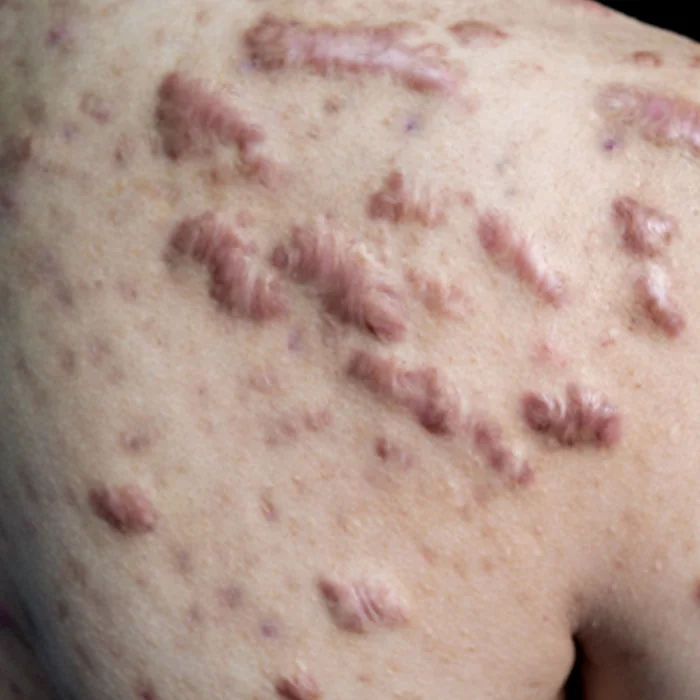
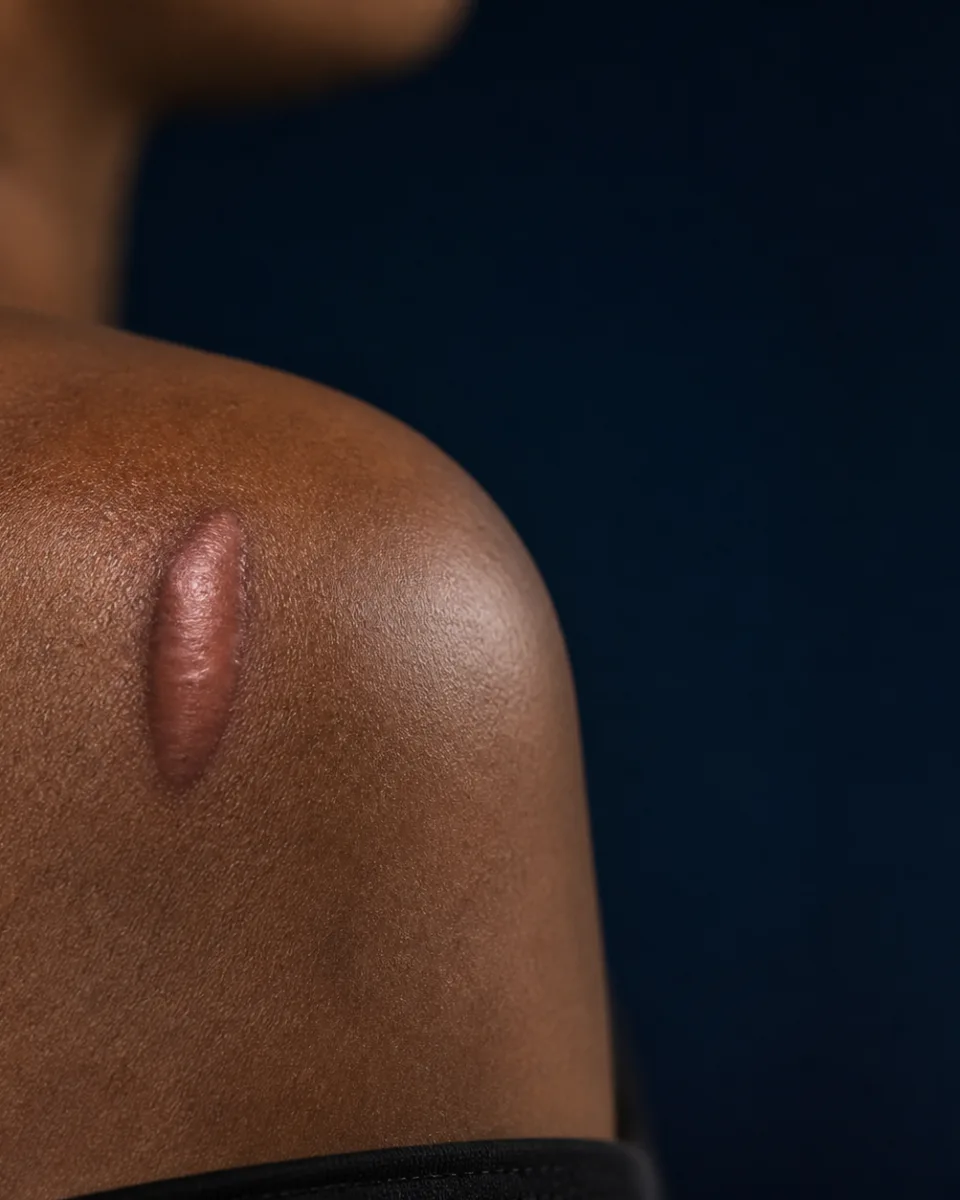
A keloid is a scar that overgrows and becomes larger than the original wound. The NHS describes it as “a raised scar left on the skin after a wound has healed” that “keeps growing and becomes bigger than the original wound.” Keloids are usually raised, hard, smooth and shiny, and can be skin-coloured, pink, red, purple, brown, or darker than the surrounding skin. They are most common on the chest, shoulders, chin, neck, lower legs and ears, and often feel itchy or painful while they are still growing.
Keloids are different from hypertrophic scars, even though the two are often confused. A hypertrophic scar stays within the boundary of the original wound and tends to improve on its own over time. A keloid extends beyond the edges of the original injury and does not usually regress spontaneously.
Almost any injury can trigger one (a cut, burn, surgery, a piercing, or even a minor acne spot) and keloids most commonly appear between puberty and 30 years of age, with risk notably higher during pregnancy and puberty too.
What causes keloid scars?
Keloids happen when the skin over-produces collagen during healing, though exactly why this happens in some people and not others is not fully understood. What is clear is that keloid-forming skin behaves differently: it produces far more collagen than normal healing skin, and the cells involved persist for longer than they should.
Keloids are well-evidenced as more common in darker skin tones, including in a UK-specific study of over 230,000 people, which found excessive scarring in 2.4% of Black, 1.1% of Asian and 0.4% of White participants. One professional reference has, however, more recently disputed how strong this ethnicity link really is, citing weak epidemiological evidence, so while the association is well-documented across multiple sources, it is not treated here as beyond debate.
Family history is a genuinely unsettled figure, and we won’t pretend otherwise. One source puts a family history of keloids at 5–10% of European patients; another puts it at around half of all patients. These numbers do not agree, and rather than quote one as fact, the honest position is that a family link exists but its true frequency is not well pinned down.
The honest limits of keloid treatment
Surgery alone very often fails. Removing a keloid by excision on its own has a recurrence rate of 45–100%, and the British Association of Dermatologists is blunt about it: surgery “is not usually recommended because it’s likely to grow back bigger.” This is the single clearest fact in this whole picture, and it is why excision is never offered here as a standalone treatment.
No single treatment reliably works, and keloids often come back regardless of what is used. The British Association of Dermatologists’ own position is that “there is currently no evidence that any single form of treatment is better than another and keloids often regrow in the same place.” Even steroid injections (the most commonly used first-line treatment) see up to 50% of keloids grow back. Combination approaches (excision paired with radiotherapy, or laser paired with steroid injections) have shown meaningfully lower recurrence in the literature, in the region of 12–14%, but head-to-head evidence comparing these combinations directly is still lacking.
A “keloid” is occasionally something more serious. A rare cancer called dermatofibrosarcoma protuberans (DFSP) can look almost identical to a keloid, and case reports describe it being misdiagnosed as one. The features that should prompt a closer look rather than an assumption: a scar that is new in later adult life without an obvious preceding injury, one that is painful, bleeding or ulcerating, or one that keeps growing despite treatment already tried. Biopsy resolves the uncertainty; this is exactly why assessment matters before treatment, not after.
Some treatments carry their own risks. Cryotherapy can cause permanent loss of skin pigment: a particular concern in the darker skin tones most prone to keloids in the first place. Steroid injections can thin and pale the skin around the treated area. Radiotherapy, used occasionally after surgery, carries a small risk of skin cancer itself and is used sparingly for that reason.
None of this means nothing can be done. It means the honest starting point is realistic: treatment can often flatten a keloid, reduce itching and improve how it looks, but there is no guaranteed cure, and recurrence is a genuine possibility whatever approach is used.
Can you get a keloid treated on the NHS?
Sometimes; this is different from most conditions on this site, where cosmetic treatment sits entirely outside NHS funding. Keloids can occasionally be NHS-funded, but the threshold is specifically functional impairment or diagnostic uncertainty, not simply size, visibility or itch.
One NHS regional clinical guidance resource sets out typical criteria: at least 18 months since the original injury, a lesion that is “ragged and protrudes more than 5mm and is more than 5cm in diameter” (or comparable severity), and demonstrable functional impairment (such as a scar over a joint restricting movement) rather than appearance alone. Routine steroid injections and surgery aimed purely at improving how a keloid looks are not typically funded.
So the honest summary is this. If a keloid is restricting movement, causing recurrent breakdown, or you’re unsure whether it’s actually a keloid at all, start with your GP. If it has been assessed as a straightforward keloid and you’d like it improved cosmetically, that is a private treatment: approached with realistic expectations about recurrence.
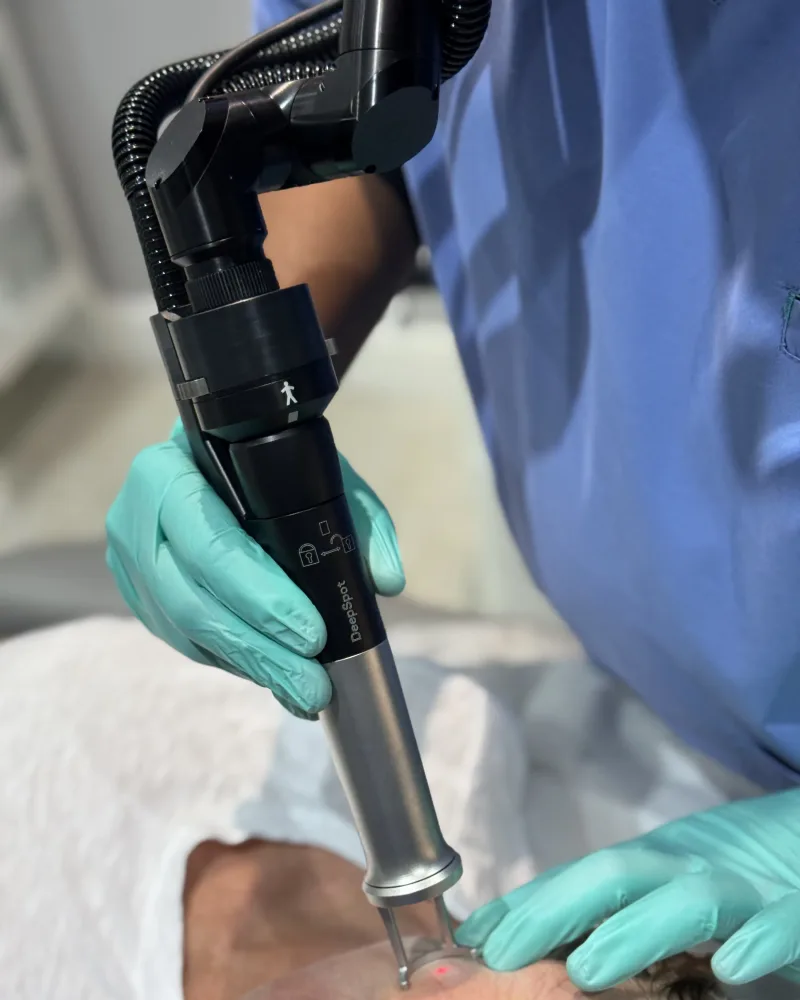
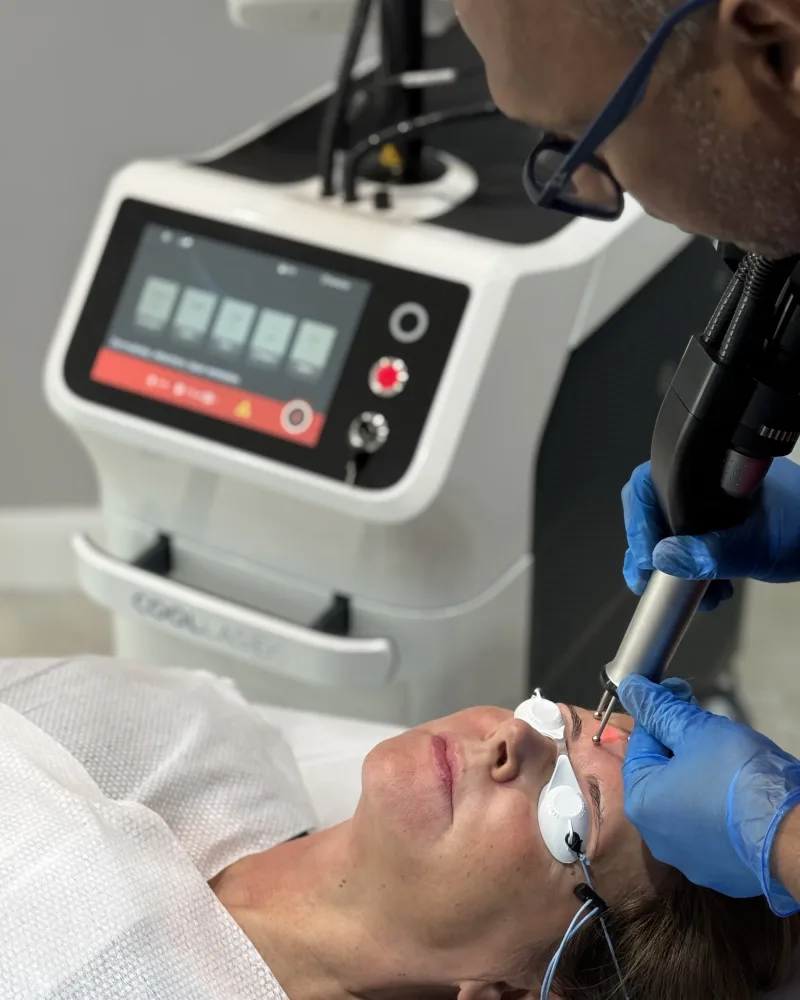
At Rejuvena, keloid scar treatment is planned around your specific scar (its size, location and history) using laser resurfacing, microneedling or RF microneedling, sometimes combined. Because the right combination, number of sessions, and realistic outcome vary from scar to scar, your cost is confirmed at your consultation rather than quoted upfront.
We will not promise a guaranteed result or a fixed number of sessions before we’ve actually assessed your scar: the evidence doesn’t support that kind of certainty for keloids.
How keloid scars are assessed at Rejuvena
Every keloid is assessed by Dr Nick before any treatment is discussed: checking it genuinely is a keloid, ruling out anything that needs biopsy or specialist referral, and being upfront about realistic outcomes. Suitable scars can then be managed with laser-led resurfacing and microneedling approaches, aimed at flattening and softening the scar rather than promising complete removal.
Why choose Rejuvena for keloid assessment in Bedford?
Honesty over promises
We tell you the real recurrence rates before you commit to treatment, not after.
Diploma in Dermatology
Assessed by Dr Nick, a GMC-registered doctor, not a beauty therapist or nurse.
Referred, not guessed at
Anything that looks atypical for a keloid is referred for proper diagnosis, not treated cosmetically.
Local & welcoming
Based at 52 Thor Drive, Bedford, we care for patients from Kempston, Biddenham, Bromham and across Bedfordshire.
Verified Google reviews
What our patients say
5.0from 161 Google reviews
As a battle-scarred rugby veteran, I may be considered an unlikely candidate for aesthetic skin treatment. However after many years of suffering venous leg ulceration, treated at considerable time and cost to the NHS, a trusted health professional suggested I try laser treatment to supplement my body's own healing process. Soon after starting treatment at Rejuvena Clinic Bedford, I found remarkably rapid healing of stubborn chronic ulcers and have a very positive view of success over the course of my treatment. Thanks to you, Dr. Nick!
Rejuvena repliedThank you very much for taking the time to leave such a thoughtful review. I’m delighted to hear how much progress you’ve made, particularly after such a long and difficult journey
Read this review on Google (opens in a new tab)Love Dr. Nick & Lana, they’re such a wonderful team. I had Morpheus 8 & a gentle peel to help with my scars at the clinic and I’m really happy with the results !
Rejuvena repliedThank you very much for your kind words Guina. ☺️🙏
Read this review on Google (opens in a new tab)I went to see Rejuvena clinic few months ago after reading their reviews online. I was suffering with acne scars since many years and have tried few treatments from elsewhere. I had a consultation with Dr Nick who was very thorough during the consultation and he suggested me few different treatment options. At any time I never felt rushed or pushed to purchase treatments. 6 months fast forward I had laser skin resurfacing, injections and skin care and my skin has never been better. I am very thankful to the Rejuvena clinic to sort out my skin issue once and for all. Thank you very much
Rejuvena repliedThank you for your kind review Monish, glad your skin issue is sorted now 😊🙏
Read this review on Google (opens in a new tab)I finally found a clinic where I received the help I needed. I had been struggling for a very long time with acne and deep scarring on my face. After a few treatments, I can already see and feel a remarkable improvement. The couple who run the clinic are incredibly kind and welcoming — from my very first visit, I felt very comfortable opening up about my problem.
Rejuvena repliedThank you very much for your valuable review Judyta. We are very happy to have helped you with your skin condition and glad to hear you feel you were listened to and seen good impr
Read this review on Google (opens in a new tab)I have had the joy of being a client of Dr Nick and Lana’s for 2 years and have benefited enormously from their expertise, knowledge and love for skin care and treatments. Dr Nick is a consummate professional, ably assisted by Lana. Today I had the most innovative laser treatment available in the country. It took about 45 mins to treat my face. I was nervous but need not have been. The laser was not painful, and the soothing serum reduced the post treatment heat Also I had blemishes that were removed leaving my skin smooth. At the moment my face is red, like sunburn but I know by tomorrow that will fade. The aftercare has been thoroughly explained so I don’t have any concerns. I. now look forward to a more refreshed face without looking artificial. I love the fact that Dr Nick and Lana are always looking to offer the best treatments available. They love their craft and it shows in everything they do. Their approach to skincare is authentic and not motivated by financial reward. Rejuvenate Clinic is a real gem in Bedford and I have nothing but praise for Dr Nick and ‘Prof’ Lana. If you haven’t tried them, please do, you won’t be disappointed.
Rejuvena repliedThank you Gina for your kind words and feedback. “Prof Lana” 😂 and Dr Nick are always happy to see you at the Rejuvena Clinic. You bring us smiles and laughter with your presence
Read this review on Google (opens in a new tab)I highly recommend Dr. Nick and Lana — they were absolutely amazing. They took the time to truly understand my concerns and managed my expectations with compassion and professionalism. Their care and dedication were exceptional, and the results exceeded my expectations. Thank you both so much!
Rejuvena repliedThank you very much for a such kind review Antony. You are such a gentleman, it was a pleasure treating you. And we are glad to hear we exceeded your expectations, we are very happ
Read this review on Google (opens in a new tab)Every review above is published on Google. Tap any card to read it there.
Keloid Scars FAQs in Bedford
Do keloid scars come back after treatment?
Are keloid scars more common in darker skin?
Can the NHS remove a keloid?
Could a keloid actually be something more serious?
What is the difference between a keloid and a hypertrophic scar?
How much does keloid scar treatment cost in Bedford?
Book your keloid scar assessment in Bedford
Speak with Dr Nick’s team at Rejuvena Bedford for an honest, doctor-led assessment of your scar. Book online or call us.