Xanthelasma: Causes, the Cholesterol Question & When to Get Checked
What xanthelasma is, the contested evidence on cholesterol and cardiovascular risk, whether the NHS removes it, and what treatment costs in Bedford.
Xanthelasma are soft, yellow, flat-to-raised plaques of cholesterol-laden cells that form on the eyelids, usually near the inner corner. They are benign and painless, but around half of people who get them have raised blood lipids: a reasonable prompt for a cholesterol check, though whether xanthelasma itself predicts heart disease is genuinely unsettled.
What is xanthelasma?
Xanthelasma (full name xanthelasma palpebrarum) is a yellowish, well-defined plaque caused by lipid-laden macrophages (“foam cells”) building up in the dermis, almost always on or around the eyelids, typically at the inner corner. It is estimated to affect around 4% of people, and is more common in women than men (roughly 1.1% vs 0.3% incidence). It can appear from the teens onwards, with onset most often in the fourth and fifth decades of life.
It is not itself a tumour, is not painful, and does not affect vision unless very large. Once established, lesions tend to persist or slowly enlarge: spontaneous resolution is uncommon.
Where xanthelasma forms
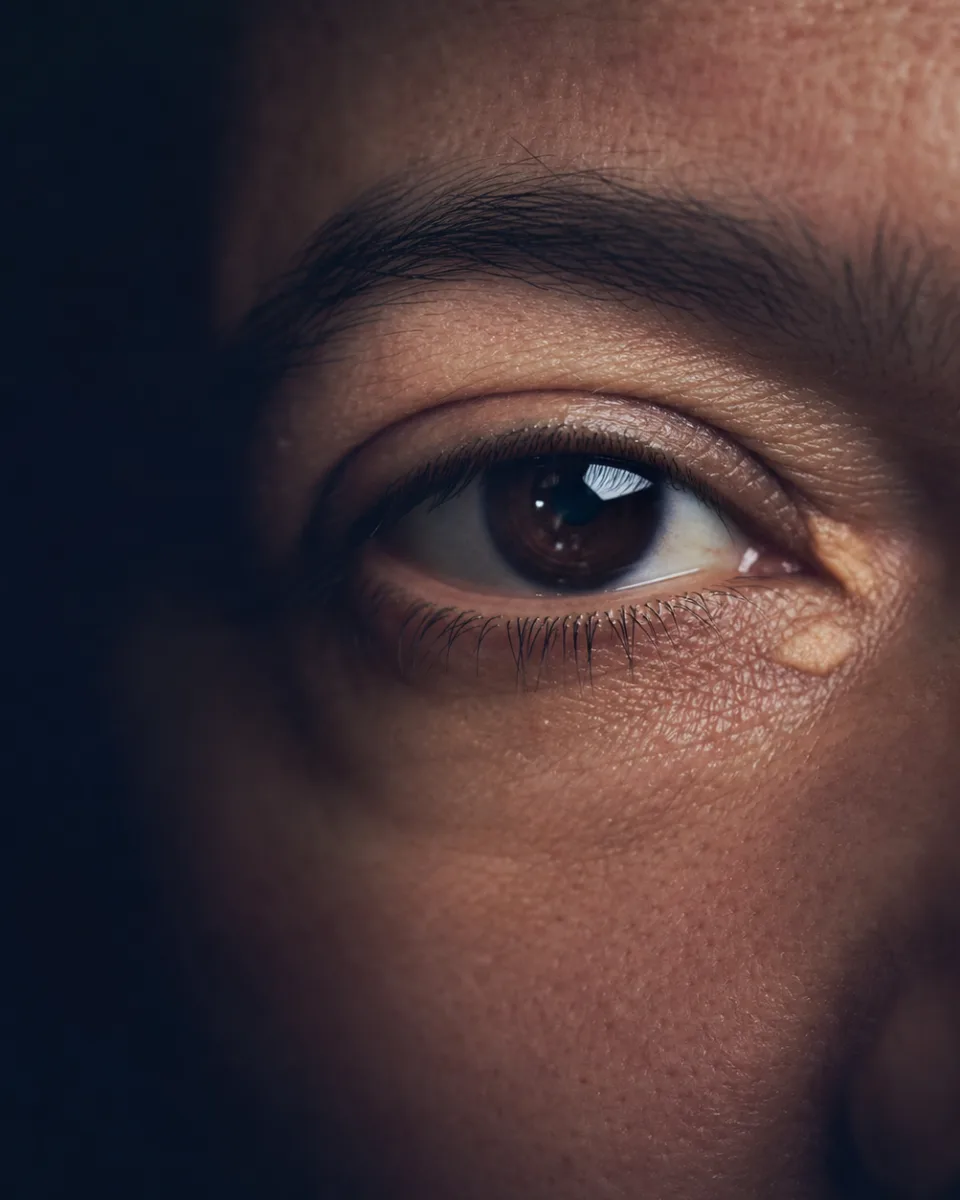
Xanthelasma usually appears as a soft yellow or yellow-orange plaque near the inner eyelid. It contains lipid-laden cells within the skin.

- Surface view
A flat or slightly raised yellow plaque near the medial eyelid.
- Skin-layer view
A simplified collection of lipid-laden cells in the upper dermis.
What causes xanthelasma?
Xanthelasma forms when lipid-laden macrophages accumulate in the eyelid skin. It is associated with (but not synonymous with) raised blood cholesterol: roughly half of people with xanthelasma have an underlying lipid abnormality, and roughly half have entirely normal blood lipids (so-called normolipidaemic xanthelasma). It does not become malignant.
Is xanthelasma dangerous? The cholesterol and heart-health question, honestly
This is the part worth reading properly, because the evidence here is genuinely divided, not a settled fact either way.
The case that xanthelasma predicts cardiovascular risk: the Copenhagen City Heart Study, a large Danish cohort of 12,745 people followed for up to 33 years (Christoffersen et al., BMJ, 2011), found that people with xanthelasma had a significantly higher adjusted risk of myocardial infarction (hazard ratio 1.48), ischaemic heart disease (1.39), severe atherosclerosis (1.69) and death from any cause (1.14), and, notably, this held true “independently of well known cardiovascular risk factors, including plasma cholesterol and triglyceride concentrations.” A 2020 meta-analysis of 15 case-control studies (854 patients; Chang, Sung & Lin, JAAD) similarly found xanthelasma patients had significantly higher total cholesterol, LDL and carotid artery thickening than people without it.
The case against: the most recent and largest case-control study on this question (Lustig-Barzelay et al., Ophthalmology, 2025: 203 xanthelasma patients matched against 2,030 controls from a database of over 35,000 people) found the opposite: “the prevalence of dyslipidemia diagnosis was similar between the two groups,” concluding xanthelasma “was not associated with increased rates of dyslipidemia or CVD.”
What this means honestly: it is fair to say xanthelasma is associated with lipid abnormalities and cardiovascular risk in some (but not all) studies, that roughly half of people with it have entirely normal cholesterol, and that a lipid profile check is a reasonable, low-cost step to take when xanthelasma appears: particularly if you’re younger or have a family history of early heart disease. It would not be honest to present xanthelasma as a reliable, settled cardiovascular warning sign: the largest recent study found no association at all. Treat it as a prompt to ask your GP for a cholesterol check, not as a diagnosis in itself.
Xanthelasma is diagnosed by appearance and doesn’t usually need a biopsy: see a doctor if a lesion looks atypical, or if you’re not sure what it is, so it can be properly distinguished from other eyelid lesions.
Can you get xanthelasma removed on the NHS?
Not for cosmetic reasons. The NHS Scotland dermatology referral pathway for benign lesions states, for xanthelasma specifically: “Exceptionally consider referral” and “Reassure patient, no treatment required”: referral into secondary care is the exception, not the norm. The same pathway sets out the general NHS principle: “If benign skin lesion is diagnosed, it will not be removed in secondary care for cosmetic reasons alone.”
There is no dedicated NHS.uk consumer page on xanthelasma, and no NICE Clinical Knowledge Summary either: the NHS Scotland clinical pathway is the strongest UK NHS source available on this. What the NHS will do, and what matters more than removal, is a cholesterol check via your GP if xanthelasma prompts one.
There is no single fixed price. Rejuvena’s xanthelasma removal page states: “pricing is confirmed at your consultation with Dr Nick: no guesswork and no surprises,” because the size, number and depth of the plaques, and how many sessions are needed, all vary. It also notes plainly that “the NHS generally classes xanthelasma removal as cosmetic and does not routinely fund it.”
For context, the clinic’s general laser skin lesion removal page states pricing “From £150, priced by lesion size and number, with a cosmetic skin lesion assessment at £50”: a starting reference point for the wider service, not a xanthelasma-specific quote.
How xanthelasma removal works at Rejuvena
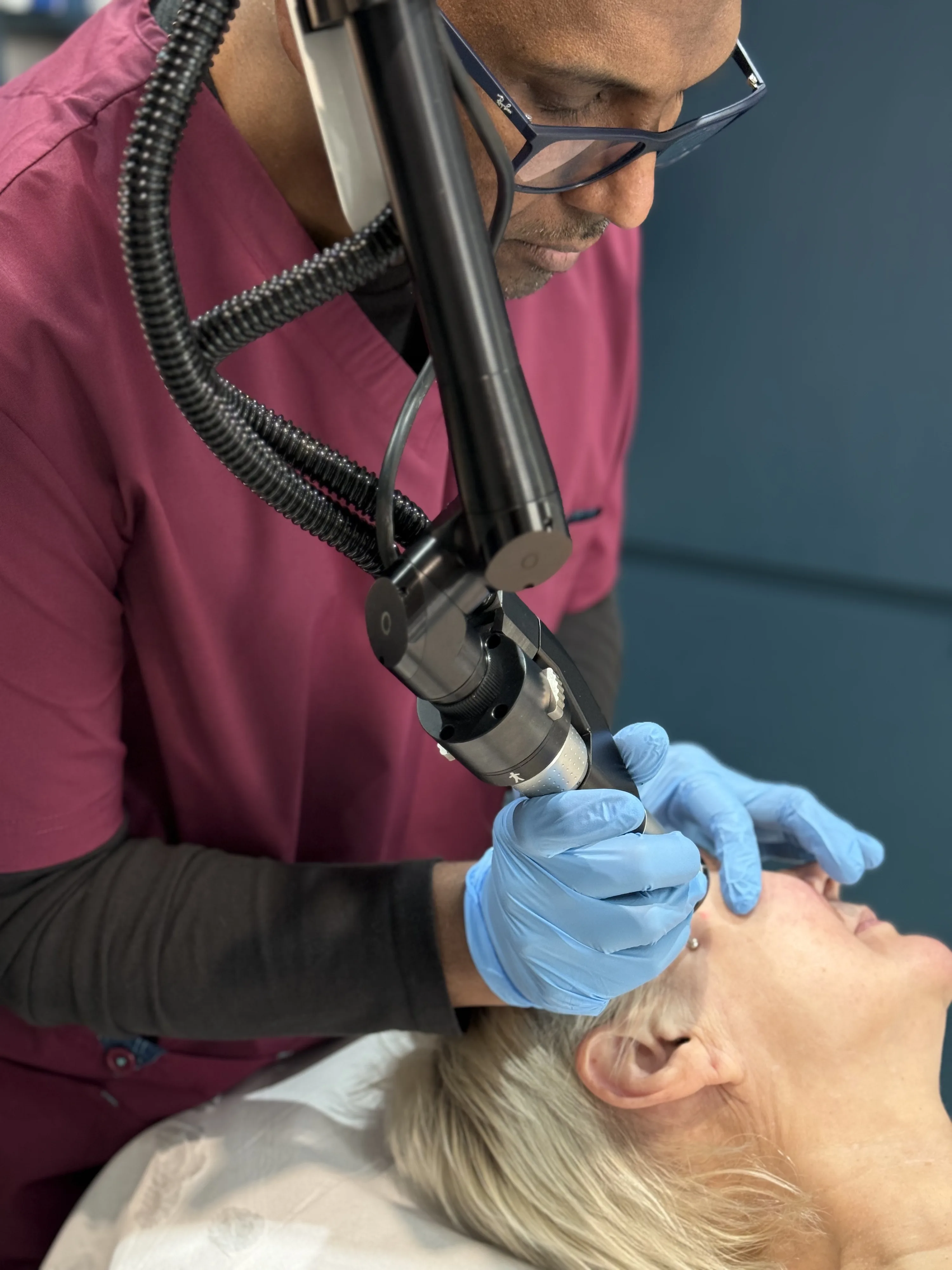
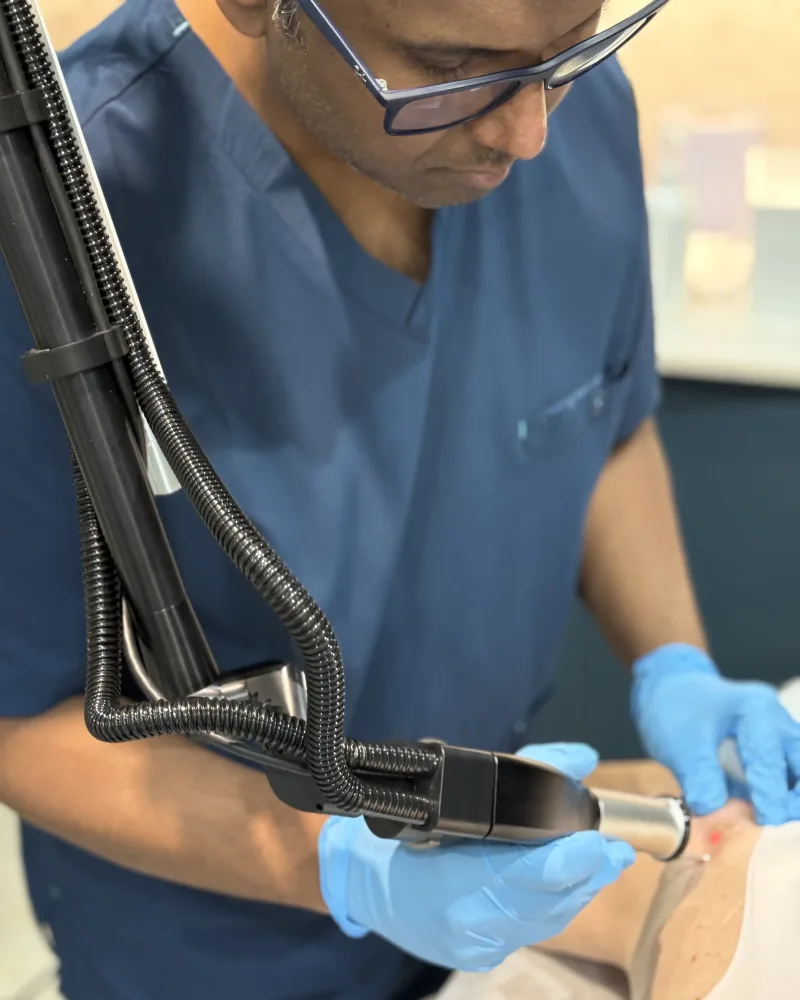
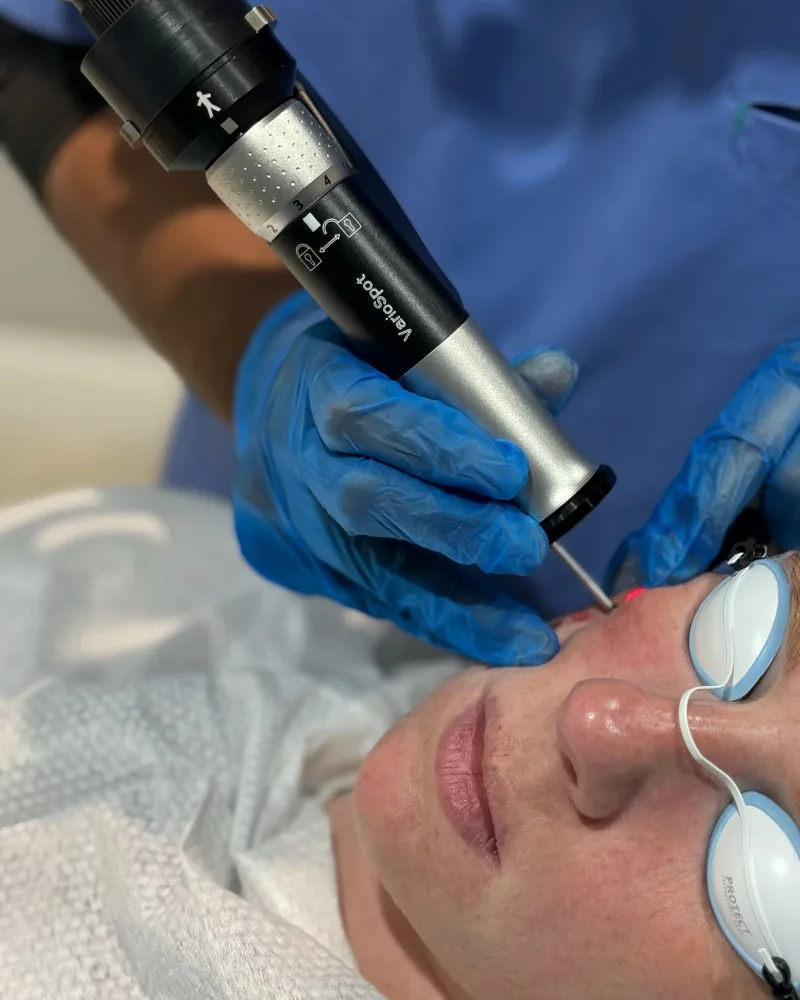
Every eyelid lesion is assessed by Dr Nick first, and he will advise on a cholesterol (lipid) check via your GP where appropriate, treating the deposits and the possible underlying cause alongside each other, not instead of one another. Smaller, superficial plaques are treated with the Dermablate Cool Laser™ (Er:YAG, 2940nm), which ablates the plaque in fine, controlled layers; larger or deeper plaques may be better suited to surgical referral. Recurrence is possible with any method, especially if lipid levels stay uncontrolled.
Why choose Rejuvena for xanthelasma assessment in Bedford?
Whole-picture assessment
Dr Nick looks at the deposit and advises on a GP lipid check where appropriate, not just the cosmetic result.
Diploma in Dermatology
Assessed by Dr Nick, a GMC-registered doctor, not a beauty therapist or nurse.
Precise near the eye
The Cool Laser™ Er:YAG ablates plaques in fine, controlled layers, close to delicate eyelid skin.
Local & welcoming
Based at 52 Thor Drive, Bedford, we care for patients from Kempston, Biddenham, Bromham and across Bedfordshire.
Verified Google reviews
What our patients say
5.0from 161 Google reviews
I recently had a lesion removed from my cheek. The pigmented lesion had bothered me for years. I’m glad I finally decided to do something about it. I was quite nervous on the day, but Dr. Nick and Lana were so careful and reassuring — they really put me at ease. The procedure was quick and comfortable, and I feel so much better for having it done. I did a lot of research before I chose this clinic for my treatment. The clinic’s medical dermatology focus made me feel confident I would be in the right hands. I’m really grateful for the care I received and I would definitely recommend this clinic.
Rejuvena repliedThank you so much for your skin review Dupinder 🙏
Read this review on Google (opens in a new tab)I had lots of skin lesions on both hands and Dr Nick and Lana have been great treating me.I will definitely be returning for any future treatments and highly recommend seeing Dr Nick.Great service and facilities thanks again.
Rejuvena repliedAww! Thank you Gavin for your kind review. It was a great pleasure having you in our clinic and we look forward to seeing you in the future too. 😊🙏
Read this review on Google (opens in a new tab)Very good and reassuring place to book your next or target any problem. This is where you want to be.
Rejuvena repliedAww! Thank you Peter. That means a lot to us 😊🙏
Read this review on Google (opens in a new tab)Lana is a complete professional and wonderful at what she does! I always feel in safe hands knowing her attention to detail is spot on and she genuinely cares about doing a great job for her clients.
Rejuvena repliedThank you very much Daisy for your kind words. ☺️🙏
Read this review on Google (opens in a new tab)I met with DR Nick and Lana for a consultation last week. I was blown away by their professionalism and expertise. They were extremely attentive , I felt completely relaxed and assured I had chosen the right clinic for treatments. Dr Nick and Lana have since put together 2 treatment plans. I am so impressed and highly recommend . I'm looking forward to starting treatments.
Rejuvena repliedAww! Thank you Louise for your kind review. We are very happy to hear you liked our services ☺️🙏
Read this review on Google (opens in a new tab)Started my laser journey a couple months ago, with Lana and yesterday I had car issues which led to me missing my appointment slot. I thought I had contacted Lana to inform her and realised I didn’t, when she messaged me. She still made time for me and managed to fit in my session! She was incredibly understanding and made me feel much better about the situation. The treatment has been going so well, and the service is incredible!! On top of that, the price for my sessions are honestly so low compared to other places and you really do get a 10/10 experience!! Thanks so much Lana! Will definitely be considering the other treatments you guys offer 🫶🏼
Rejuvena repliedAww! Thank you for your kind words Shazmin. x
Read this review on Google (opens in a new tab)Every review above is published on Google. Tap any card to read it there.
Xanthelasma FAQs in Bedford
How much does it cost to remove xanthelasma in the UK?
Will the NHS remove xanthelasma?
Will xanthelasma go away if I lower my cholesterol?
Does xanthelasma mean I have high cholesterol?
Book your xanthelasma assessment in Bedford
Speak with Dr Nick’s team at Rejuvena Bedford for a doctor-led xanthelasma assessment. Book online or call us.