Surgical Scars: Two Red Flags, Twelve Months Apart
Why wound edges separating in the first week after surgery is a medical emergency, why most people asking about scar revision are asking too early, and what genuine improvement looks like in Bedford once your scar has actually matured.
Most surgical scars settle quietly over the roughly two years it takes them to mature: no clinic input needed. The two moments that actually matter sit at opposite ends of that timeline: wound edges separating in the first week is a surgical emergency, and asking about revision before 12–18 months usually means asking too early.
What is a surgical scar, and what counts as normal?
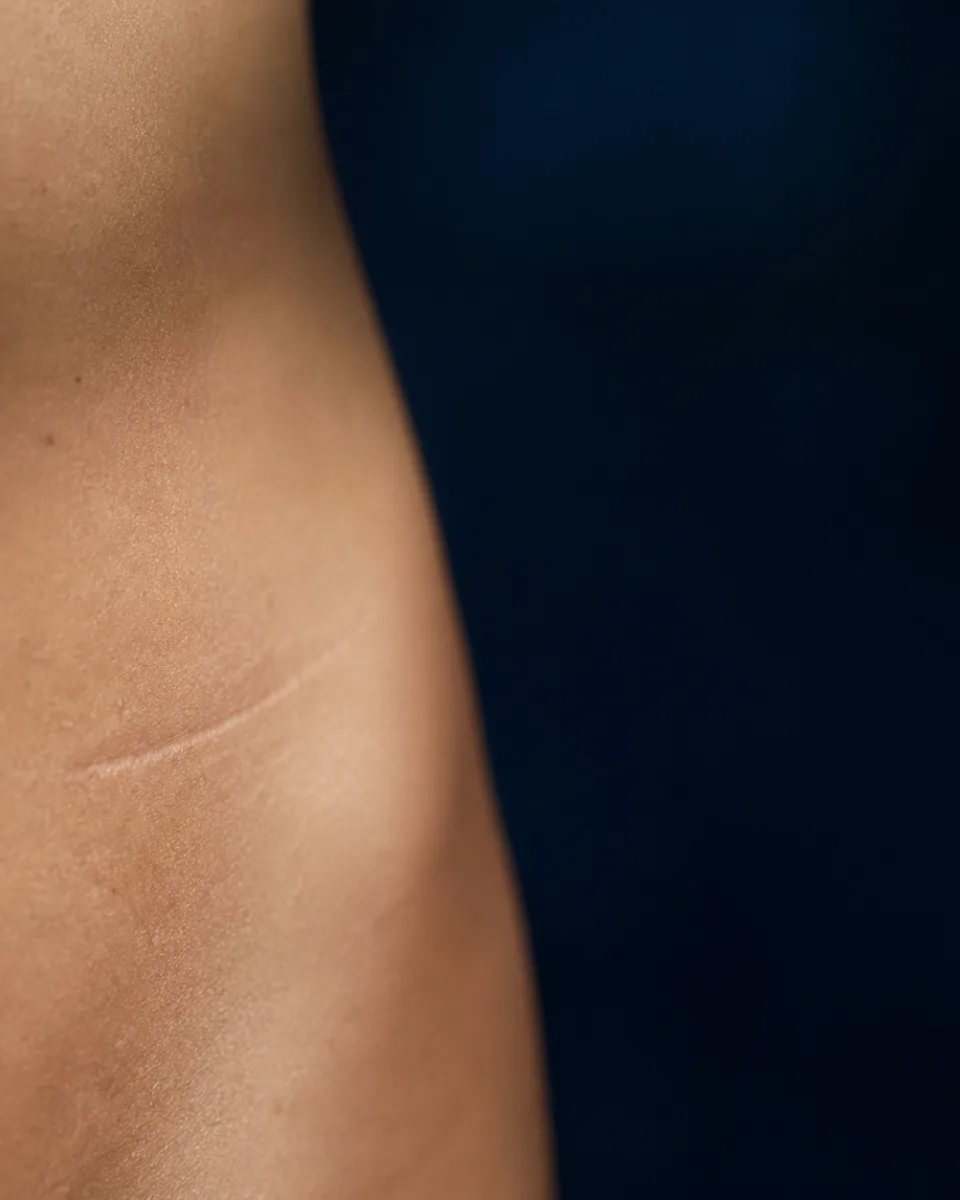
A surgical scar is the visible result of a wound closing after an operation. NHS.uk describes the general fact plainly: “you cannot get rid of a scar, but most scars fade over time without any treatment.” A more detailed NHS Trust patient guide, from the Royal National Orthopaedic Hospital, sets out the realistic timeline: “a scar can take around two years to mature fully, gradually flattening and becoming less red.”
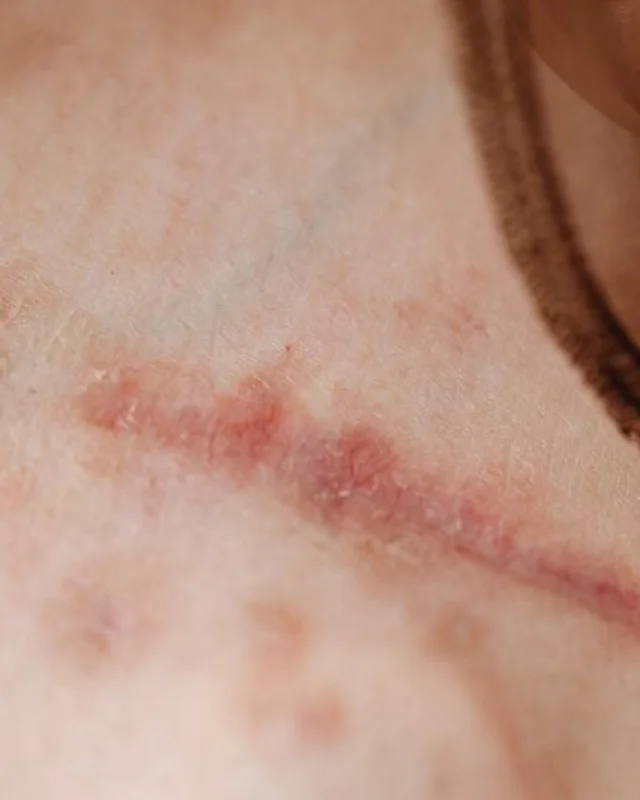
What counts as normal during that window is broader than most people expect. In the early stages a scar “can remain red, be raised and widen” before it settles, and it can also feel “dry, itchy, and feel numb or sensitive to touch.” None of that means something has gone wrong. It is what an ordinary, well-healing surgical scar looks and feels like on its way to maturing: the distinction that matters is about trajectory and degree, not the presence of these features at all.
How a surgical wound actually heals
Wound healing happens in overlapping phases. An inflammatory phase lasts several days. A proliferative phase (new tissue, blood vessels and re-surfacing) can last several weeks. Then a maturation, or remodelling, phase starts around week three and continues for up to 12 months, sometimes longer, as the collagen laid down early on is gradually replaced and reorganised. Strength returns slowly too: an incision reaches its maximum tensile strength at around 11 to 14 weeks, but even a fully matured scar never regains more than around 80% of the original skin’s strength.
Certain factors are well-evidenced to slow this process and increase the risk of a poorly-healing scar: smoking (nicotine constricts blood flow to the healing tissue), diabetes, regular NSAID use, poor nutritional status, and prior radiotherapy to the area. None of these mean a scar can’t heal well; they simply mean healing may take longer and deserves a closer look if it stalls.
Where a surgical wound heals into a raised, overgrown scar rather than a flat one, that is hypertrophic or keloid scarring: the same biology covered in full on our keloid scars page, including why excision alone so often fails. A surgical wound is one of the commonest triggers of both, so that page’s evidence applies directly if your scar has become raised and thickened rather than settling flat.
The two red flags and why they’re nothing alike
Early: wound dehiscence is a surgical emergency, not “a scar looking bad.” Dehiscence is defined clinically as a partial or total separation of previously closed wound edges, and it typically happens 5 to 8 days after surgery, while healing is still in its earliest stage. The warning sign is increased bleeding or drainage from the wound as the edges begin to part.
Superficial separation can sometimes be managed conservatively, but deep separation down to the muscle layer is a surgical emergency requiring immediate operating-room closure, and if any tissue is visibly protruding through the wound, it needs covering with a sterile saline dressing and emergency care straight away. This is not a scale question. In the population studied, dehiscence carried a mortality rate of 16%. If your wound is coming apart within the first couple of weeks after surgery, that is a same-day medical emergency, categorically different from a scar simply looking imperfect months later.
The NHS’s own general advice reflects the same urgency threshold: seek same-day attention if a scar is swollen or painful, feels warm to the touch, or has pus coming from it: signs of a step-change or infection, not the ordinary discomfort of early healing.
Late: most people asking about scar revision are asking too early. Scars take roughly 12 to 18 months to mature, and operating on an immature scar produces poor results; this is stated plainly in the clinical literature on scar revision. A scar under six weeks old should be managed with supportive measures like silicone or steroid injections if it’s misbehaving, not surgical revision.
And even once a scar has matured, revision is best justified by a real technical or functional reason (poor initial technique, restricted movement, or landmarks that don’t line up) rather than appearance alone. Waiting the full 12–18 months before considering revision isn’t overcaution. It’s what gives a genuinely accurate picture of how the scar is actually going to settle, and it saves most people from paying for, and being disappointed by, a revision they didn’t yet need.
Does the NHS treat surgical scars?
Generally, no. The NHS’s position on scars is that “most scars fade over time without any treatment,” and there is no NHS pathway dedicated to improving the appearance of an ordinary, well-healed surgical scar.
There is a real exception, and it’s worth knowing about rather than assuming it doesn’t apply. NHS commissioning guidance states plainly that “surgical revision of scars and keloids which are expected only to improve appearance, with no impact on function, will not be funded”: the standard route requires at least 18 months since surgery, a scar of a certain severity, and a genuine functional problem.
But the same policy carves out an explicit exemption: “scars interfering with function following burns/trauma, serious scarring of the face and severe post-surgical scarring are exempt from this policy.” So a straightforward, settled surgical scar you’d simply prefer to look better sits outside NHS funding, but severe post-surgical scarring, or a scar genuinely restricting function, has a real NHS referral route worth raising with your GP.
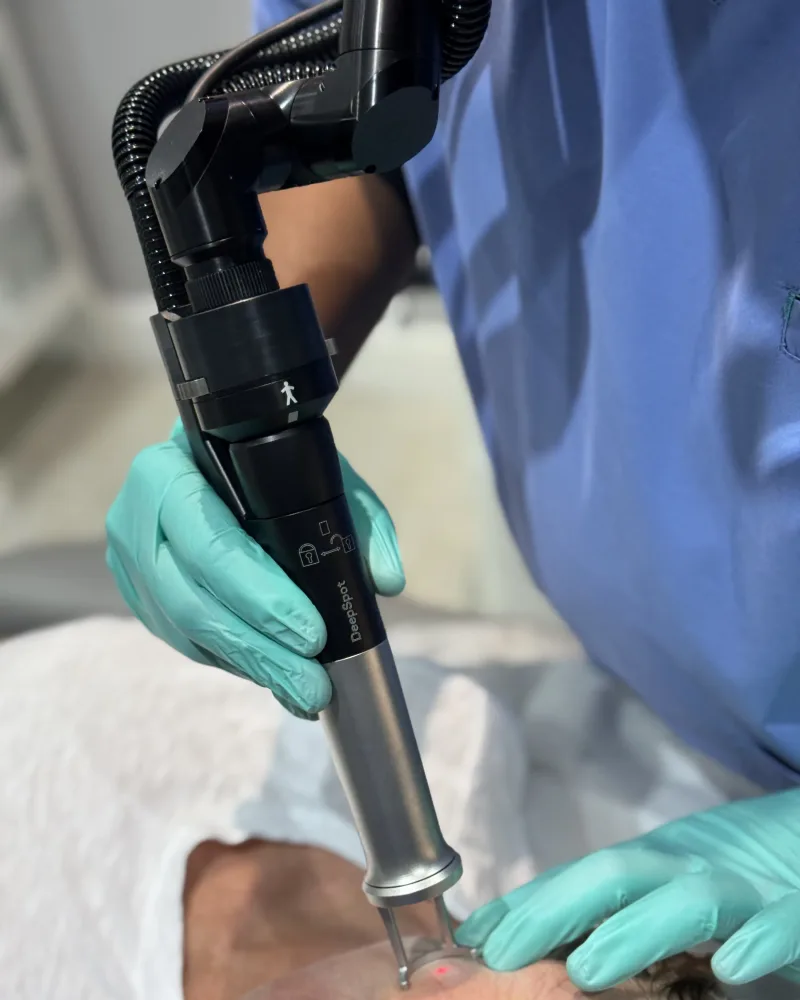
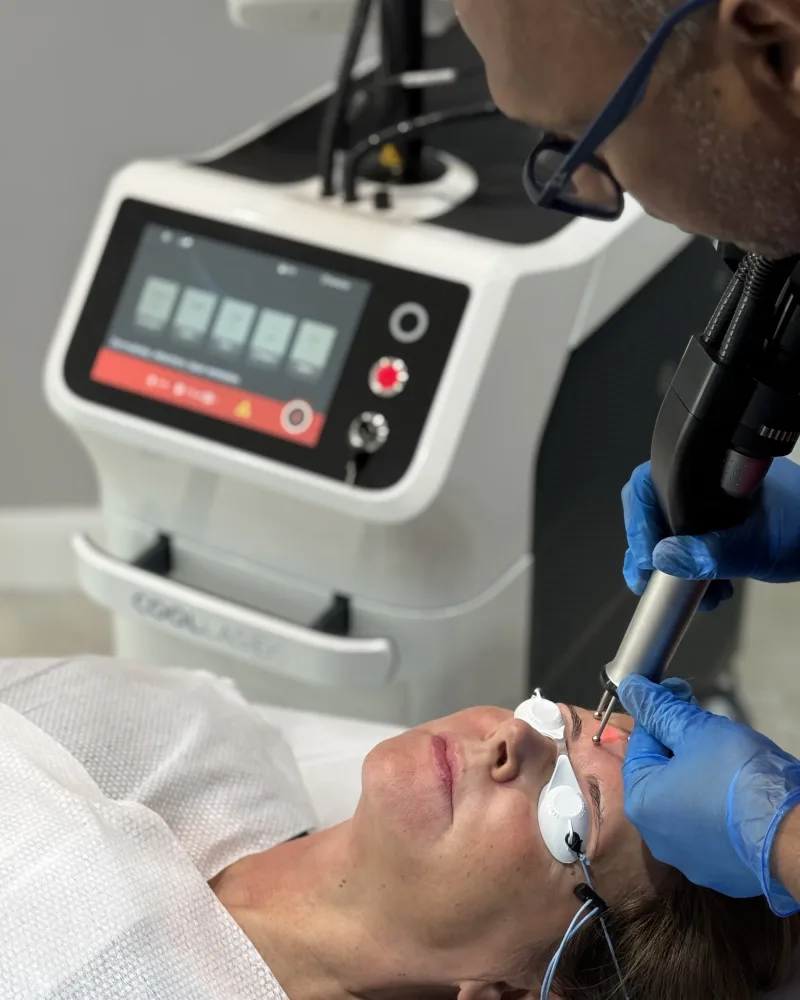
Once a scar has genuinely matured (usually 12 to 18 months on) cosmetic refinement uses laser resurfacing or microneedling, planned around the scar’s age, size and location. Cool Laser scar revision starts from £150 a session; SkinPen microneedling starts from £250. The right approach and number of sessions are confirmed at your consultation.
If your scar is under 12 months old, the honest advice at your consultation may simply be to wait; we will not book a revision plan before that makes clinical sense.
How surgical scars are assessed at Rejuvena
Every surgical scar is asked about first: how old it is, how it’s changed, and whether anything about it needs urgent attention rather than cosmetic planning. Scars that have genuinely matured can then be refined with laser resurfacing and microneedling to soften texture and even out colour.
Why choose Rejuvena for surgical scar assessment in Bedford?
Honest about timing
We tell you when a scar simply needs more time, not a treatment plan booked too soon.
Diploma in Dermatology
Assessed by Dr Nick, a GMC-registered doctor, not a beauty therapist or nurse.
Referred, not guessed at
Anything suggesting dehiscence or infection is referred for urgent medical care, not treated cosmetically.
Local & welcoming
Based at 52 Thor Drive, Bedford, we care for patients from Kempston, Biddenham, Bromham and across Bedfordshire.
Verified Google reviews
What our patients say
5.0from 161 Google reviews
As a battle-scarred rugby veteran, I may be considered an unlikely candidate for aesthetic skin treatment. However after many years of suffering venous leg ulceration, treated at considerable time and cost to the NHS, a trusted health professional suggested I try laser treatment to supplement my body's own healing process. Soon after starting treatment at Rejuvena Clinic Bedford, I found remarkably rapid healing of stubborn chronic ulcers and have a very positive view of success over the course of my treatment. Thanks to you, Dr. Nick!
Rejuvena repliedThank you very much for taking the time to leave such a thoughtful review. I’m delighted to hear how much progress you’ve made, particularly after such a long and difficult journey
Read this review on Google (opens in a new tab)Love Dr. Nick & Lana, they’re such a wonderful team. I had Morpheus 8 & a gentle peel to help with my scars at the clinic and I’m really happy with the results !
Rejuvena repliedThank you very much for your kind words Guina. ☺️🙏
Read this review on Google (opens in a new tab)I went to see Rejuvena clinic few months ago after reading their reviews online. I was suffering with acne scars since many years and have tried few treatments from elsewhere. I had a consultation with Dr Nick who was very thorough during the consultation and he suggested me few different treatment options. At any time I never felt rushed or pushed to purchase treatments. 6 months fast forward I had laser skin resurfacing, injections and skin care and my skin has never been better. I am very thankful to the Rejuvena clinic to sort out my skin issue once and for all. Thank you very much
Rejuvena repliedThank you for your kind review Monish, glad your skin issue is sorted now 😊🙏
Read this review on Google (opens in a new tab)I finally found a clinic where I received the help I needed. I had been struggling for a very long time with acne and deep scarring on my face. After a few treatments, I can already see and feel a remarkable improvement. The couple who run the clinic are incredibly kind and welcoming — from my very first visit, I felt very comfortable opening up about my problem.
Rejuvena repliedThank you very much for your valuable review Judyta. We are very happy to have helped you with your skin condition and glad to hear you feel you were listened to and seen good impr
Read this review on Google (opens in a new tab)I have had the joy of being a client of Dr Nick and Lana’s for 2 years and have benefited enormously from their expertise, knowledge and love for skin care and treatments. Dr Nick is a consummate professional, ably assisted by Lana. Today I had the most innovative laser treatment available in the country. It took about 45 mins to treat my face. I was nervous but need not have been. The laser was not painful, and the soothing serum reduced the post treatment heat Also I had blemishes that were removed leaving my skin smooth. At the moment my face is red, like sunburn but I know by tomorrow that will fade. The aftercare has been thoroughly explained so I don’t have any concerns. I. now look forward to a more refreshed face without looking artificial. I love the fact that Dr Nick and Lana are always looking to offer the best treatments available. They love their craft and it shows in everything they do. Their approach to skincare is authentic and not motivated by financial reward. Rejuvenate Clinic is a real gem in Bedford and I have nothing but praise for Dr Nick and ‘Prof’ Lana. If you haven’t tried them, please do, you won’t be disappointed.
Rejuvena repliedThank you Gina for your kind words and feedback. “Prof Lana” 😂 and Dr Nick are always happy to see you at the Rejuvena Clinic. You bring us smiles and laughter with your presence
Read this review on Google (opens in a new tab)What a lovely Aesthetic Clinic I visited today and had some treatments at- both Nick and Lana are so welcoming and knowledgeable about all procedures. Definitely will be going back in the future.
Rejuvena repliedThank you very much Stephen. We are very glad to hear you liked our treatments ☺️🙏
Read this review on Google (opens in a new tab)Every review above is published on Google. Tap any card to read it there.
Surgical Scars FAQs in Bedford
What is wound dehiscence, and is it an emergency?
How long should I wait before revising a surgical scar?
Why does my healed incision still feel tight, itchy or numb months later?
Does the NHS treat surgical scars?
How much does surgical scar revision cost in Bedford?
What’s the difference between a scar maturing normally and one that isn’t?
Book your surgical scar assessment in Bedford
Speak with Dr Nick’s team at Rejuvena Bedford for an honest, doctor-led assessment of your scar, including whether it’s actually ready for revision yet.