Seborrhoeic Keratosis Removal in Bedford
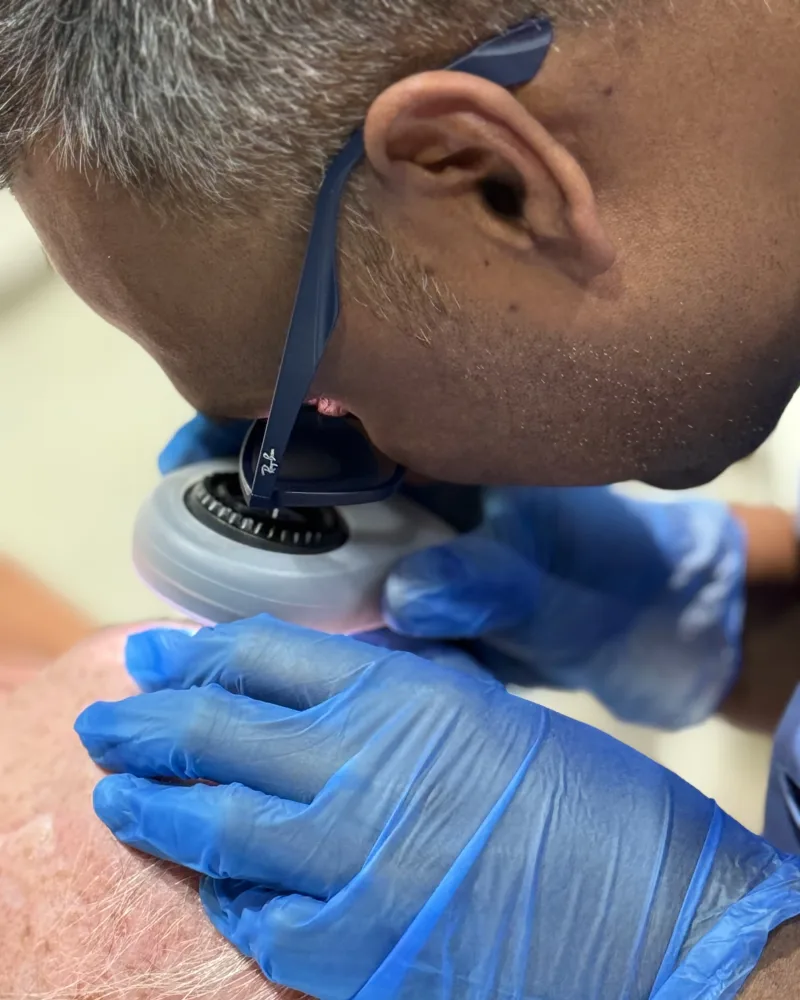
A harmless, “stuck-on” skin growth, not skin cancer and does not turn into skin cancer. Dr Nick examines every lesion, using dermoscopy where appropriate, to exclude a melanoma mimic before anything is removed by laser, cryotherapy or curettage.
A seborrhoeic keratosis is a harmless, “stuck-on” looking skin growth made from a build-up of ordinary skin cells; it is not skin cancer and does not turn into skin cancer. More than half of UK adults have one by 40. The one thing that matters is checking any lesion that is new, changing or unusually dark.
What is a seborrhoeic keratosis?
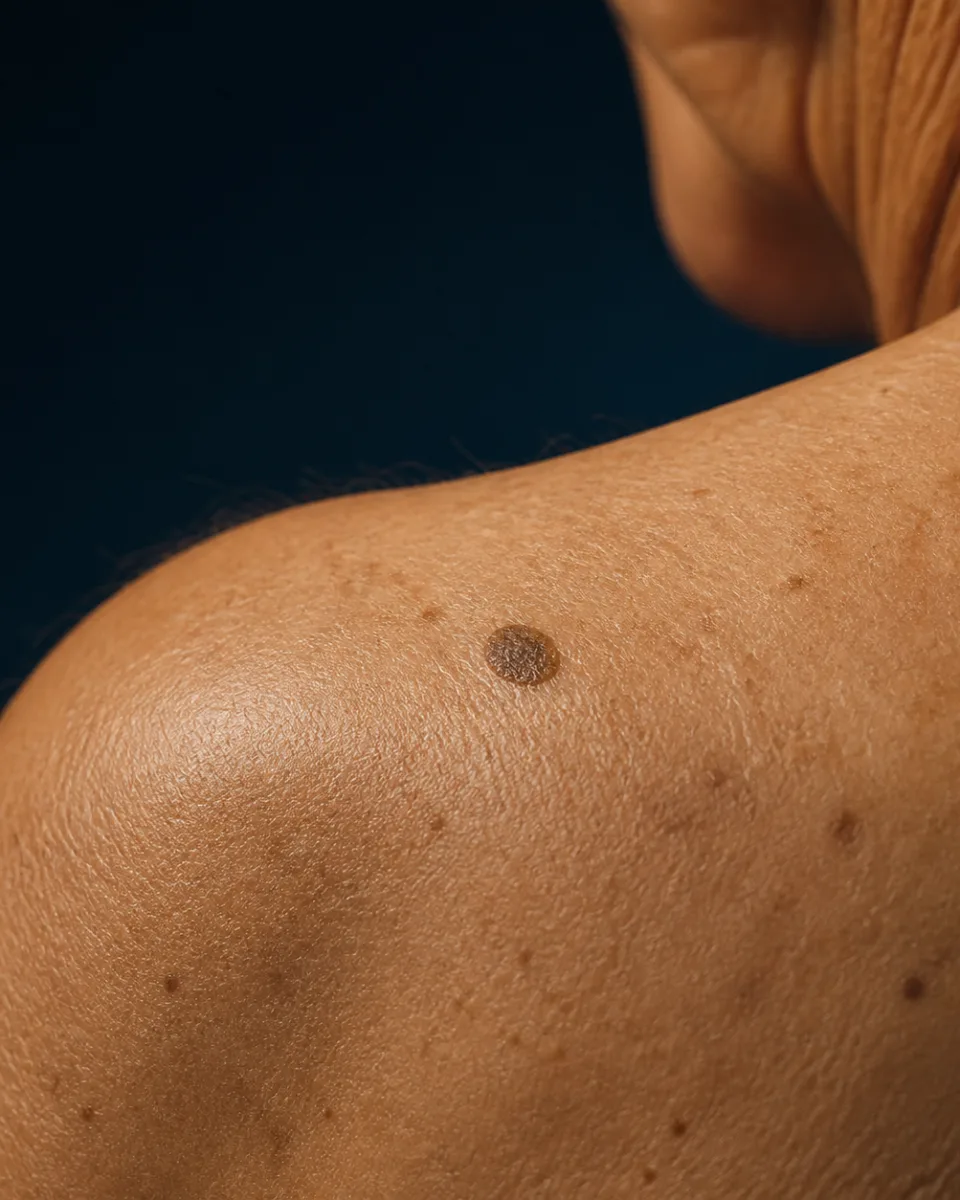
A seborrhoeic keratosis (also called a basal cell papilloma, seborrhoeic wart, “age wart” or “senile wart”) is a very common, benign skin growth formed by a build-up of ordinary surface skin cells. Despite the name, it has nothing to do with the sebaceous (oil) glands, and it is not a viral wart, so it is not contagious. They look waxy, warty or “stuck-on”, are usually well defined with a rough or velvety surface, and range in colour from pale tan and pink through to dark brown or black. Most appear on the trunk, but they are also common on the head and neck.
They are strongly age-related: 30% of the UK population has at least one by 40, rising to 75% by 70, and more than 90% of adults over 60 are affected, per DermNetNZ. Numbers per person vary widely, from one to hundreds, and once present they usually persist indefinitely, with new ones commonly appearing over the years. The exact cause is unknown: the British Association of Dermatologists (BAD) notes that sun exposure and human papillomavirus (HPV) have both been suggested as contributing factors, and there is a clear hereditary component. None of it is caused by poor hygiene.
Why it can look “stuck on”
A seborrhoeic keratosis is typically a well-defined, waxy or textured growth arising from the epidermis. Other lesions can resemble it, so assessment matters before removal.

- Surface view
A tan-to-brown waxy growth with a sharply defined edge.
- Skin-layer view
A simplified thickening that remains associated with the epidermis.
Is a seborrhoeic keratosis dangerous? When to get it checked
The core reassurance is well established. The BAD is unambiguous: seborrhoeic keratoses “are not infectious and do not become skin cancer.” DermNetNZ agrees: they “are not premalignant tumours.” A typical, stable, stuck-on growth that has looked the same for years does not need urgent attention.
But a changing or unusual-looking lesion is a different matter, and this is the real, evidence-based reason why. In the largest study of its kind, researchers reviewed 9,204 cases where the clinical diagnosis included seborrhoeic keratosis, and found that 61 of them, 0.66%, were actually melanoma (Izikson et al., Archives of Dermatology, 2002). The lesson is not that seborrhoeic keratoses are dangerous; it’s that a dark, irregular or changing growth can occasionally look like one when it is something else. That is exactly why the BAD advises that “either a general practitioner or specialist checks any pigmented lesions to ensure that the correct diagnosis is made.”
At Rejuvena, every lesion is examined by Dr Nick (using dermoscopy where appropriate) before anything is removed. Anything that looks atypical is not treated cosmetically; it is assessed and referred.
Changed noticeably
In size, shape or colour compared with how it’s always looked.
Dark or uneven
Very dark, unevenly coloured, or has an irregular edge.
Bleeding or crusting
Or growing noticeably quickly.
Doesn’t fit the pattern
Not the “stuck-on, unchanging for years” look you’d expect.
None of this means the growth is cancer. It means it should be looked at properly before it’s assumed to be a harmless keratosis: cosmetically or otherwise.
Can you get a seborrhoeic keratosis treated on the NHS?
Usually not, if the reason is purely cosmetic. The BAD’s own patient guidance states plainly: “Most need no treatment as they are harmless and cause no symptoms; however, for those who wish to have some of their keratoses removed it may be possible to have them treated by a general practitioner in primary care.” It also states that “SK are not routinely removed in hospitals” and that such treatment “may not be funded by the local NHS service.”
So the honest summary: if a lesion is medically concerning (changing, bleeding, or possibly something else) start with your GP; that route is free and appropriate. If it has been assessed as a harmless seborrhoeic keratosis and you would simply prefer it gone, that is a private, cosmetic treatment.
Every removal starts with a cosmetic skin lesion assessment with Dr Nick: £50, where the diagnosis is confirmed under magnification before anything is decided. Treatment itself starts from £150, priced by the size and number of lesions treated. You’ll receive a clear, itemised quote before anything goes ahead, with no obligation to proceed.
How we remove seborrhoeic keratosis at Rejuvena
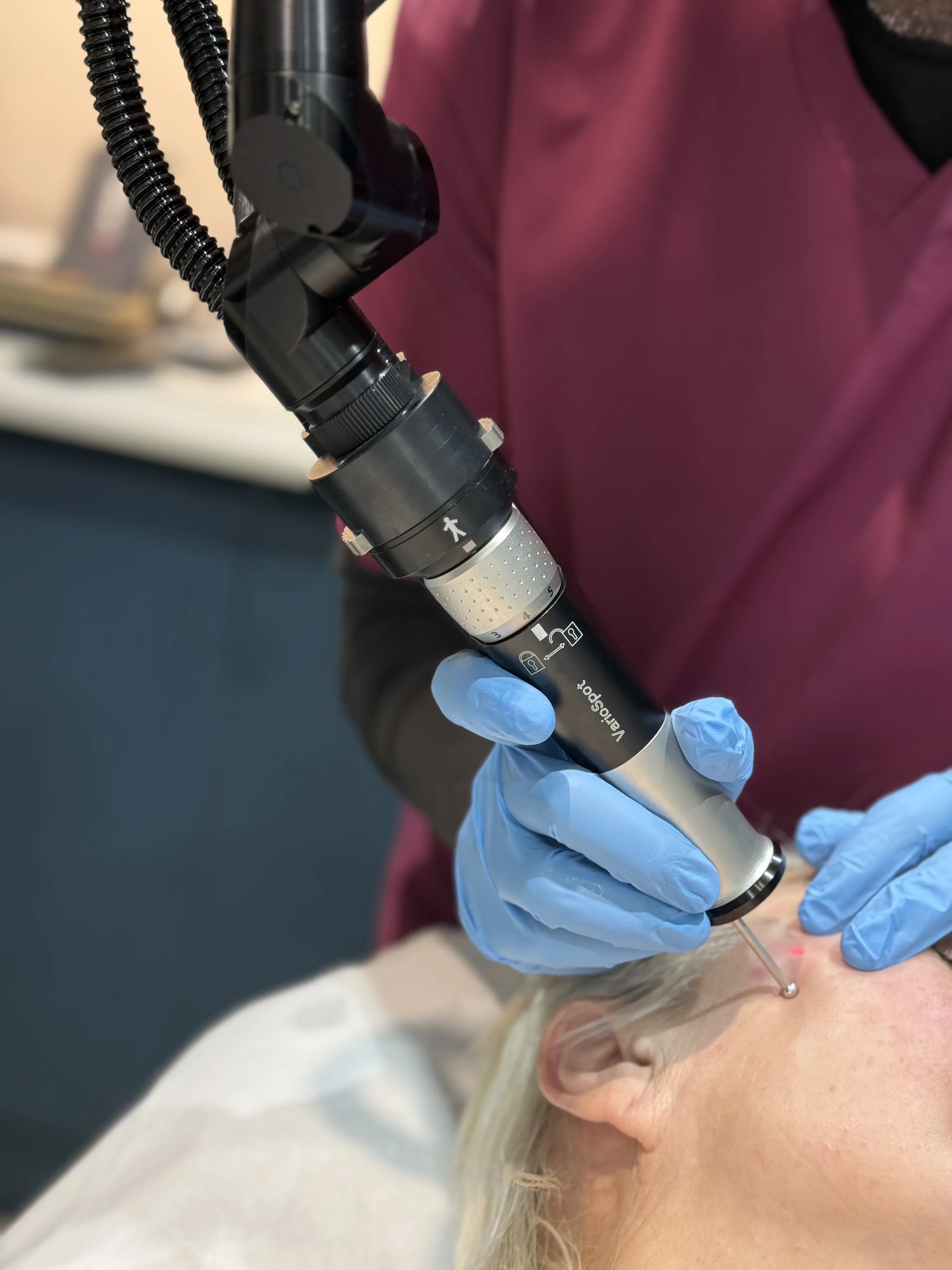
After assessment, suitable, clearly benign keratoses are removed with the Er:YAG Cool Laser™ (well suited to discrete, raised lesions in a single session) or with cryotherapy (controlled liquid-nitrogen freezing), which suits thinner, flatter lesions. Curettage is a further option for some lesions. Which method (or combination) is right for you is decided at your assessment, never assumed in advance. Anything that looks suspicious is not treated cosmetically; it is referred for proper diagnostic assessment.
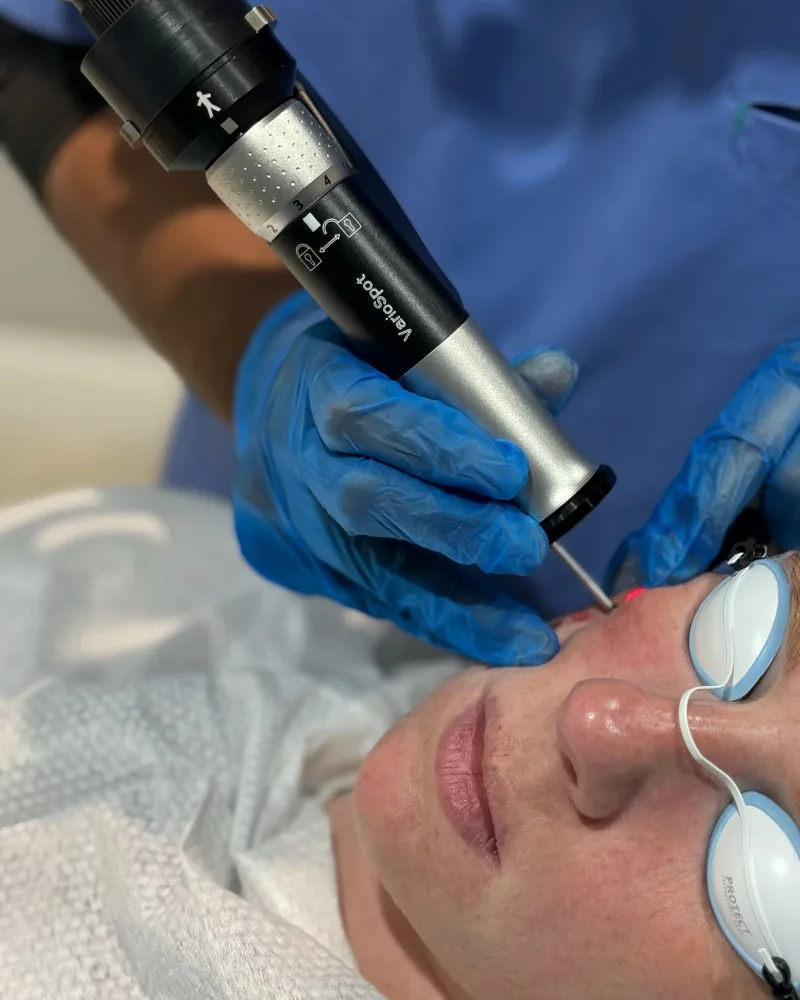
Laser Skin Lesion Removal
Precise, low-bleeding Er:YAG removal: the core route for raised keratoses. Full procedure detail and healing timeline.
Learn more →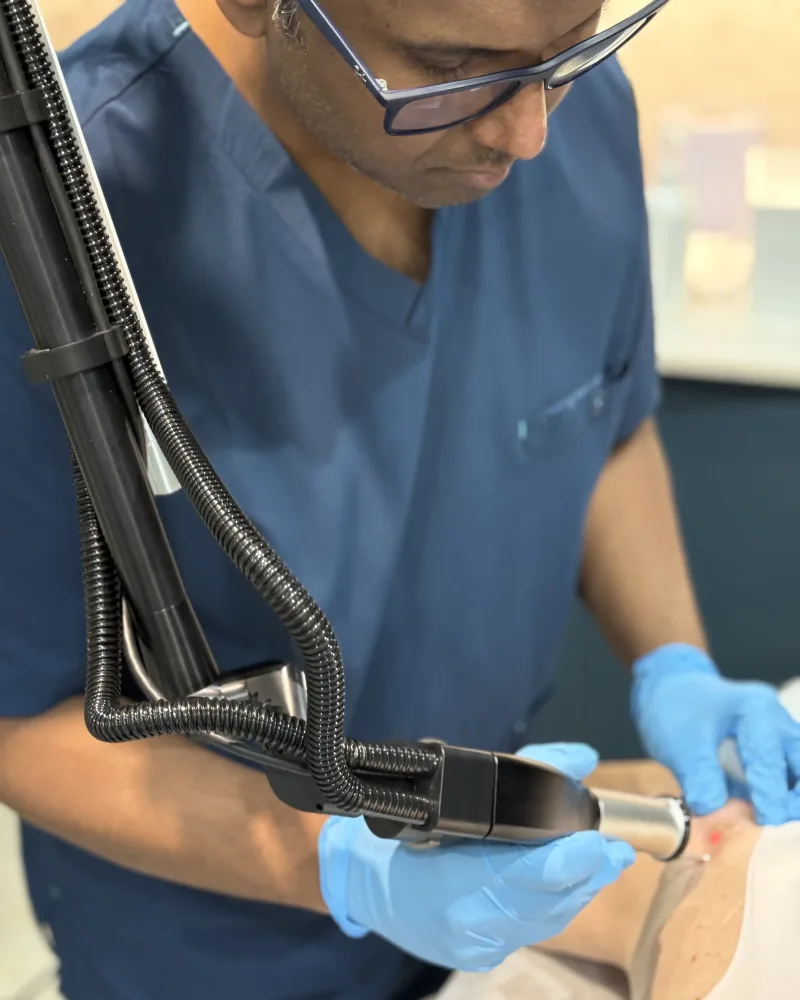
Cryotherapy
Controlled liquid-nitrogen freezing for thinner and flatter keratoses. Full procedure detail and healing timeline.
Learn more →Not sure what your growth is? See mole removal in Bedford, and note that a seborrhoeic keratosis is benign: quite different from the pre-cancerous actinic keratosis. Or view all dermatology in Bedford →
Why choose Rejuvena for seborrhoeic keratosis removal in Bedford?
Doctor-led, not guesswork
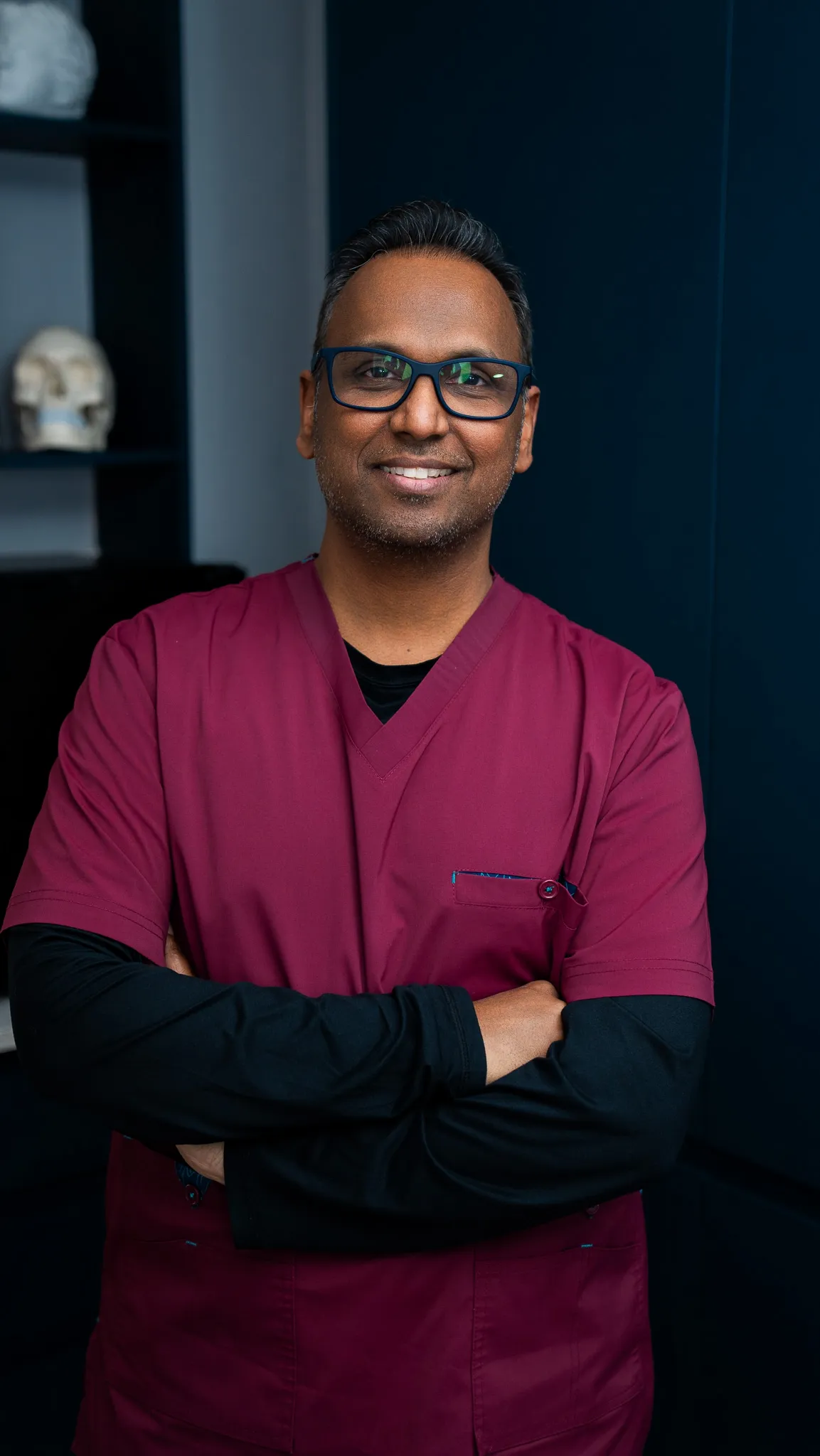
Every growth is examined by Dr Nick (MBBS, MRCGP, Dip Dermatology, GMC 6072251) before any decision to treat.
Melanoma mimic safeguard
Dark, irregular lesions can resemble melanoma. We assess with dermoscopy and refer appropriately; we never remove a suspicious lesion cosmetically.
The right method per lesion
Laser, cryotherapy or curettage: matched to each growth’s size, type and site rather than a one-size-fits-all approach.
Local & welcoming
Based at 52 Thor Drive, Bedford, we care for patients from Kempston, Biddenham, Bromham, Clapham, Wootton, Great Denham, Milton Keynes and across Bedfordshire.
Verified Google reviews
What our patients say
5.0from 161 Google reviews
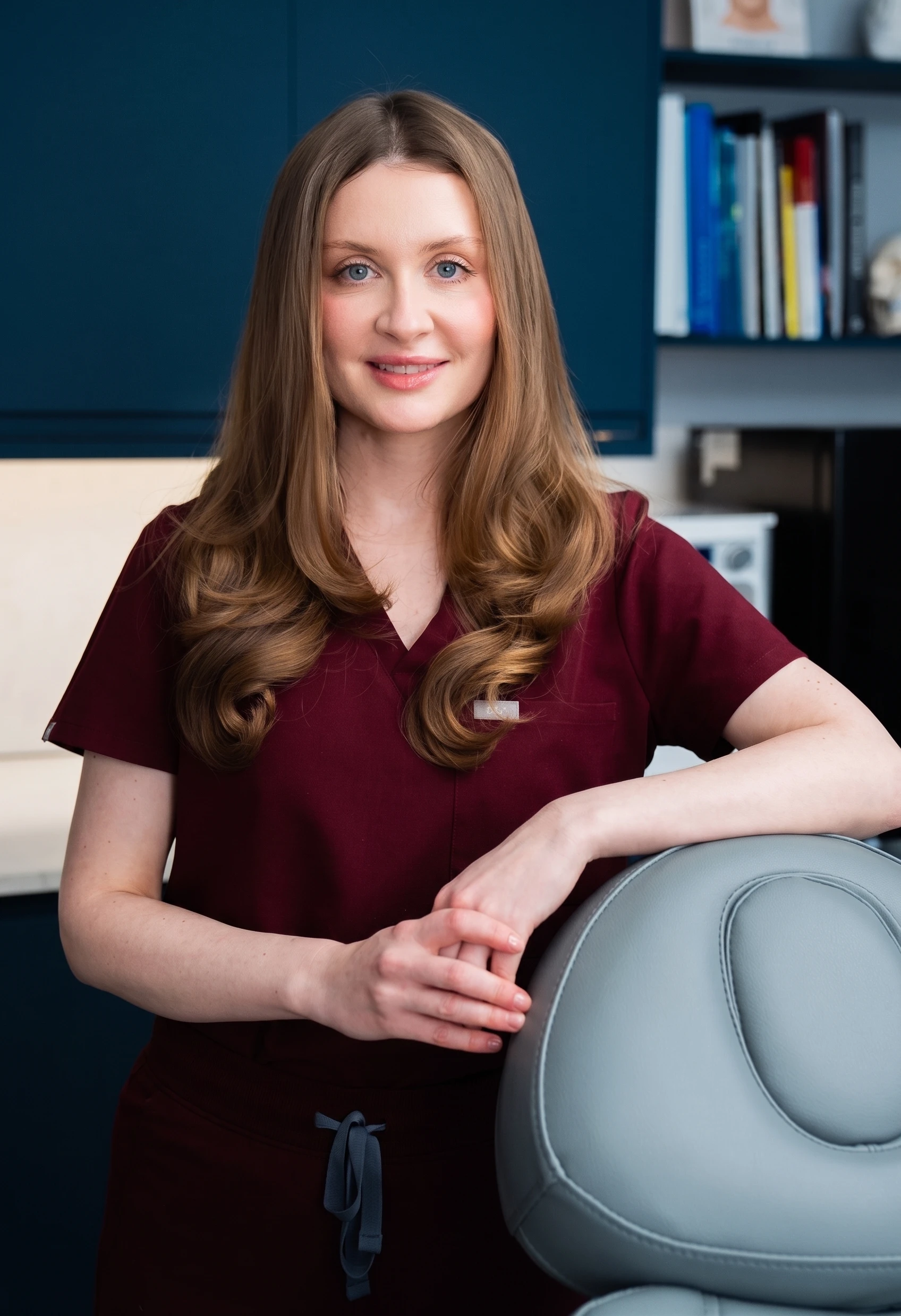
I recently had a lesion removed from my cheek. The pigmented lesion had bothered me for years. I’m glad I finally decided to do something about it. I was quite nervous on the day, but Dr. Nick and Lana were so careful and reassuring — they really put me at ease. The procedure was quick and comfortable, and I feel so much better for having it done. I did a lot of research before I chose this clinic for my treatment. The clinic’s medical dermatology focus made me feel confident I would be in the right hands. I’m really grateful for the care I received and I would definitely recommend this clinic.
Rejuvena repliedThank you so much for your skin review Dupinder 🙏
Read this review on Google (opens in a new tab)I had lots of skin lesions on both hands and Dr Nick and Lana have been great treating me.I will definitely be returning for any future treatments and highly recommend seeing Dr Nick.Great service and facilities thanks again.
Rejuvena repliedAww! Thank you Gavin for your kind review. It was a great pleasure having you in our clinic and we look forward to seeing you in the future too. 😊🙏
Read this review on Google (opens in a new tab)Dr Nick and Lana made me feel welcomed and comfortable in their care. I would highly recommend for their wealth of knowledge, kindness, skill and gentle hands.
Rejuvena repliedThank you Silvana for your kind review, glad to hear, you felt well taken care of. ☺️🙏🤗
Read this review on Google (opens in a new tab)I’ve been seeing Dr Nick and Lana for almost a year now. They have provided me with such a comforting experience and given exceptional results. Their Salon isn’t local for me, but I chose to keep seeing Dr Nick because of his professionalism and extra care he takes to my individual needs. I’m always provided with a detailed, realistic outcome before and after any treatment, by being explained any possible risks or benefits, which helped me a lot in making decisions. Seeing Dr Nick has helped changed my skin and I’m grateful for how attentive and skilled he was during my treatment. After any treatment i’ve always been followed up with the recovery, aftercare advice or any worries I had, which helped me feel at ease. I was understandably nervous for my treatment before seeing Dr Nick and Lana, but it was a great joy seeing them as they are always the most genuine and welcoming towards me, anytime I visit I feel very safe in the hands of Dr Nick.
Rejuvena repliedAww Ruby, thank you very much for your kind review. It made us emotional reading it. We are glad to hear you feel you have received good service from us. It’s always a pleasure see
Read this review on Google (opens in a new tab)I have been visiting Lana’s clinic for approximately one year, and each experience has been exceptional. I always leave feeling happy, confident, and fully satisfied with the quality of her work. Lana is highly skilled, attentive, and genuinely cares about her clients, ensuring that every detail is addressed with great care. I wholeheartedly recommend her services. If you are considering booking an appointment, do not hesitate—you will be in excellent hands!
Rejuvena repliedThank you very much for your sweetest review Roxana. It means a lot to me that you like our services ☺️🙏🤗🥺
Read this review on Google (opens in a new tab)Very very good! Clean. Can’t wait to start my journey here Non judgmental
Rejuvena repliedAww! Thank you very much Peter ☺️🙏 for leaving us a 5 star review. Really appreciate your kindness. We can’t wait to help you in getting your confidence back! 🤗
Read this review on Google (opens in a new tab)Every review above is published on Google. Tap any card to read it there.
Frequently asked questions about seborrhoeic keratosis in Bedford
Is a seborrhoeic keratosis dangerous or cancerous?
What is the difference between a seborrhoeic keratosis and a melanoma?
What causes seborrhoeic keratoses to appear?
Can they be removed, and what is the best method?
How much does removal cost in Bedford?
Are they removed on the NHS, or is it cosmetic?
Will it scar or come back after removal?
Why do I have so many of these growths?
Book a consultation for seborrhoeic keratosis in Bedford
Have a warty growth checked and, if it’s benign, safely removed by a doctor. Book a consultation with Dr Nick at Rejuvena Bedford: online or by phone.