Rosacea: Causes, Subtypes & When to Get Help
What rosacea is, why the NHS treats it as a genuine medical condition, the warning signs that need urgent care, and why steroid creams can make it worse, with an honest look at what treatment in Bedford can do.
Rosacea is a genuine, long-term skin condition, and unlike most of the concerns covered on this site, the NHS treats it as real medicine, not a cosmetic issue. It cannot be cured, but with the right care (and by avoiding steroid creams), it can be controlled well.
What is rosacea?
Rosacea is described by the NHS as “a long-term skin condition that mainly affects the face.” The British Association of Dermatologists (BAD) calls it “a common skin condition, mostly affecting the face,” noting that it “predominantly affects fair-skinned individuals but may appear in any skin type.” It is more common in women, though the NHS notes symptoms “can be worse in men,” and redness “may be harder to see on brown or black skin”, which is why it can be under-recognised in some patients.
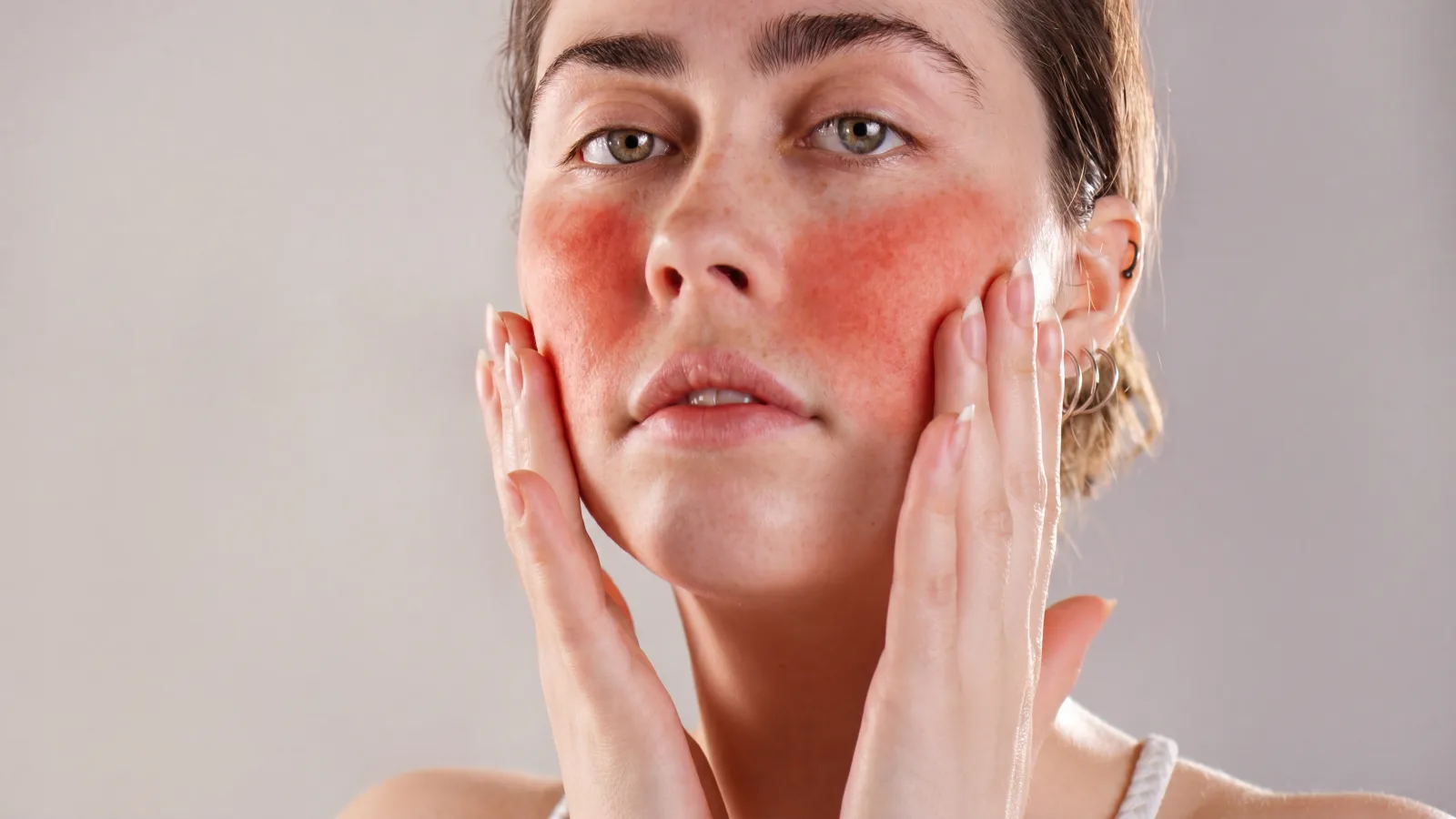
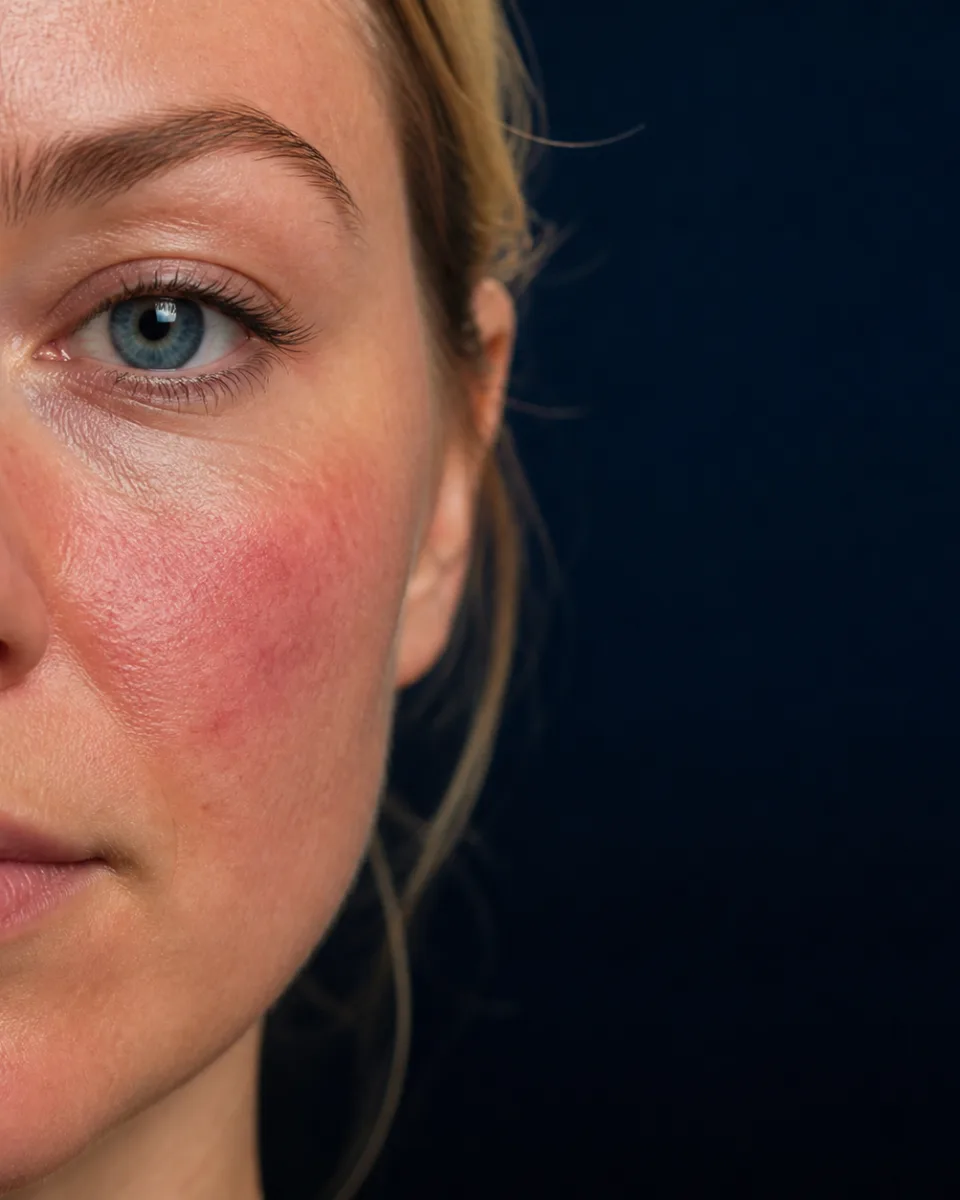
Early signs are redness across the nose, cheeks, forehead, chin, neck and chest that comes and goes, sometimes with a burning or stinging feeling when using water or skincare products. Left untreated, the NHS is clear that rosacea tends to progress: more advanced disease can bring dry skin, swelling (particularly around the eyes), yellow-orange patches, sore eyelids or crusting around the lashes, and thickened skin on the nose.
The BAD classifies rosacea into four subtypes, which can overlap, and doctors use them to decide what treatment is right:
- Erythematotelangiectatic (ETR): persistent facial redness with visible blood vessels and flushing: the vascular-predominant type.
- Papulopustular: inflammatory bumps and pustules on a background of redness, most easily confused with acne.
- Phymatous: thickened, bumpy skin, classically on the nose (rhinophyma).
- Ocular: eyelid and eye involvement, covered fully below, because it is the one form that needs urgent attention.
Each subtype responds to different treatment: inflammatory disease to topical or oral anti-inflammatory medicine, the vascular type to laser or light therapy, phymatous disease to surgical or laser resurfacing, and ocular disease to eye-directed treatment, sometimes with an ophthalmologist.
What causes rosacea?
Honestly, nobody fully knows. The NHS states plainly: “It’s not known what causes rosacea.” The BAD agrees: “The cause of rosacea is not fully understood. Genetics, immune system problems and environmental factors may all play a part.” The BAD is also careful to note that the popular idea of a single bacterial cause is unproven: “The theory that rosacea is due to bacteria on the skin or in the gut has not been proven.”
Two mechanisms are discussed most in the research. The first is the Demodex mite theory: tiny mites that live in hair follicles are found far more often in rosacea-affected skin (one 2024 review found them in around 70% of rosacea patients versus roughly 32% of healthy skin). That is a strong statistical association, but it is not proof that the mites cause rosacea: the link remains associative, not causal, and we won’t overstate it here. The second is a vascular and immune mechanism, where inflammatory signalling causes the small blood vessels in facial skin to dilate and stay dilated, producing the persistent redness and visible vessels.
What is well established is what sets rosacea off. Both the NHS and the BAD independently list the same trigger set: alcohol, spicy foods, hot drinks, sunlight, hot or cold temperatures, aerobic exercise such as running, and stress. The BAD explains the mechanism simply: these triggers “cause the blood vessels in the skin of the face to enlarge (dilate).” Identifying and moderating your personal triggers is a genuinely useful, low-risk first step alongside any medical treatment.
Safety: eye involvement, and why steroid creams make rosacea worse
Ocular rosacea: a genuine urgent-care flag
Rosacea does not only affect the skin. The NHS lists eye and eyelid features (sore eyelids, crusting around the lash roots) among rosacea’s more advanced symptoms, and is direct that some eye symptoms need urgent attention: “eye pain, blurred vision, light sensitivity, red eye, or gritty sensation” are described as “signs of keratitis, which can be serious if not treated urgently.”
A 2024 clinical review adds that ocular rosacea can also show up as “foreign body sensations, eyelid telangiectasia, frequent chalazion, blepharitis, conjunctivitis, and corneal ulcers.” It is usually managed medically (with topical metronidazole or cyclosporine eye drops and/or an oral antibiotic) sometimes jointly with an ophthalmologist. If you have rosacea and develop any of the eye symptoms above, seek medical attention promptly rather than waiting it out.
Do not reach for a steroid cream
This is worth stating clearly, because it is a genuinely common mistake. The BAD tells patients directly: “Do not use creams and ointments containing corticosteroids, unless specifically recommended by your dermatologist as these may make rosacea worse.” This is not a vague caution; it is a well-documented clinical picture. A study of 110 patients who developed steroid-induced rosacea-like dermatitis found the pattern was papules, pustules and small fluid-filled bumps on inflamed, swollen skin, with the steroid cream betamethasone valerate the most frequently implicated.
Critically, the same study confirmed a rebound phenomenon: “all patients exhibited symptom exacerbation… and experienced rebound phenomenon upon discontinuing topical steroids”, meaning the skin can look worse for a period after stopping the steroid before it gets better. If you think you may have been using a steroid cream on rosacea-affected skin, the right move is gradual, supervised tapering rather than either continuing it or stopping abruptly: talk to a GP or dermatology-led clinic rather than managing this alone.
Rosacea can look like other conditions
Because treatment differs, getting the diagnosis right matters. UK clinical reference guidance distinguishes rosacea from its common look-alikes: acne “occurs in younger patients and is characterized by comedones” and does not feature the flushing and visible vessels of rosacea; lupus rashes tend to be more rapid in onset or have discrete scaly lesions; seborrhoeic dermatitis brings yellowish scaling around the eyebrows and nose folds, plus troublesome dandruff; and perioral dermatitis shows as small bumps and blisters clustered specifically around the mouth or eyes. If your diagnosis is uncertain, a proper assessment is the right next step, not a guess.
Does the NHS treat rosacea?
Yes, and this is genuinely different from most of the skin concerns covered on this site. Rosacea is actively diagnosed and treated by the NHS. The NHS states plainly: “Rosacea cannot be cured, but treatment from a GP can help control the symptoms.” The standard NHS pathway, per NHS.uk, includes GP-prescribed creams and gels, and oral antibiotics typically for six to sixteen weeks, with referral to a dermatologist if first-line treatment does not work well enough.
Where private, doctor-led clinics such as ours tend to add value is on the vascular side of the condition. The BAD confirms that “redness and dilated blood vessels can be treated with laser therapy by a dermatologist”; this vascular-component treatment (laser or IPL) generally sits outside routine GP prescribing and is where many patients choose to go privately, even while their underlying rosacea diagnosis is being managed on the NHS.
We are not able to state the exact current NHS prescribing ladder as guideline-backed here, because the relevant NICE guidance page was not accessible to us at the time of writing; if you want the precise current NHS treatment protocol, your GP is the right source. What we can say honestly is this: the inflammatory (spots and bumps) side of rosacea and the vascular (redness and visible vessels) side often need different treatment, and it is genuinely reasonable to use both your GP and a private laser/IPL clinic for the two different problems.
Every rosacea plan begins with a consultation and skin analysis, then draws on whichever of these suits your pattern:
Lumecca™ IPL (targets redness & visible vessels): from £225
Dermalux LED Therapy (calms inflammation): from £50
Cool Laser Resurfacing (redness-related texture): from £350
These are the treatments used for the vascular/inflammatory side of rosacea at Rejuvena. If your rosacea needs oral or topical medical treatment, that route starts with your GP and is available on the NHS.
How rosacea treatment works at Rejuvena
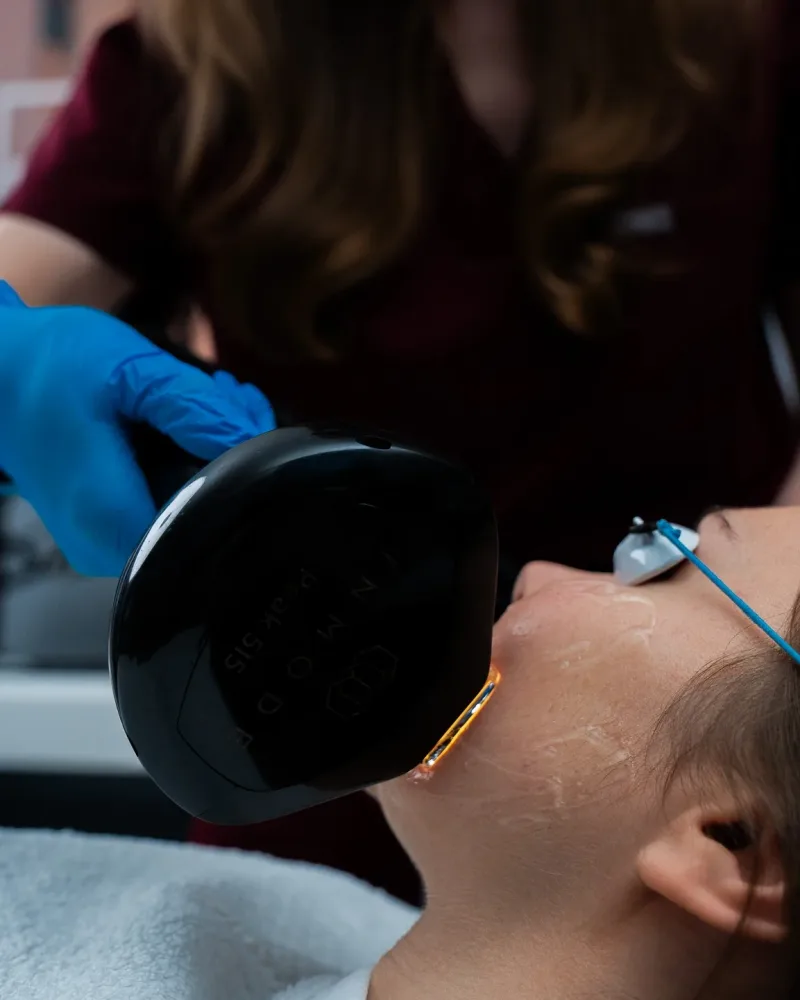
Your rosacea is assessed by Dr Nick (a GMC-registered GP with a Diploma in Dermatology), who identifies your subtype and pattern before recommending anything. Trigger management and skincare come first; Lumecca™ IPL, Dermalux LED or Cool Laser Resurfacing are then used to target redness, visible vessels and texture, tailored to your skin. Where oral or topical medical treatment is the right route, we will say so and point you back to your GP rather than treating everything cosmetically.
Why choose Rejuvena for rosacea in Bedford?
GP-led, not guesswork
Assessed by Dr Nick (a GMC-registered GP with a Diploma in Dermatology), who identifies your rosacea subtype before treating.
Evidence-based devices
Lumecca™ IPL and laser therapy for the vascular component, with the trial-level evidence to back it, not a vague promise.
Honest about the NHS route
We tell you plainly when your GP and the NHS are the right first call: rosacea is one of the few conditions here that genuinely is.
Local & welcoming
Based at 52 Thor Drive, Bedford, we care for patients from Kempston, Biddenham, Bromham and across Bedfordshire.
Verified Google reviews
What our patients say
5.0from 161 Google reviews
I love the Morpheus8 treatment and so does my daughter, seeing my results straight after the first treatment she keeps saying I look so young she is referring to some of my photos taken 18 years ago and pointing out that I am a yummy mummy. My face was tight first few days and the redness disappeared in the late afternoon. But I feel great and look wonderful with just one treatment of M8 and can't wait to get the other 2 treatments as well. I am so glad you recommended this treatment to me. Thanks a million Dr Nick & Lana I'm glad I discovered Rejuvena I will not go anywhere else for treatments I know with Rejuvena I am in safe hands and well looked after!
Rejuvena repliedThank you very much for your kind review VC / “yummy mummy” 😁 Thank you for being our valuable customers in our clinic. We are so glad to offer our services to you and your daughte
Read this review on Google (opens in a new tab)Lana and Dr Nick are both friendly and professional. I had treatment for thread vein removal and starting to see good results already! Thank you :)
Rejuvena repliedThank you very much for your kind words Alison. Your thread veins are improving great! Kind regards 🤗
Read this review on Google (opens in a new tab)I’m five sessions into my Lumecca treatment and the results have been incredible — it’s genuinely transformed my skin. Dr Nick and Lana are exceptional at what they do. Their skill, knowledge, and understanding of the latest technology instantly put you at ease and fill you with confidence throughout the process.
Rejuvena repliedThank you very much for your kind words Jake 😊🙏
Read this review on Google (opens in a new tab)I’ve had both laser hair removal and Lumecca treatments with Lana, and she has been amazing. She’s very professional, incredibly attentive, and genuinely such a kind person. Her focus on the little details and the care she puts into her work make a big difference. I truly recommend Rejuvena Clinic.
Rejuvena repliedthank you very much for your kind review ))
Read this review on Google (opens in a new tab)I had Lumecca treatment at this clinic and had a great experience. The consultation with Dr Nick was very informative and put me at ease. Lana, who carried out the treatments, was an absolute pleasure to deal with—even though the treatment itself isn’t the most pleasant, she managed to make it as relaxing and comfortable as possible. Highly recommend this clinic for their professionalism and care.
Rejuvena repliedThank you for taking the time to share your kind feedback. We truly appreciate your thoughtful review and are delighted to hear that you had a great experience with our team. Thank
Read this review on Google (opens in a new tab)Throughout my Lumecca experience Nick & Lana have been nothing but exceptional. Their knowledge and experience mixed with personal customer service can’t be matched. They put your mind and rest and explain everything from the start. The results speak for themselves! For years I have managed Rosecea, Pigmentation and Thread Veins. After just one treatment I could see clearer, dewy skin. Thanks to Nick and Lana my confidence has grown to be able to go out with minimal make up on. A Randall
Rejuvena repliedHi Aisling, thank you for your kind review. We are so happy that we managed to help you feel confident in your skin again. It means a lot to us, so thank you once again. ☺️🙏
Read this review on Google (opens in a new tab)Every review above is published on Google. Tap any card to read it there.
Rosacea FAQs in Bedford
Is rosacea dangerous?
Can rosacea be cured?
Will the NHS treat my rosacea?
Can I use a steroid cream on rosacea?
What are the warning signs of ocular rosacea?
How much does rosacea treatment cost in Bedford?
What triggers a rosacea flare-up?
Is laser or IPL treatment for rosacea safe?
Book your rosacea assessment in Bedford
Speak with Dr Nick’s team at Rejuvena Bedford for a doctor-led rosacea assessment. Book online or call us.