Moles: Types, Causes & When to Get One Checked
What moles are, the ABCDE warning signs doctors use, whether the NHS removes them, and what private removal costs in Bedford, with an honest steer on when to see your GP first.
Most moles are harmless and need nothing done to them. What matters is knowing which ones deserve a closer look. A mole that is changing (in size, shape or colour) is the single most useful warning sign, and it should be assessed by a doctor before anyone considers removing it.
What are moles?
Moles, known medically as melanocytic naevi, are small clusters of melanocytes: the cells that give your skin its colour. Almost everyone has them. The NHS describes them as “small, coloured spots on the skin” that are “usually nothing to worry about unless they change size, shape or colour.”
A typical harmless mole is round or oval with a smooth edge. It may be flat or raised, smooth or slightly rough, and some have hairs growing from them. On darker skin tones, moles are usually darker too. None of that is unusual.
Dermatologists group them into a few common types:
- Junctional naevi: flat and usually circular, with even brown colouring. Most common in childhood.
- Compound naevi: raised brown bumps, most of which are hairy.
- Intradermal naevi: raised, often hairy, and typically paler than the surrounding skin.
- Blue naevi: harmless moles with a distinctly dark blue colour.
- Dysplastic (atypical) naevi: irregular-looking moles which, as the British Association of Dermatologists notes, “have a greater tendency than most moles to change into a melanoma.”
What causes moles?
Moles form when melanocytes grow in clusters rather than spreading evenly through the skin. Some people are simply more prone to them: the British Association of Dermatologists notes that “a tendency to have multiple melanocytic naevi runs in some families.”
Sun exposure plays a substantial part. Sunburn and heavy sun exposure contribute to new moles forming, and people with fair skin are more likely to develop them.
The number you have is not fixed for life. According to the BAD, “the number of moles increases up to the age of 30–40. Thereafter, the numbers of naevi tend to decrease.” So new moles appearing through childhood and early adulthood are entirely normal.
When to get a mole checked
The British Association of Dermatologists sets out the warning signs as ABCDE:
- A: Asymmetry: “the two halves of the area differ in their appearance”
- B: Border: “edges of the area may be irregular, jagged or blurred”
- C: Colour: “uneven and may show multiple different colours”
- D: Diameter: “most melanomas are at least 6 mm in diameter”
- E: Evolution: “rapid change in size, shape or colour of a pre-existing mole”
If you remember only one of those, make it the last one. A 2023 systematic review in Skin Health and Disease, which examined more than a thousand histologically confirmed melanomas, found that “changes in features, rather than irregularity, is more likely to identify early melanoma.” Change over time is the most reliable single signal there is, more reliable than how irregular a mole looks in isolation.
UK GPs use a weighted seven-point checklist to decide who needs a specialist opinion. Three features score two points each: a change in size, an irregular shape or border, and irregular colour. Four score one point each: a diameter of 7mm or more, inflammation, oozing or crusting, and any change in sensation, including itch. A lesion scoring three or more should be referred for a specialist opinion.
See a GP if you notice
The NHS advises seeing a GP about:
- a mole that has changed size, shape or colour
- a mole that is painful or itchy
- a mole that is inflamed, bleeding or crusty
- any new or unusual skin mark that has lasted a few weeks
- a dark area under a nail that was not caused by an injury
None of these means you have skin cancer. They mean the mole should be looked at properly rather than watched and worried about.
Who is at higher risk
Ultraviolet light is the most common cause of melanoma. The NHS lists the main risk factors as pale skin that burns easily, red or blonde hair, blue or green eyes, a large number of freckles or moles, a history of heavy sun exposure or sunburn, sunbed use, and a family or personal history of skin cancer.
Darker skin carries a lower risk, but not a zero one, and melanoma in darker skin more often appears on the soles of the feet, the palms, or under the nails, which are easy places to overlook.
ABCDE at a glance
These visual cues explain the checklist used in the guide. They are prompts to seek an assessment, not a way to diagnose a mole yourself.

- Asymmetry
One half looks different from the other.
- Border
The edge may look irregular, jagged or blurred.
- Colour
More than one shade may be present.
- Diameter
Size is one clue, especially alongside other changes.
- Evolution
Change in size, shape or colour over time matters most.
Can you get a mole removed on the NHS?
Usually not, if the reason is cosmetic.
The NHS position is direct: “Harmless moles are not usually treated on the NHS.” The British Association of Dermatologists says the same, noting that removal for cosmetic reasons is “not available on the NHS.”
What the NHS does cover is assessment and removal where a mole is medically concerning, where the diagnosis is uncertain, where it is suspicious, or where it is causing genuine problems such as repeated trauma or bleeding. If a mole is suspected of being a melanoma, your GP can refer you on the urgent suspected-cancer pathway, and treatment is surgical: “surgery is the main treatment for melanoma, especially if it’s found early.”
So the honest summary is this. If your mole is worrying you medically, start with your GP; that route is free and appropriate. If your mole has been assessed as harmless and you would simply prefer it gone, that is a private treatment.
Single mole: Cool Laser™ Er:YAG, including dermoscopy assessment: from £250
Two to three moles, same session: from £425
The assessment is not an optional extra. Every mole is examined with dermoscopy before anything is done, and anything concerning is referred rather than removed.
How mole removal works at Rejuvena
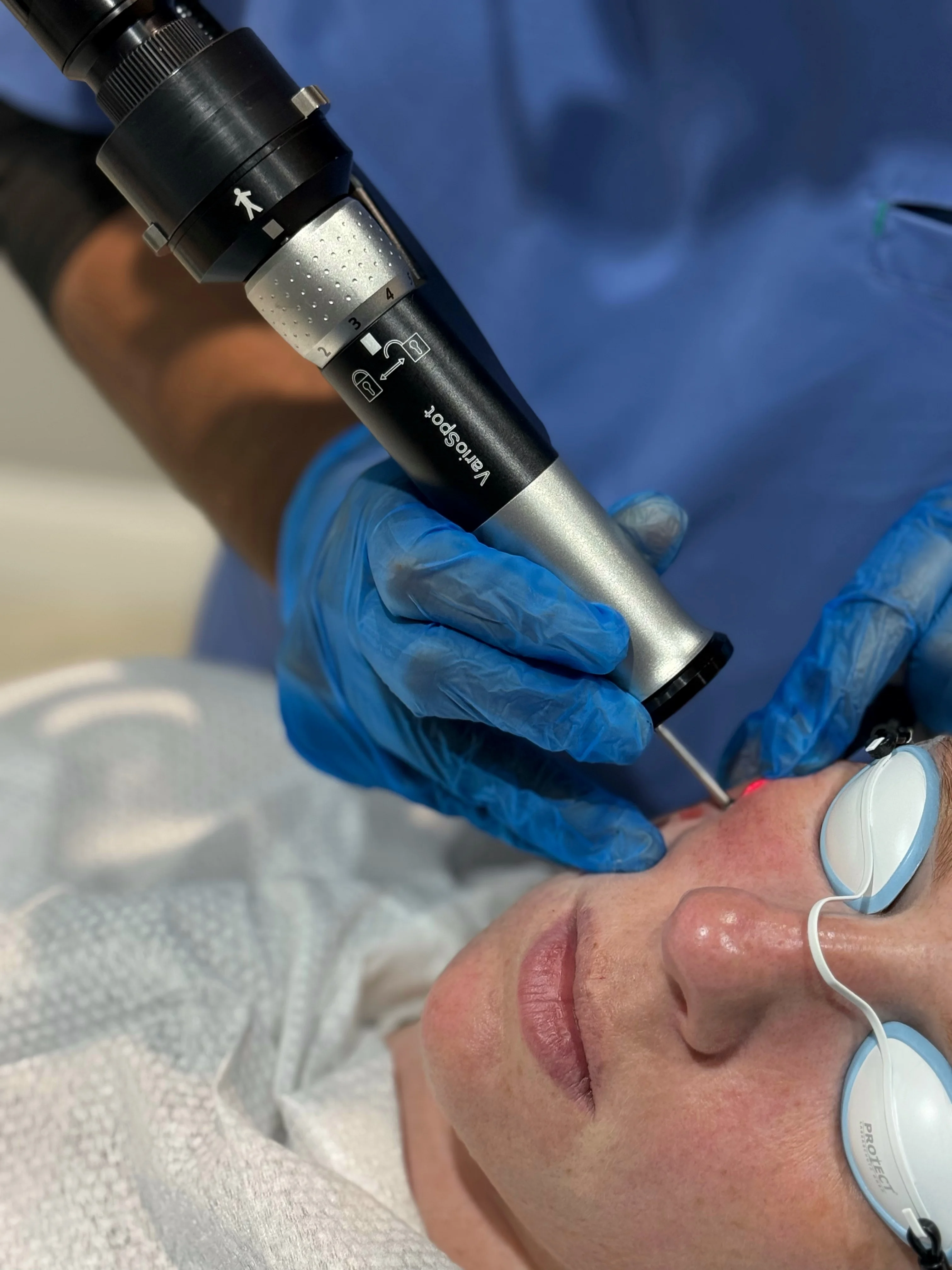
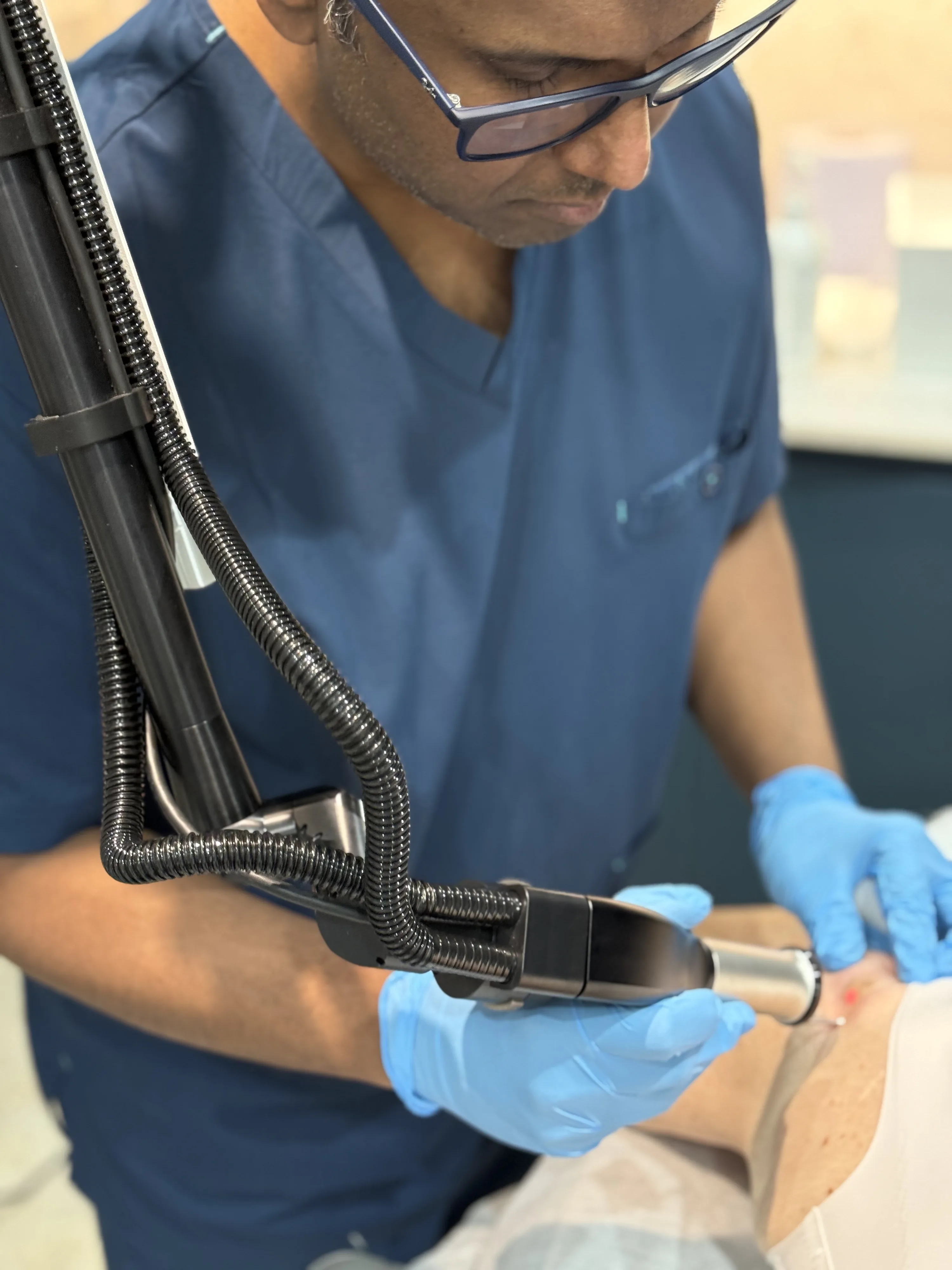
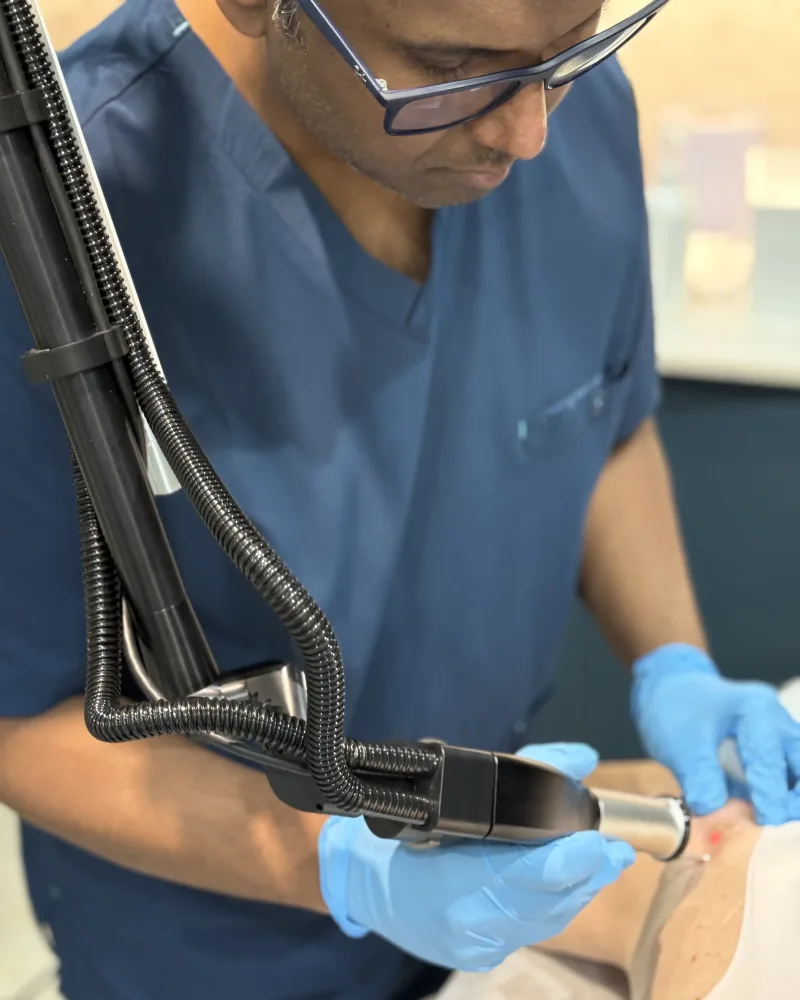
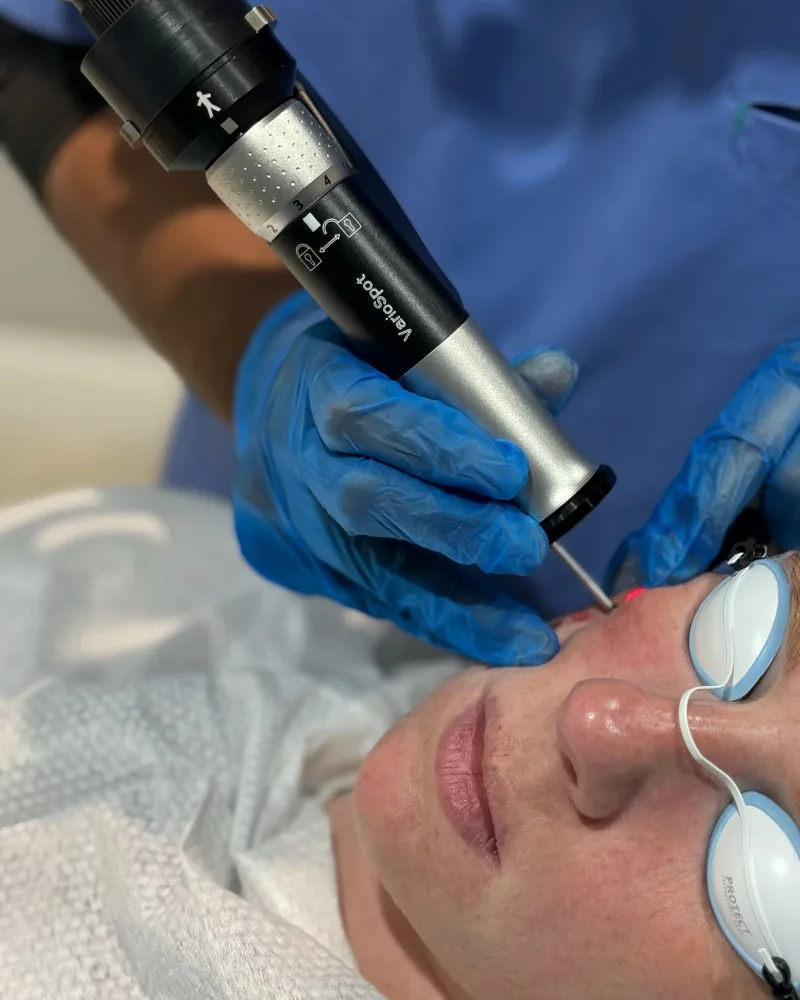
Every mole is assessed by Dr Nick (a GMC-registered doctor with a Diploma in Dermatology) using dermoscopy before any treatment is considered. Suitable, clearly benign moles can then be removed with the Cool Laser™ Er:YAG, usually in a single session. Anything that looks suspicious is not treated cosmetically; it is referred for proper diagnostic assessment, because a mole that needs a pathologist should never be vaporised by a laser.
Why choose Rejuvena for mole assessment in Bedford?
Dermoscopy every time
A clinical assessment before any removal: how safe mole care is distinguished from cosmetic guesswork.
Diploma in Dermatology
Assessed by Dr Nick, a GMC-registered doctor, not a beauty therapist or nurse.
Referred, not lasered
Anything that looks suspicious is never treated cosmetically; it is referred for proper diagnosis.
Local & welcoming
Based at 52 Thor Drive, Bedford, we care for patients from Kempston, Biddenham, Bromham and across Bedfordshire.
Verified Google reviews
What our patients say
5.0from 161 Google reviews
I had an excellent experience at the clinic. The team recommended skincare products that truly transformed my skin. I had never seen great results with other products in the past, but this regimen has given me noticeably beautiful, healthy skin, and I am genuinely happy with the outcome. Thank you so much, Lana and Dr Nick, for your guidance and support. I highly recommend both you and your clinic - you are very professional, knowledgeable, and always willing to help.
Rejuvena repliedThank you very much for your kind and honest review Anastasia. It means a lot to us that we were able to help you and your skin.
Read this review on Google (opens in a new tab)In August of this year, after seeing another practitioner, I was left with complex complications that affected both my appearance and health. I was completely overwhelmed and honestly in bits. The original practitioner severely lacked the knowledge to deal with what had happened, and while my GP was supportive, they understandably weren’t a specialist in this area. That’s when I contacted Dr Nick and Lana at Rejuvena Clinic, and from my very first consultation I knew I was in the safest of hands. I was met with complete professionalism, kindness, and a totally non-judgemental approach. Dr Nick immediately understood the issues I was facing and knew exactly how to manage and approach them. Dr Nick truly went above and beyond to ensure that the damage caused by the previous treatment was minimised as much as possible. Every single treatment I’ve had at the clinic has been impeccable, from the warm welcome when you walk through the door, to the care, precision, and reassurance during treatment, and the excellent follow-up afterwards. I can’t recommend Dr Nick and Lana highly enough. If you are looking for expertise, compassion, and outstanding care, this clinic is exceptional.
Rejuvena repliedThank you for your detailed kind review H. We are very sorry that you are going through this complication from other practitioner. It’s not nice for any one to go through this. We
Read this review on Google (opens in a new tab)Doctor Nick and Lana are the most professional people you could possibly wish to meet. I have been having treatments for a couple of months now and what a difference it has made. From the moment you arrive at the clinic to the moment you leave you are made to feel at ease. The clinic is immaculate and Doctor Nick is so knowledgeable. Lana is fantastic at her treatments and is one of the loveliest people you could wish to meet. I can honestly say they have made a massive difference to me since the treatments. Thank you you so much.
Rejuvena repliedAww Jackie! Thank you very much for your kind feedback, it really means a lot to us. We are so glad to have helped you with your skin and you are also one of the most loveliest peo
Read this review on Google (opens in a new tab)I am quite new to visiting this clinic but so far only good emotions about it. I am undergoing laser treatment at the moment. Lana is such a nice girl, very friendly and supportive. I had to change few times my appointments and she never made me feel bad about it! The clinic - atmosphere feels calming and welcoming. It is very clean, modern and warm. I have met Dr Nick as well for consultation and he is incredibly professional, knowledgeable, and attentive, like Lana. They both make sure you understand the entire process. I am definitely recommending this Clinic!
Rejuvena repliedThank you very much Reda for your kind words and for placing your trust in us! We’re delighted to hear that you have a positive experience with our team, and we look forward to wel
Read this review on Google (opens in a new tab)Thank you so much for your help, I cannot fault Lana and Dr Nick at all, the services offered were excellent and they are clearly both very caring, professional and passionate in what they do. The venue is perfect, very clean, calming and peaceful. I would highly recommend to friends and family.
Rejuvena repliedThank you for your kind words Clara. Glad we could help with your skin concerns. 😊🙏
Read this review on Google (opens in a new tab)Lana is very knowledgeable and professional and makes you feel like you are in safe hands. I am happy I chose to have my treatment at Rejuvena and would highly recommend the clinic.
Rejuvena repliedThank you very much Bobbie 🤗🙏
Read this review on Google (opens in a new tab)Every review above is published on Google. Tap any card to read it there.
Moles FAQs in Bedford
How much does mole removal cost in the UK?
Will the NHS remove a mole for free?
Can a GP remove a mole in the UK?
Will a GP cut out a mole?
Is it safe to laser a mole?
Book your mole assessment in Bedford
Speak with Dr Nick’s team at Rejuvena Bedford for a dermoscopy-led mole assessment. Book online or call us.