
Wrinkles: Crow’s Feet, Frown & Forehead Lines
Why expression lines are muscle-driven, not just skin ageing, why anti-wrinkle injections are a prescription-only medicine, the honest complication rate, and doctor-led treatment in Bedford.
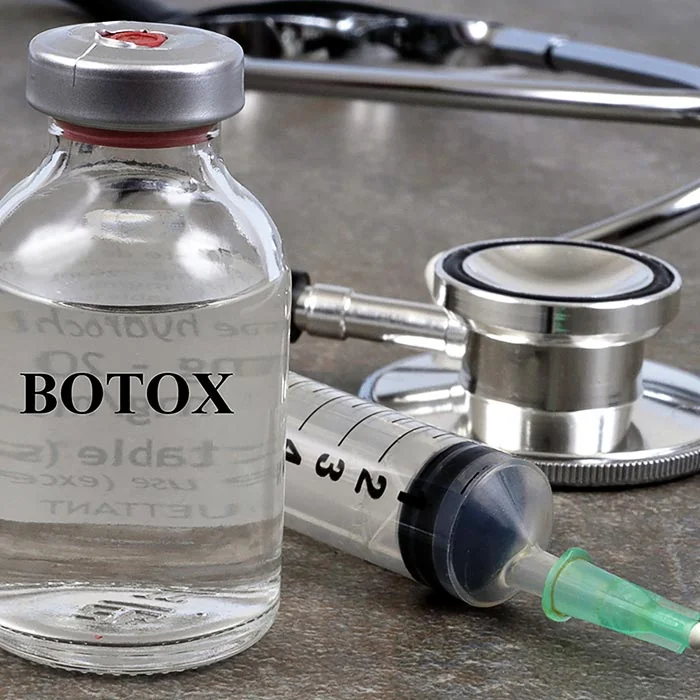
Crow’s feet, forehead lines and frown lines are caused by the muscles underneath repeatedly contracting, not simply by skin ageing. Anti-wrinkle injections work by relaxing that muscle activity, and in the UK they are a prescription-only medicine that can only be given after a proper medical consultation, never bought casually or from an untrained provider.
What are dynamic wrinkles?
Crow’s feet, forehead lines and frown (“glabellar”) lines are known as dynamic or expression wrinkles, because they are produced by specific facial muscles contracting during everyday expressions: smiling, squinting, raising the eyebrows, frowning. This is a different mechanism from static, volume-related lines such as nasolabial folds, which come from lost structural support rather than muscle movement.
Each line has its own muscle behind it: crow’s feet come from the muscle that circles the eye, forehead lines from the muscle that raises the eyebrows, and frown lines from the pair of muscles that pull the eyebrows together and down.
Over years, repeated contraction places ongoing mechanical stress on the overlying skin and contributes to a gradual breakdown of collagen and elastin. This is how a line that used to appear only when you pulled a particular expression can, over time, become “etched”: visible even when your face is completely relaxed.
What causes dynamic wrinkles to develop earlier or deeper?
Everyone who makes facial expressions develops some dynamic lines eventually; this is a normal part of having an expressive face. What varies is how early and how deep they become, and the evidence points to several contributing factors working together:
- Environmental: UV exposure, pollution and smoking all accelerate the underlying skin change.
- Genetics and skin type: some people etch lines more readily than others for reasons that are largely inherited.
- Behavioural: habitually expressive movement patterns (frequent squinting, frowning) drive more muscle activity over time.
- Intrinsic ageing: a gradual, genetically programmed process that compounds everything above.
Because the muscle-contraction component and the deeper collagen/elastin-loss component are mechanistically different, a purely dynamic line (visible only when you move) and a deeply etched, static line (visible at rest) don’t always respond to treatment the same way: see the treatment section below.
Prescription-only medicine, and the honest complication rate
Anti-wrinkle injections are a prescription-only medicine in the UK. This is not marketing language; it is a legal and regulatory fact, confirmed by the UK’s medicines regulator, which has explicitly warned that if you’re offered treatment without a proper medical consultation, in an informal setting, or at a price well below the usual rate, that should be treated as a warning sign. It can only be prescribed following a face-to-face consultation with an appropriately qualified prescriber such as a doctor, and the prescriber is responsible for ensuring whoever actually gives the injection is trained and safe to do so.
Ptosis (a drooping eyelid or eyebrow) is the most common complication of frown-line treatment, and this should be said plainly rather than glossed over. It happens when the medicine diffuses slightly beyond the intended muscle. A large real-world safety analysis of aesthetic anti-wrinkle treatment found that facial paresis, ptosis or asymmetry accounted for around one in ten of all reported adverse events: the single largest complication category identified, out of tens of thousands of reports spanning more than two decades.
The same analysis found serious systemic complications to be rare overall, supporting a generally favourable safety profile when treatment is given appropriately, but ptosis specifically is common enough that you should expect it to be discussed with you before treatment, not discovered afterward. When it occurs, it typically appears within one to two weeks, peaks around two weeks, and usually resolves on its own within three to four months as the effect wears off.
A “frozen” or unnatural look is a real risk of overdosing or poor technique, and one reason technique and dosing judgement matter as much as the medicine itself.
Realistic expectation: anti-wrinkle injections treat the muscle-contraction component of a line. A line that has become deeply etched and is visible even at rest may need additional treatment (such as skin resurfacing or filler) alongside toxin, not instead of it.
Are wrinkles treated on the NHS?
Not for cosmetic reasons. Cosmetic surgery and cosmetic procedures generally are not routinely provided on the NHS, and there is no exception for wrinkle-reduction treatment of ordinary facial ageing; this is confirmed directly for anti-wrinkle injections specifically, which are not available on the NHS when given for cosmetic reasons.
For contrast and honesty: anti-wrinkle injections genuinely are an NHS-funded treatment for certain medical conditions unrelated to cosmetic wrinkles, for example, dystonia, which includes involuntary eyelid spasm, is treated through a specialist neurology referral pathway with repeat injections roughly every three months. That is a completely different clinical pathway from cosmetic treatment of expression lines, and the two should not be confused.
So the honest summary is this. If you’d like your expression lines softened, that is always a private, cosmetic consultation with an appropriately qualified prescriber.
Because dosing and the areas treated are tailored to your individual muscle pattern and how etched your lines are, we don’t quote a single fixed fee. After Dr Nick has assessed your face at a proper medical consultation, you’ll receive a clear, honest plan and its price.
How wrinkles are treated at Rejuvena
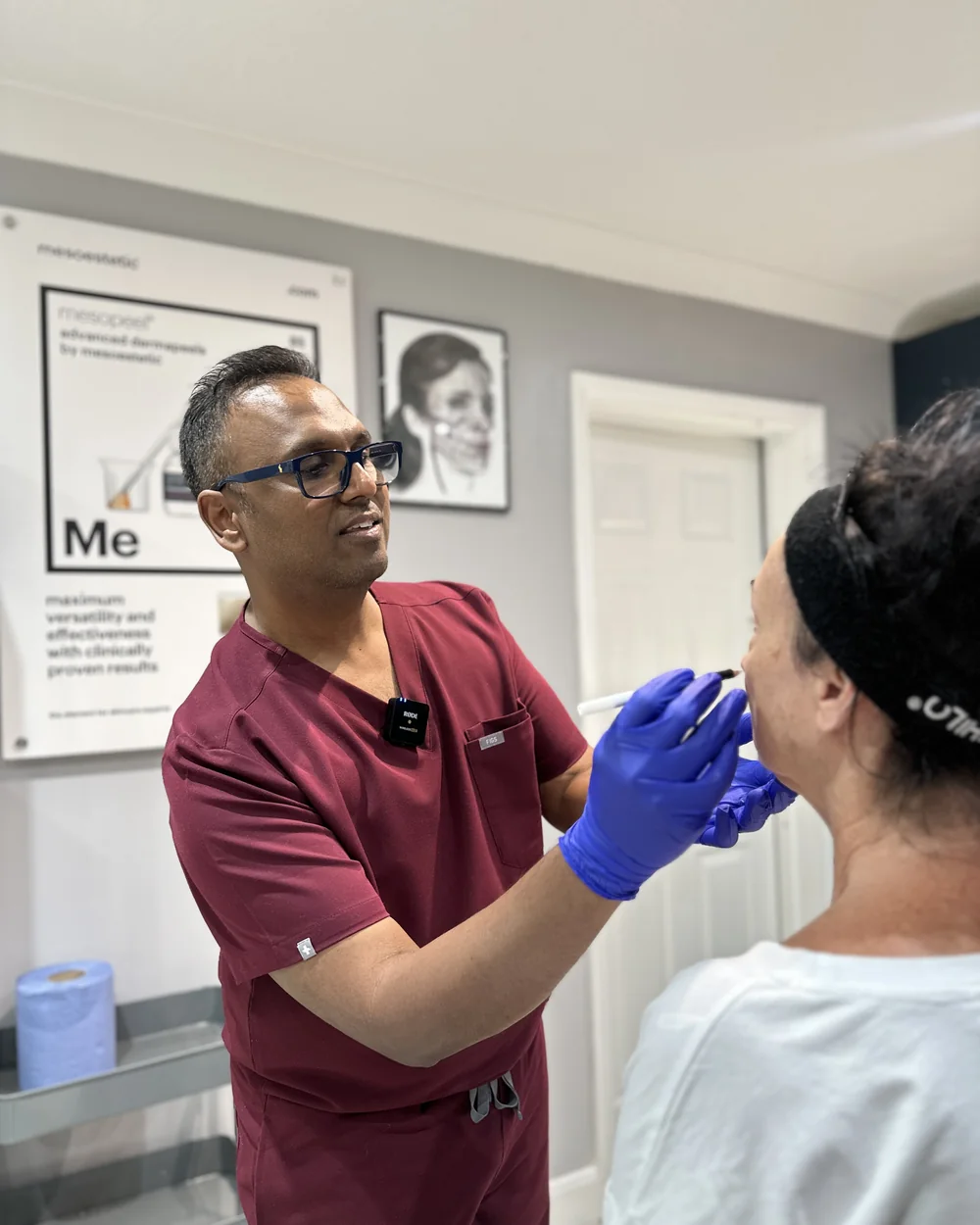
Dr Nick carries out a full medical consultation before any prescription-only anti-wrinkle treatment, assessing your muscle pattern, whether your lines are dynamic or already etched, and your suitability. Ptosis risk and realistic outcomes are discussed clearly before treatment, not afterward. Where a line has become deeply etched and volume-related, this may be combined with a separate conversation about filler or skin resurfacing.
Why choose Rejuvena for wrinkles in Bedford?
Proper prescriber consultation
A prescription-only medicine requires a real medical consultation with an appropriately qualified prescriber, every time.
Diploma in Dermatology
Assessed and treated by Dr Nick, a GMC-registered doctor, not a beauty therapist or nurse.
Complications discussed upfront
Ptosis is a real, recognised risk; we explain it before treatment, not just when it happens.
Local & welcoming
Based at 52 Thor Drive, Bedford, we care for patients from Kempston, Biddenham, Bromham and across Bedfordshire.
Verified Google reviews
What our patients say
5.0from 161 Google reviews
Lana delivered my treatment with her usual calmness and professionalism. She makes everything so seamless! Thank you Lana.
Rejuvena repliedThank you so much for your kind review Joanne! We are looking forward to seeing you again! 🙏☺️
Read this review on Google (opens in a new tab)—Update— Lana is excellent, always thrives to ensure I’m comfortable, and explains everything clearly in steps. I’m pleased to say I’ve booked another package to continue my treatment with Lana. —— Brilliant! I have completed my second laser session, and this is my third time visiting Lana. Every time I go, I’m welcomed and made comfortable. I am looking forward to attending more sessions. Thank you again.
Rejuvena repliedThank you so much Lizzie! Your words mean a lot to us! 🙏
Read this review on Google (opens in a new tab)So after attending my consultation today, I was made to feel very comfortable everything was explained to me in detail so that I understood the difference in treatments that I was potentially thinking to have. I decided to go for it there and then , so happy with my results I’ll definitely be going back and would recommend to my friends. 😉 Thanks again
Rejuvena repliedThank you very much for your kind review Mel. We are very happy to hear that you liked your treatment results. 🤗😊🙏
Read this review on Google (opens in a new tab)So happy to visit Svetlana and have it an amazing make up for my photoshoot. Thank you so much,highly recommended ☺️
Rejuvena repliedThank you very much for your kind words ☺️🤗🥰
Read this review on Google (opens in a new tab)I have already been a customer for almost a year and I’m impressed with every visit of how professional the clinic is and how professional Lana is. She is very friendly as well and very knowledgeable in her domain, and knows the answer to every possible question I always have. I highly recommend the clinic for its services and for its professionalism! Thank you so much for everything, and I’m always looking forward for my appointments! ❤️
Rejuvena repliedThank you very much for your feedback Andreea. We appreciate you taking time to leave this review and glad to know you and your sister liked our service. ☺️🙏
Read this review on Google (opens in a new tab)Lana and Dr Nick are absolutely fabulous. They provide an exceptional service and genuinely go above and beyond to achieve the best possible outcome — particularly for those of us whose only request is to look “10 years younger”! Having experienced and attended numerous aesthetic clinics around the world over many years, I feel particularly well placed to recognise exceptional standards of care and expertise. I can categorically say that this is my clinic of choice. That is not simply because of the clinic’s extensive and impressive range of treatments, but because of Lana and Dr Nick, their professionalism and genuine commitment to their clients are what truly set this clinic apart. The atmosphere is wonderfully warm, welcoming and friendly, while remaining highly professional throughout. Their expertise, care and attention to detail inspire complete confidence, and I have always felt that I am in exceptionally capable hands. I recommend Lana, Dr Nick and the clinic with the utmost confidence. For me, it is not simply the treatments available or the results they achieve — it is the people behind them that make this clinic so special and keep me coming back.
Rejuvena repliedThank you very much for your kind review Monika. Your words and trust mean a lot to us, and we will continue to strive hard the exceptional service that our patients deserve. We ho
Read this review on Google (opens in a new tab)Every review above is published on Google. Tap any card to read it there.
Wrinkle FAQs in Bedford
What’s the difference between dynamic and static wrinkles?
Are anti-wrinkle injections safe?
Can anti-wrinkle injections cause a droopy eyelid?
Is treatment available on the NHS?
How much does wrinkle treatment cost in Bedford?
Book your wrinkle consultation in Bedford
Speak with Dr Nick’s team at Rejuvena Bedford for a proper prescriber consultation. Book online or call us.