Nasolabial Folds: Why It’s Volume, Not a Wrinkle
Why the lines from your nose to your mouth corners are a structural, volume-loss problem that creams cannot touch, the real vascular safety risk of filler here, and honest doctor-led treatment in Bedford.
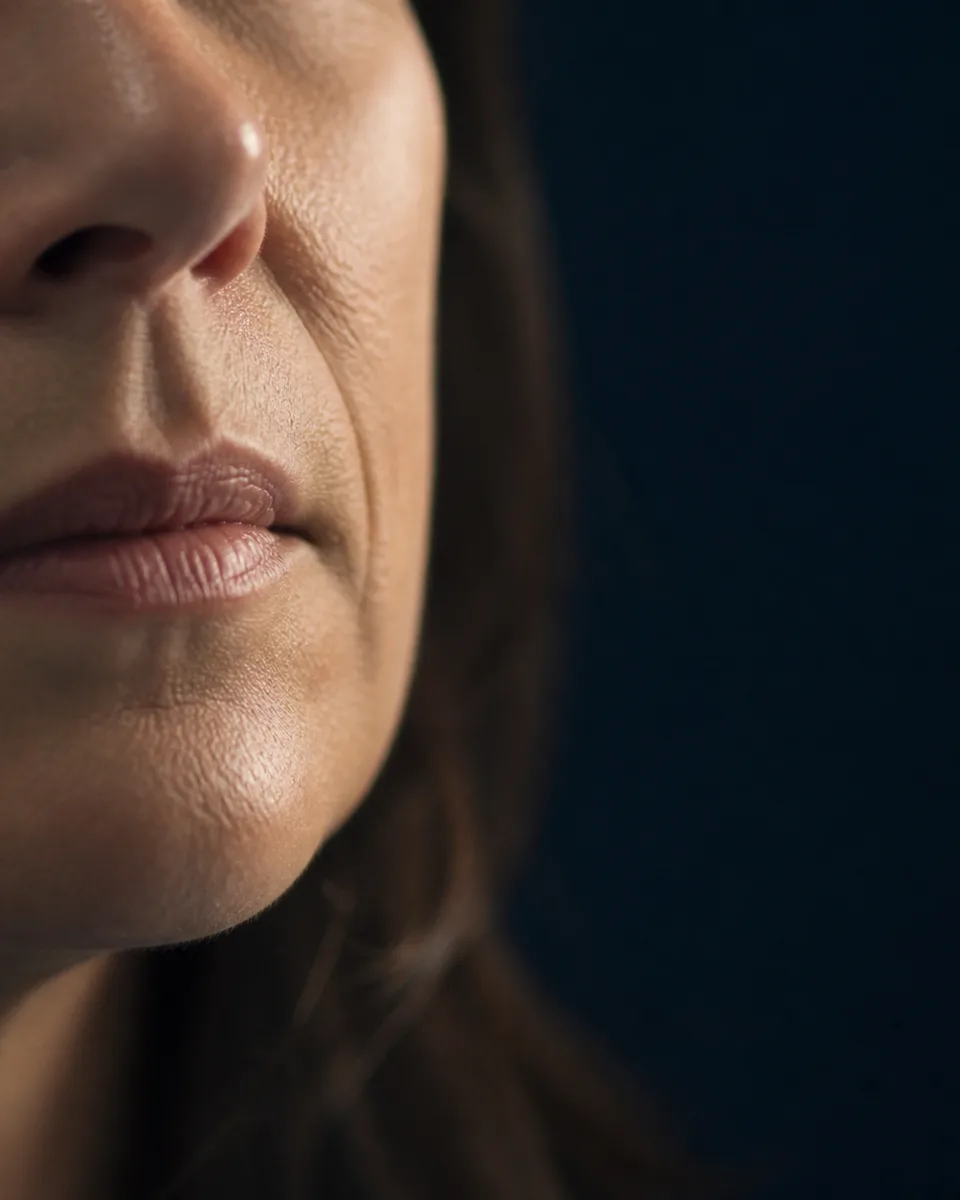
The fold running from the side of your nose to the corner of your mouth is not, in itself, a wrinkle; it is a fixed anatomical boundary that becomes more visible as the cheek volume either side of it is lost. That’s exactly why creams and skincare cannot soften it, and why the fold is treated by restoring volume, not by resurfacing skin.
What are nasolabial folds?
Facial fat is not one continuous sheet under the skin. It sits in separate, distinct compartments, and the nasolabial fold marks the fixed boundary line where the cheek’s fat compartments meet the tissue beside the nose and mouth. That boundary is anchored by fibrous attachment points, which is why the line itself stays put even as everything around it changes shape with age.
As the fat compartments either side of that fixed line lose volume and begin to sit lower on the face, the boundary that was always there becomes far more visible, creating the fold most people notice from midlife onward. This is sometimes described by researchers as “pseudoptosis”: the skin envelope looks like it has sagged, when the underlying cause is deflation of the compartment beneath it, not the skin itself stretching or wrinkling.
This matters practically. A genuine wrinkle is a crease in the skin’s surface, treatable by working on the skin. A nasolabial fold is a shadow cast by lost structural support underneath, which is why topical anti-ageing products, however good, do not meaningfully soften it.
What causes nasolabial folds?
The main driver is loss of volume in the deep cheek fat compartment that sits nearest the fold, as this deflates, the skin covering it has less support underneath, and the fixed boundary line beside it becomes a visible crease rather than a smooth transition.
Contributing factors include:
- Age-related fat loss: the deep midface compartments lose volume gradually from the late 20s onward for most people, more noticeably in midlife.
- Skin laxity: reduced collagen and elastin mean the skin over the fold supports itself less well.
- Genetics and facial structure: some faces show a more visible fold at a younger age purely from bone and fat-compartment anatomy.
- Weight change: significant weight loss can unmask deep volume loss that was previously hidden by more fat.
Nasolabial folds of some degree are normal at almost any age, even younger faces show a faint line here, because it is a genuine anatomical boundary, not purely a sign of ageing. What changes with age is how deep and shadowed that line becomes.
The vascular safety point that matters here
The nasolabial fold is one of the highest-risk sites on the face for filler injection. This needs to be stated plainly rather than glossed over. A world-literature review of documented vision-loss cases following filler injection found the nasolabial fold to be the third most commonly implicated site, behind only the area between the eyebrows and the nose itself: accounting for roughly one in eight of the cases reviewed.
The reason is anatomical: this region carries a dense, individually variable network of facial and infraorbital artery branches, and these vessels connect, through a chain of anastomoses, to the arteries supplying the eye. Injecting filler directly into one of these vessels (rather than the surrounding tissue) is a rare but genuine cause of sudden, often permanent vision loss.
This is precisely why nasolabial fold filler should only ever be performed by an appropriately trained medical injector who understands this vascular anatomy, uses technique that reduces (though never fully eliminates) the risk, and has hyaluronidase (the enzyme that dissolves hyaluronic acid filler) immediately available in case of a vascular event.
Overcorrection is a real, documented risk too. Filling this area too aggressively, or too often over time, can produce an unnatural, heavy-cheeked look (sometimes called “overfilled syndrome”) and, ironically, can worsen rather than soften the appearance of ageing in the lower face. Visible lumps or a blue-grey discolouration under the skin can also occur if filler is placed too superficially; both are correctable, usually with hyaluronidase, but are far easier to avoid with careful technique from the outset.
Are nasolabial folds treated on the NHS?
No. Nasolabial fold treatment is an elective cosmetic procedure, and the NHS position on cosmetic treatment generally is direct: cosmetic surgery and cosmetic procedures are not routinely provided on the NHS, and most people who want them need to pay for treatment privately. There is no dedicated NHS pathway for nasolabial folds specifically, because this is not a medical condition; it is a normal, expected feature of facial ageing.
So the honest summary is this. If you’d like your nasolabial folds softened, that is always a private, cosmetic consultation, but it should still be one where the vascular risk above is explained to you clearly, not skipped over.
Because the right filler volume and technique depend on how much support your cheek compartments have lost and how deep your fold has become, we don’t quote a single fixed fee. After Dr Nick has assessed your face, you’ll receive a clear, honest plan and its price.
How nasolabial folds are treated at Rejuvena
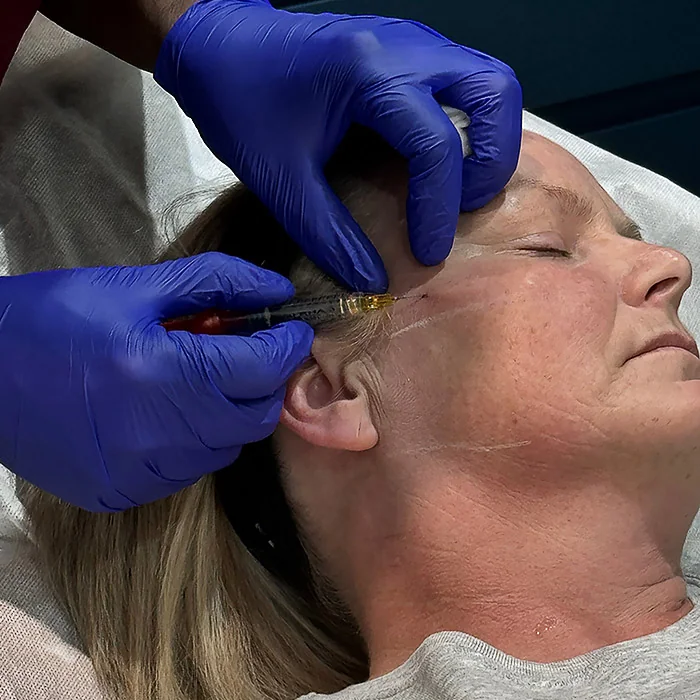
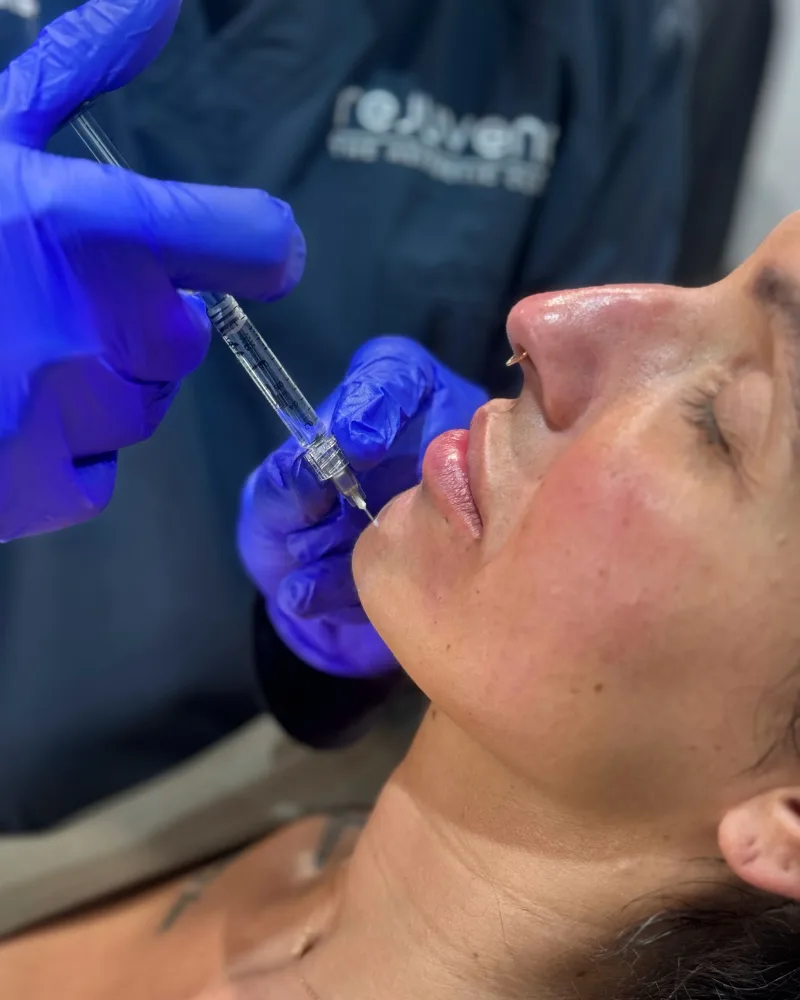
Dr Nick assesses your midface first, working out how much of your fold is caused by deep volume loss versus skin laxity, before recommending anything. Treatment is with hyaluronic acid dermal filler, placed to restore support in the deep cheek compartment rather than simply filling the visible line itself: the anatomically correct approach for a lasting, natural result. The vascular risk described above is explained clearly before any treatment, and appropriate injection technique is used throughout.
Also considering the folds running below your mouth corners? See marionette lines in Bedford: a related but distinct concern.
Why choose Rejuvena for nasolabial folds in Bedford?
Vascular anatomy taken seriously
This is a genuine high-risk injection site, and we explain the risk plainly rather than glossing over it.
Diploma in Dermatology
Assessed and treated by Dr Nick, a GMC-registered doctor, not a beauty therapist or nurse.
Anatomically correct technique
We restore the deep compartment behind the fold, not just fill the visible line: the approach the evidence supports.
Local & welcoming
Based at 52 Thor Drive, Bedford, we care for patients from Kempston, Biddenham, Bromham and across Bedfordshire.
Verified Google reviews
What our patients say
5.0from 161 Google reviews
"I had a consultation today with Svetlana and I’m very pleased with the experience! She was very professional, attentive, and took the time to listen to my concerns. She provided detailed explanations about my skin condition and gave me helpful recommendations for skincare. The atmosphere was comfortable, and I truly appreciated her expertise and care. I will definitely be coming back! Thank you for your great service!"☺️
Rejuvena repliedThank you very much for your kind review ☺️🙏 I am glad you liked the service I offered you today.
Read this review on Google (opens in a new tab)Absolutely outstanding an professional medical aesthetic service. Before any treatment began Dr Nick made sure I was fully informed, understood the treatment, discussed my wants and managed my expectations. The treatment itself was comfortable, Dr Nick kept checking i was okay. Showed me the progress as we went. His wife/medical assistant was as sweet and gentle as she is beautiful! Booked now upper wont regret it!
Rejuvena repliedThank you very much for your feedback Ayesha. We are very glad you are happy with our service. Means a lot to us. ☺️🙏
Read this review on Google (opens in a new tab)Lana delivered my treatment with her usual calmness and professionalism. She makes everything so seamless! Thank you Lana.
Rejuvena repliedThank you so much for your kind review Joanne! We are looking forward to seeing you again! 🙏☺️
Read this review on Google (opens in a new tab)—Update— Lana is excellent, always thrives to ensure I’m comfortable, and explains everything clearly in steps. I’m pleased to say I’ve booked another package to continue my treatment with Lana. —— Brilliant! I have completed my second laser session, and this is my third time visiting Lana. Every time I go, I’m welcomed and made comfortable. I am looking forward to attending more sessions. Thank you again.
Rejuvena repliedThank you so much Lizzie! Your words mean a lot to us! 🙏
Read this review on Google (opens in a new tab)So after attending my consultation today, I was made to feel very comfortable everything was explained to me in detail so that I understood the difference in treatments that I was potentially thinking to have. I decided to go for it there and then , so happy with my results I’ll definitely be going back and would recommend to my friends. 😉 Thanks again
Rejuvena repliedThank you very much for your kind review Mel. We are very happy to hear that you liked your treatment results. 🤗😊🙏
Read this review on Google (opens in a new tab)So happy to visit Svetlana and have it an amazing make up for my photoshoot. Thank you so much,highly recommended ☺️
Rejuvena repliedThank you very much for your kind words ☺️🤗🥰
Read this review on Google (opens in a new tab)Every review above is published on Google. Tap any card to read it there.
Nasolabial Fold FAQs in Bedford
Why doesn’t anti-ageing cream work on nasolabial folds?
Is nasolabial fold filler dangerous?
Can nasolabial folds be treated on the NHS?
Do nasolabial folds mean I need surgery?
How much does nasolabial fold treatment cost in Bedford?
Book your nasolabial fold consultation in Bedford
Speak with Dr Nick’s team at Rejuvena Bedford for an honest, vascular-safety-first assessment. Book online or call us.