Hooded Eyes: Dermatochalasis, Ptosis & When It’s Urgent
What hooded eyelids actually are, the difference between excess skin and true muscle-based drooping, when NHS blepharoplasty can apply, and the one warning sign that needs same-day medical attention in Bedford.
Hooded eyes usually means one of two different things (excess eyelid skin, or a genuinely drooping eyelid margin) and telling them apart matters. Most hooding is ordinary, gradual skin ageing. But eyelid drooping that comes on suddenly, or on one side only, is a different problem entirely and needs a doctor the same day, not a cosmetic booking.
What are hooded eyes: dermatochalasis or ptosis?
“Hooded eyes” is a cosmetic description, not a medical diagnosis. It actually covers two anatomically different problems that need different assessment and different treatment.
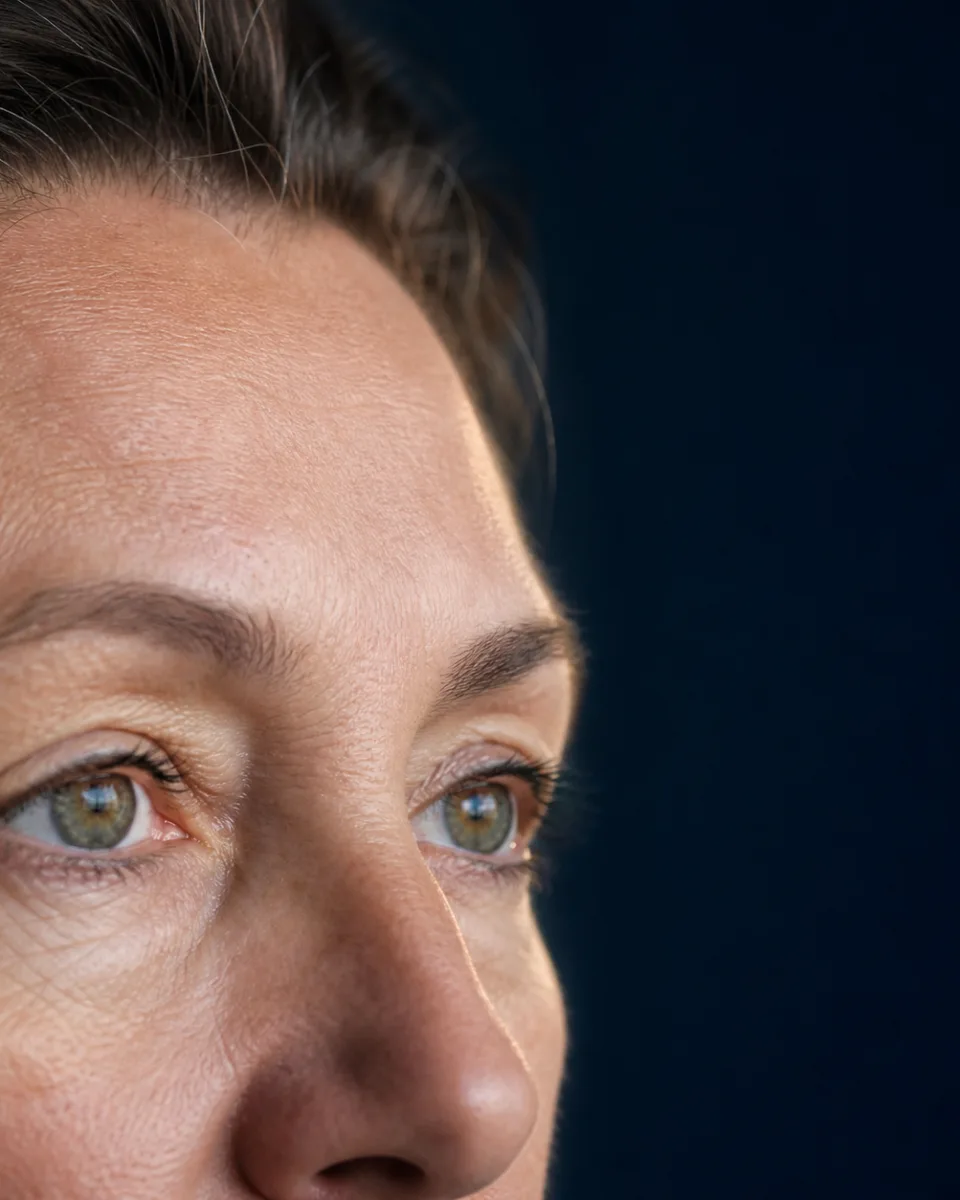
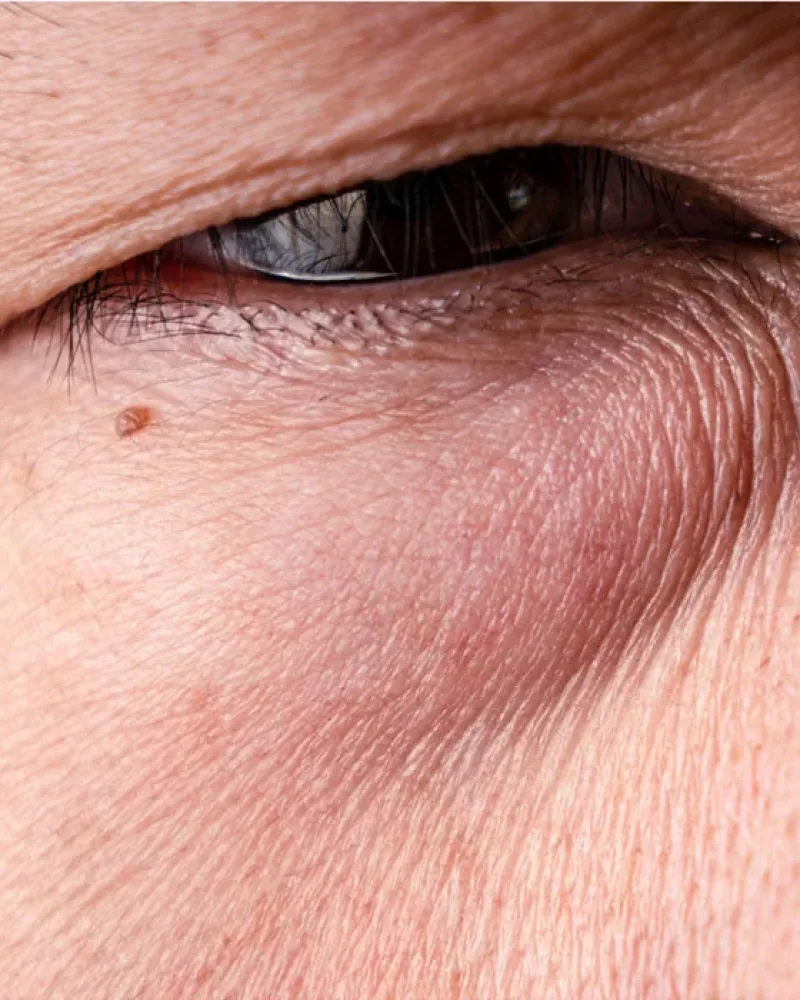
Dermatochalasis is a skin problem: an excess of skin on the upper eyelid, which can overhang the lash line and, in some people, block part of the visual field. It is a common, gradual part of ageing, is usually bilateral, and can also involve extra fat or muscle tissue sitting underneath the skin.
Ptosis (blepharoptosis) is a different, structural problem: drooping of the eyelid margin itself, caused by weakness or displacement of the muscle and tendon that lift the lid, not by excess overlying skin. The most common type in adults is age-related, caused by gradual thinning, stretching or separation of the levator tendon from its normal attachment point: a mechanical fault in the lifting mechanism, rather than simply “too much skin.”
The distinction is measured clinically using the position of the eyelid margin relative to the pupil (margin-reflex distance), not just how the eye looks in a photo. It matters because the two are corrected differently: dermatochalasis is treated by removing or tightening the excess skin, while ptosis is corrected by shortening or reattaching the muscle or tendon that lifts the lid. Treating skin alone will not fix a weak lifting muscle.
What causes hooded eyes?
Dermatochalasis develops as skin loses elasticity with age, sometimes alongside extra fat or muscle bulk under the lid. It is part of normal ageing for most people and is not, on its own, anything to worry about medically.
Age-related ptosis has a specific mechanical cause: the tendon that lifts the eyelid gradually separates or stretches from where it attaches to the lid’s supporting plate. Risk factors include long-term contact lens wear, frequent eye rubbing, previous eye surgery, and chronic eye inflammation.
Ptosis can also have causes that have nothing to do with ageing, and recognising these matters:
- Congenital: present from birth, usually from an underdeveloped lifting muscle.
- Muscle disease: conditions such as myasthenia gravis, where drooping characteristically fluctuates and worsens with fatigue.
- Nerve-related: Horner’s syndrome or a problem affecting the third (oculomotor) cranial nerve.
- Mechanical: a cyst, swelling or growth physically weighing the eyelid down.
- Other acquired causes: trauma, or after other eye surgery.
One further point worth knowing: over-treating the forehead with anti-wrinkle injections can occasionally worsen the appearance of hooding, by weakening the brow-lifting muscle more than intended and letting the outer brow settle lower. This is a technique issue, and one reason brow and eyelid anatomy should be assessed together before any treatment near the eyes.
When hooded eyes need a doctor, not a clinic
Sudden or one-sided eyelid drooping is a medical emergency, not a cosmetic concern. Ordinary dermatochalasis and age-related ptosis develop gradually, over years, and are usually symmetrical. A droopy eyelid that appears suddenly, affects only one eye, or fluctuates and worsens through the day is a completely different picture, and needs same-day assessment. UK ophthalmology guidance is explicit that ptosis “can be caused by ageing and neurological, inflammatory and muscular conditions” and that sudden onset should go straight to emergency ophthalmology, not a routine appointment.
The named causes behind this warning are genuinely serious: Horner’s syndrome, giant cell arteritis, and a bulge on an artery inside the skull (a posterior communicating artery aneurysm). Moorfields Eye Hospital describes one further cause (third nerve palsy) in plain terms: as a type of stroke. Myasthenia gravis is another recognised cause, where eyelid drooping characteristically gets worse when tired and improves after rest.
Practical rule of thumb: gradual, bilateral, slowly-progressive hooding over years is the normal picture that a cosmetic consultation is appropriate for. Sudden onset, one-sided drooping, a change alongside a fever, or a change in pupil size, is not; that needs an emergency eye assessment.
When hooding affects your vision, that is a genuine functional problem, not just an appearance issue. If excess eyelid skin overhangs far enough to reduce your field of vision (for example needing to lift your eyebrows, tilt your head back, or lift the skin manually to see properly), this is assessed with formal visual field testing and can, in some cases, be treated on the NHS. See below for how that works.
Can you get hooded eyes treated on the NHS?
Not for cosmetic reasons. NHS commissioning policy is direct that surgical treatment of dermatochalasis or ptosis of the upper eyelid for cosmetic purposes, including correcting the ordinary effects of ageing, is not funded.
Where hooding genuinely obstructs your vision, it is a different story. This is assessed with a formal visual field test, and NHS-funded upper-eyelid surgery can be available where hooding is shown to significantly reduce your field of vision, cause you to compensate by raising your eyebrows or tilting your head back, or is causing skin irritation or recurrent infection from the fold of skin.
There is no single national rule here; this is assessed regionally by each Integrated Care Board, and the exact visual field threshold and required tests vary from one area to another, so what qualifies depends on your local NHS policy, not a fixed nationwide figure. Congenital ptosis in children that risks affecting normal visual development is generally treated urgently outside this process.
Lower-eyelid “eye bags” are treated far more restrictively on the NHS than upper-eyelid hooding, because they rarely cause a functional visual problem: see our separate page on eye bags in Bedford for that distinction.
So the honest summary is this. If hooding is genuinely affecting your vision, start with your GP for assessment and referral. If your eyelids are simply more hooded than you’d like with normal ageing, that is a private, cosmetic consultation.
Because the right approach depends on whether you have dermatochalasis, mild age-related change, or something needing medical referral, we do not quote a single fixed fee. After Dr Nick has assessed your eyelids, you’ll receive a clear, honest plan and its price.
If your presentation suggests true ptosis or a medical cause rather than cosmetic hooding, we will say so and refer you appropriately rather than treat it cosmetically.
How hooded eyes are treated at Rejuvena
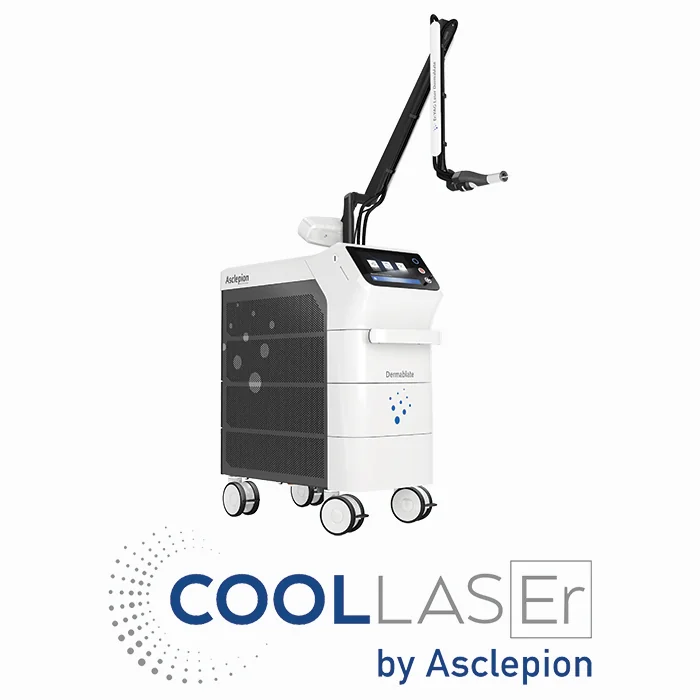
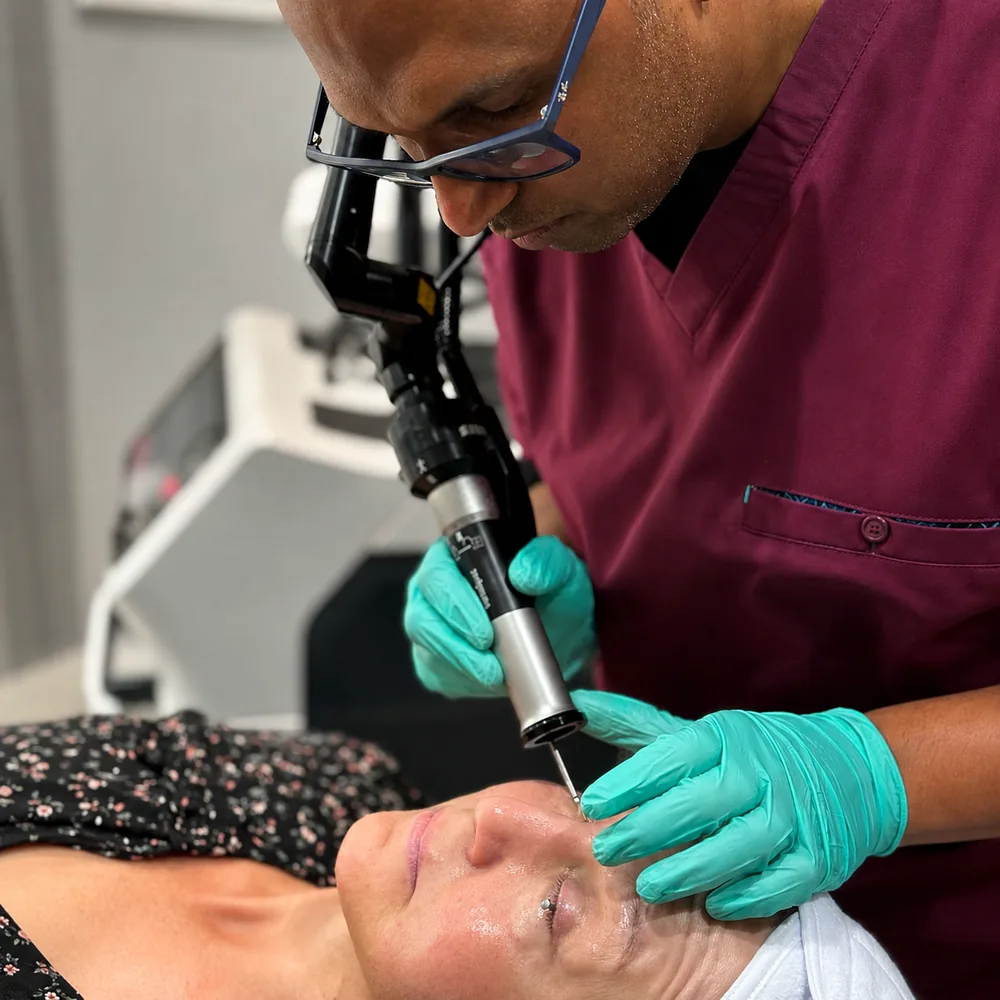
Dr Nick assesses your eyelids first, distinguishing straightforward dermatochalasis from true ptosis or a cause needing medical referral, before recommending anything. Suitable cases of mild-to-moderate dermatochalasis can be treated with Cool Bleph, our non-surgical laser eyelid tightening using the Dermablate Cool Laser; it tightens and lifts eyelid skin without surgery, needles or significant downtime. Genuine ptosis, where the eyelid margin itself is displaced, needs a different, muscle-based surgical correction that a skin-only treatment cannot substitute for; where that is the case, we say so plainly and point you towards the right referral rather than treating it with the wrong tool.
Why choose Rejuvena for hooded eyes in Bedford?
We check which one you have first
Dermatochalasis and true ptosis look similar but need different treatment; we tell them apart before recommending anything.
Diploma in Dermatology
Assessed by Dr Nick, a GMC-registered doctor, not a beauty therapist or nurse.
Honest about limits
If your case needs a surgical or medical referral rather than a cosmetic laser, we tell you plainly instead of treating it anyway.
Local & welcoming
Based at 52 Thor Drive, Bedford, we care for patients from Kempston, Biddenham, Bromham and across Bedfordshire.
Verified Google reviews
What our patients say
5.0from 161 Google reviews
A very quick procedure ,it is working already after one session ,so I am pleased so far ,and everything is properly explained and talked about if any worries . Will defo be doing lots of other areas . The room is nice and welcoming as well .
Rejuvena repliedThank you Kelly 😊 We are looking forward to seeing you again ☺️
Read this review on Google (opens in a new tab)"I had a consultation today with Svetlana and I’m very pleased with the experience! She was very professional, attentive, and took the time to listen to my concerns. She provided detailed explanations about my skin condition and gave me helpful recommendations for skincare. The atmosphere was comfortable, and I truly appreciated her expertise and care. I will definitely be coming back! Thank you for your great service!"☺️
Rejuvena repliedThank you very much for your kind review ☺️🙏 I am glad you liked the service I offered you today.
Read this review on Google (opens in a new tab)Absolutely outstanding an professional medical aesthetic service. Before any treatment began Dr Nick made sure I was fully informed, understood the treatment, discussed my wants and managed my expectations. The treatment itself was comfortable, Dr Nick kept checking i was okay. Showed me the progress as we went. His wife/medical assistant was as sweet and gentle as she is beautiful! Booked now upper wont regret it!
Rejuvena repliedThank you very much for your feedback Ayesha. We are very glad you are happy with our service. Means a lot to us. ☺️🙏
Read this review on Google (opens in a new tab)Lana delivered my treatment with her usual calmness and professionalism. She makes everything so seamless! Thank you Lana.
Rejuvena repliedThank you so much for your kind review Joanne! We are looking forward to seeing you again! 🙏☺️
Read this review on Google (opens in a new tab)—Update— Lana is excellent, always thrives to ensure I’m comfortable, and explains everything clearly in steps. I’m pleased to say I’ve booked another package to continue my treatment with Lana. —— Brilliant! I have completed my second laser session, and this is my third time visiting Lana. Every time I go, I’m welcomed and made comfortable. I am looking forward to attending more sessions. Thank you again.
Rejuvena repliedThank you so much Lizzie! Your words mean a lot to us! 🙏
Read this review on Google (opens in a new tab)So after attending my consultation today, I was made to feel very comfortable everything was explained to me in detail so that I understood the difference in treatments that I was potentially thinking to have. I decided to go for it there and then , so happy with my results I’ll definitely be going back and would recommend to my friends. 😉 Thanks again
Rejuvena repliedThank you very much for your kind review Mel. We are very happy to hear that you liked your treatment results. 🤗😊🙏
Read this review on Google (opens in a new tab)Every review above is published on Google. Tap any card to read it there.
Hooded Eyes FAQs in Bedford
What’s the difference between hooded eyes and ptosis?
Is sudden drooping of one eyelid an emergency?
Can hooded eyes be treated without surgery?
Can I get eyelid surgery on the NHS?
Can anti-wrinkle injections make hooded eyes worse?
How much does hooded eye treatment cost in Bedford?
Book your hooded eye assessment in Bedford
Speak with Dr Nick’s team at Rejuvena Bedford for an honest assessment of your eyelids. Book online or call us.