Burn Scars: When We’d Send You Elsewhere First
Why a scar that tightens across a joint needs a burns or plastics specialist, the rare cancer that can develop in an old burn scar decades later, and what genuine cosmetic refinement in Bedford looks like once the medical picture is clear.
Most burn scars need nothing more than time, gentle care and, if wanted, cosmetic refinement. But some don’t: a scar that tightens across a joint needs a burns or plastics specialist, not a clinic, and the professional body for plastic surgeons itself warns patients to be wary of cosmetic-clinic advertising for post-burn problems. That honesty comes first here.
What is a burn scar?
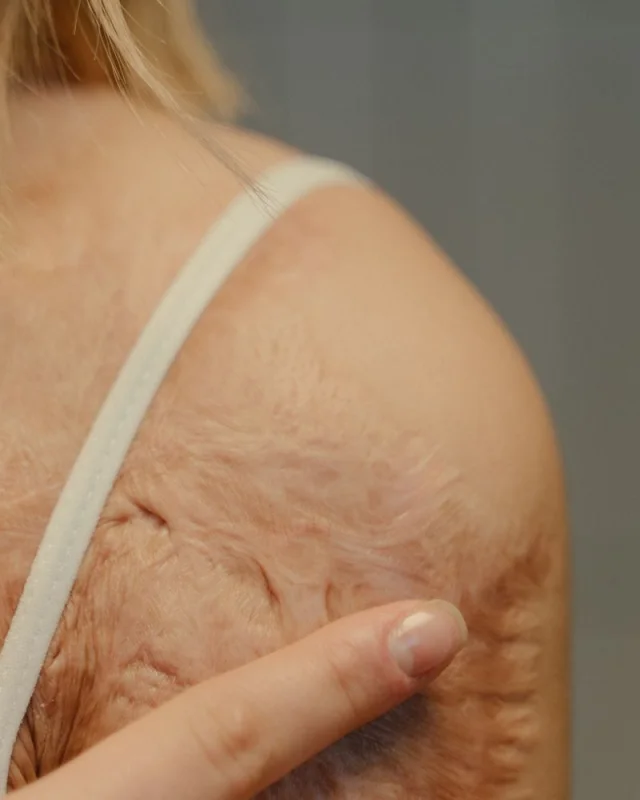
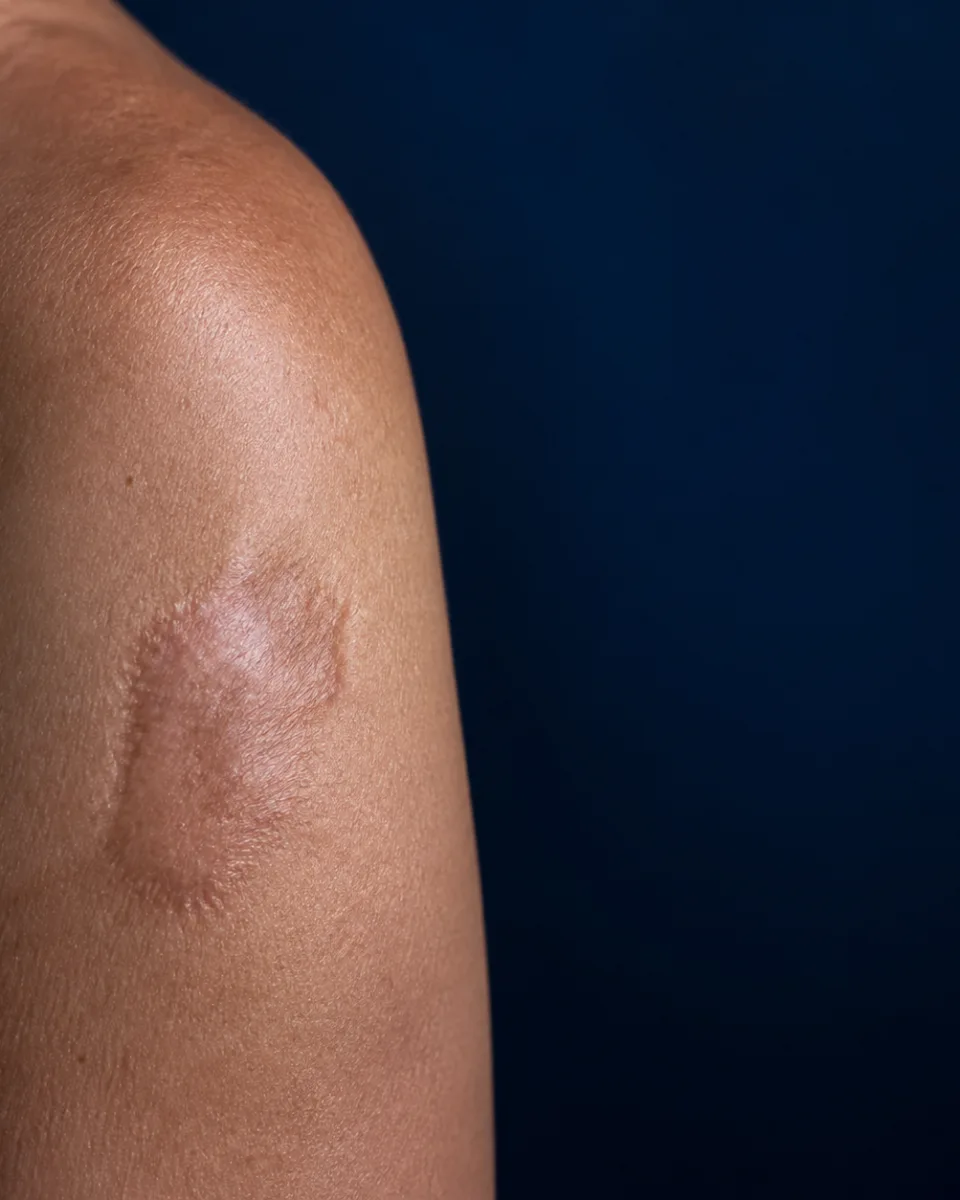
A burn scar forms because burn wounds heal through a longer, more intense inflammatory process than most other injuries, and how much scarring results depends heavily on how deep the burn went. BAPRAS (the British Association of Plastic, Reconstructive and Aesthetic Surgeons) sets out a clear depth-to-risk gradient in its patient guide to burns.
A superficial partial-thickness burn typically heals “usually within two weeks with minimal or no scarring.” A deep partial-thickness burn “will usually be associated with delayed healing and risk of significant scarring” if it isn’t surgically treated. A full-thickness burn “will lead to scarring and contractures” without surgery, usually a skin graft.
The NHS gives the same pattern in simpler terms: small, superficial burns “can often be treated at home” and heal in around two weeks, while larger, deeper burns, or those on the face, hands or genitals, need hospital-level care, and it is that deeper, slower-healing group that carries the real risk of a raised, tight or thickened scar rather than a flat, faded one.
Contracture: the burn-specific problem a clinic shouldn’t treat
The feature that most clearly separates burn scarring from other scar types is contracture. BAPRAS defines it precisely: “contracture, which is when the skin or a scar shrinks following a burn injury. This shrinkage, particularly if it happens over a joint, can impair movement and cause ligaments to tighten.”
That is a functional problem, not a cosmetic one, and we say so plainly. If a scar is restricting how a joint moves, the answer is not a laser session at an aesthetic clinic. BAPRAS’s own treatment for contracture is surgical: full-thickness skin grafts “can help to resolve this tightness and restore flexibility to the affected area.” That is reconstructive surgery, delivered through a specialist burns or plastic surgery service, aimed at restoring movement rather than improving appearance.
Burn wounds are also one of the classic triggers of hypertrophic and keloid scarring: the raised, overgrown scarring pattern covered in full on our keloid scars page, including why excision alone so often fails and the honest limits of treating it. Where a burn scar has become keloid rather than simply hypertrophic, that page’s evidence applies directly.
When a burn scar needs more than a clinic
The professional body that represents UK plastic surgeons has publicly warned patients about clinics like ours. BAPRAS’s own patient guide states: “patients should be wary of advertisements that promise the world in terms of surgical outcomes and the cosmetic treatment of scars. Wherever possible, post-burns problems should be dealt with by a burns specialist who will be able to advise on the best and most appropriate course of action.” We think a clinic repeating that warning on its own page, rather than hoping you never read it elsewhere, is the point. If your scar is restricting movement, sits over a joint, or came from a deep or grafted burn, a burns or plastics specialist should see it before we do.
A long-stable burn scar that starts breaking down deserves urgent attention, not reassurance. A rare but genuine complication called Marjolin’s ulcer (a squamous cell carcinoma developing within a burn scar) occurs in an estimated 0.7% to 2.0% of burn scars that healed without skin grafting. Its defining feature is a long latency: onset ranges from 5 to 51 years after the original injury, averaging around 29 years.
The clinical warning sign is specific: a nonhealing, ulcerative or indurated area appearing in a chronic burn scar should raise suspicion, particularly where there is new ulceration, pain, bleeding or discharge in a scar that had been stable for years. This matters because Marjolin’s ulcers are more aggressive than typical skin cancers, metastasising in 30–40% of cases compared with 0.5–3% for non-Marjolin squamous cell carcinoma. A scar that has been quiet for decades and suddenly starts weeping or ulcerating should be seen by a GP promptly, not treated cosmetically.
None of this means an old, flat, non-restrictive burn scar can’t be softened and improved here: plenty can. It means the referral questions come first, every time, before any treatment is discussed.
Can burn scars be treated on the NHS?
Acute burn treatment and the functional, reconstructive side of burn scarring are unambiguously NHS-funded, delivered through the specialist burns-service network. BAPRAS states it directly: “the surgical and non-surgical treatment of burns is available on the NHS for both the acute phase and the reconstructive phase.”
Once healing is complete, a real NHS scar-management pathway follows for wounds that needed grafting or took longer than two weeks to heal. It typically includes pressure garments worn up to 23 hours a day for as long as two years, silicone therapy on a graduated wear-in schedule, taught scar massage, and (where a scar remains symptomatic) escalation to burns doctors for steroid injections or laser treatment, with review roughly every three months.
Where the NHS line sits is honest and worth stating plainly: functional and reconstructive burn scar care is NHS-funded and delivered through that pathway. Requests for further surgery beyond what is clinically needed may be declined, as BAPRAS notes, “on the grounds that this is not the best or most appropriate course of action.” Purely cosmetic refinement of a scar’s appearance, once any functional need has been met, sits outside NHS funding; that is where a private clinic becomes appropriate, and only at that point.
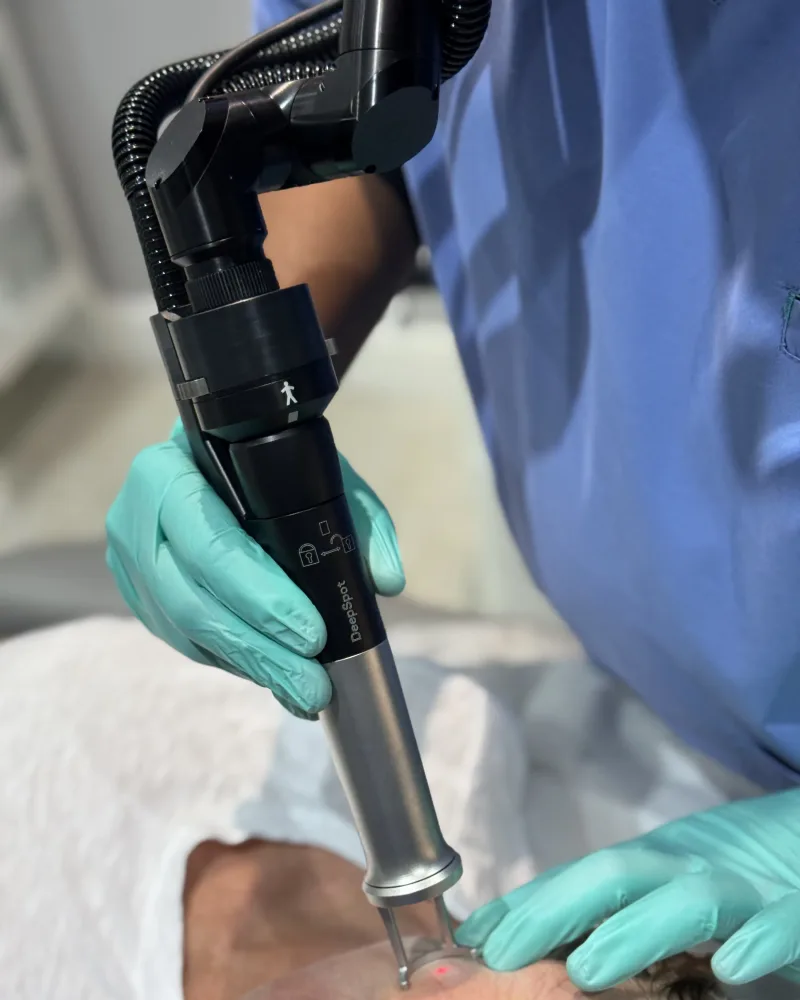
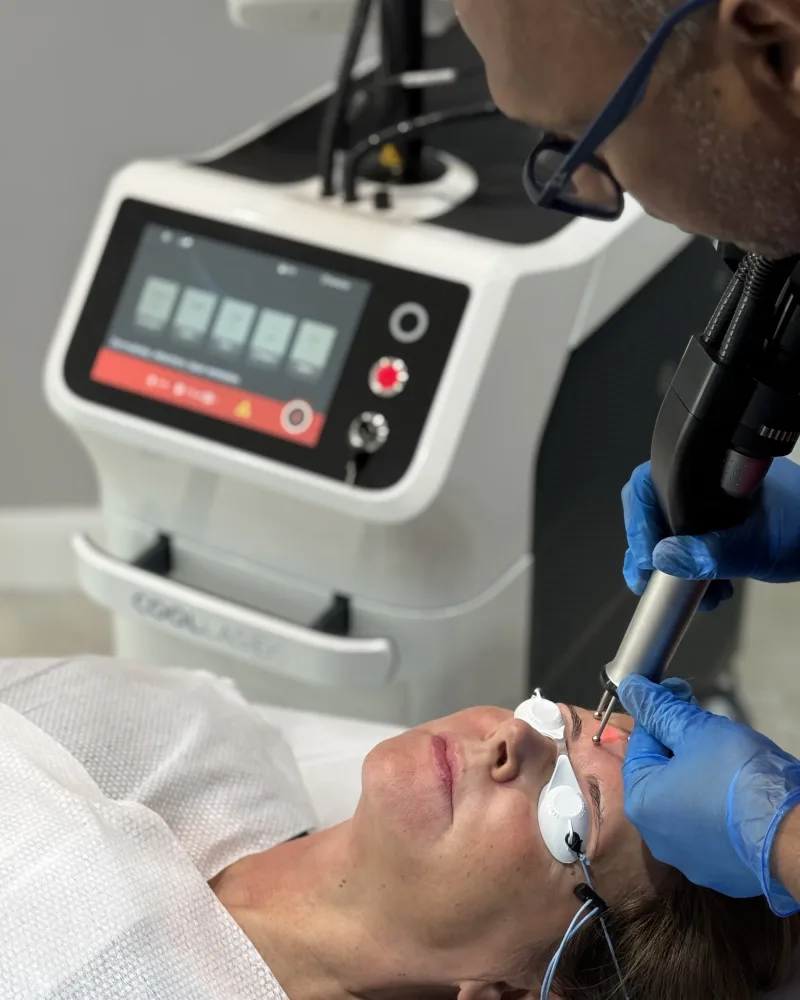
Cosmetic refinement of a settled, non-restrictive burn scar (once any functional or medical question has been ruled out) uses the same Cool Laser resurfacing and microneedling-based approach as our general scar treatment programme, from £150 a session. Because burn scars vary enormously in size, depth and history, the number of sessions and total cost are confirmed at your consultation, not quoted upfront.
We will not quote a price, or agree to treat, before establishing that your scar doesn’t need a burns or plastics specialist first.
How burn scars are assessed at Rejuvena
Every burn scar is asked about before it is looked at: location, age, whether it crosses a joint, and whether it has ever been assessed by a burns service. Dr Nick checks for anything that needs referring rather than treating. Suitable, stable, non-restrictive scars can then be softened and refined with laser resurfacing and microneedling.
Why choose Rejuvena for burn scar assessment in Bedford?
Honest about our limits
We tell you when a burns or plastics specialist is the right first step, not a laser session here.
Diploma in Dermatology
Assessed by Dr Nick, a GMC-registered doctor, not a beauty therapist or nurse.
Referred, not guessed at
Anything suggesting contracture, non-healing or malignant change is referred, not treated cosmetically.
Local & welcoming
Based at 52 Thor Drive, Bedford, we care for patients from Kempston, Biddenham, Bromham and across Bedfordshire.
Verified Google reviews
What our patients say
5.0from 161 Google reviews
As a battle-scarred rugby veteran, I may be considered an unlikely candidate for aesthetic skin treatment. However after many years of suffering venous leg ulceration, treated at considerable time and cost to the NHS, a trusted health professional suggested I try laser treatment to supplement my body's own healing process. Soon after starting treatment at Rejuvena Clinic Bedford, I found remarkably rapid healing of stubborn chronic ulcers and have a very positive view of success over the course of my treatment. Thanks to you, Dr. Nick!
Rejuvena repliedThank you very much for taking the time to leave such a thoughtful review. I’m delighted to hear how much progress you’ve made, particularly after such a long and difficult journey
Read this review on Google (opens in a new tab)Love Dr. Nick & Lana, they’re such a wonderful team. I had Morpheus 8 & a gentle peel to help with my scars at the clinic and I’m really happy with the results !
Rejuvena repliedThank you very much for your kind words Guina. ☺️🙏
Read this review on Google (opens in a new tab)I went to see Rejuvena clinic few months ago after reading their reviews online. I was suffering with acne scars since many years and have tried few treatments from elsewhere. I had a consultation with Dr Nick who was very thorough during the consultation and he suggested me few different treatment options. At any time I never felt rushed or pushed to purchase treatments. 6 months fast forward I had laser skin resurfacing, injections and skin care and my skin has never been better. I am very thankful to the Rejuvena clinic to sort out my skin issue once and for all. Thank you very much
Rejuvena repliedThank you for your kind review Monish, glad your skin issue is sorted now 😊🙏
Read this review on Google (opens in a new tab)I finally found a clinic where I received the help I needed. I had been struggling for a very long time with acne and deep scarring on my face. After a few treatments, I can already see and feel a remarkable improvement. The couple who run the clinic are incredibly kind and welcoming — from my very first visit, I felt very comfortable opening up about my problem.
Rejuvena repliedThank you very much for your valuable review Judyta. We are very happy to have helped you with your skin condition and glad to hear you feel you were listened to and seen good impr
Read this review on Google (opens in a new tab)I have had the joy of being a client of Dr Nick and Lana’s for 2 years and have benefited enormously from their expertise, knowledge and love for skin care and treatments. Dr Nick is a consummate professional, ably assisted by Lana. Today I had the most innovative laser treatment available in the country. It took about 45 mins to treat my face. I was nervous but need not have been. The laser was not painful, and the soothing serum reduced the post treatment heat Also I had blemishes that were removed leaving my skin smooth. At the moment my face is red, like sunburn but I know by tomorrow that will fade. The aftercare has been thoroughly explained so I don’t have any concerns. I. now look forward to a more refreshed face without looking artificial. I love the fact that Dr Nick and Lana are always looking to offer the best treatments available. They love their craft and it shows in everything they do. Their approach to skincare is authentic and not motivated by financial reward. Rejuvenate Clinic is a real gem in Bedford and I have nothing but praise for Dr Nick and ‘Prof’ Lana. If you haven’t tried them, please do, you won’t be disappointed.
Rejuvena repliedThank you Gina for your kind words and feedback. “Prof Lana” 😂 and Dr Nick are always happy to see you at the Rejuvena Clinic. You bring us smiles and laughter with your presence
Read this review on Google (opens in a new tab)I had the absolute pleasure of receiving a KLaser fractional non-ablative full face treatment today at Rejuvena Clinic in Bedford with Nick Nosina and Lana. From start to finish, their hospitality was phenomenal. Both Nick and Lana were incredibly thorough, professional, and genuinely kind. I felt truly cared for, and it was clear I was in expert hands. It was an honor to be surrounded by such skilled professionals, including the director, and I’m extremely grateful for the experience. Nick uses some of the most advanced technology available and doesn’t scrimp or cut corners when it comes to achieving the best results for his clients. He’s an absolute perfectionist, and his attention to detail is matched only by his exceptional hygiene and clinical standards. Everything was carried out with the utmost precision and care. Without a doubt, I’ll be a returning client. When people have that level of expertise and dedication, it builds complete trust. It’s so important for others to understand that laser treatments should always be performed by qualified professionals—if anything were to go wrong, someone like Nick would know exactly how to manage and resolve it. That kind of knowledge and responsibility makes all the difference. I couldn’t recommend them more highly.
Rejuvena repliedAww! Thank you so much for your detailed kind review Kerry. Truly grateful for your comments 🙏☺️
Read this review on Google (opens in a new tab)Every review above is published on Google. Tap any card to read it there.
Burn Scars FAQs in Bedford
Why would a clinic send me to a burns specialist instead of treating my scar?
What is contracture, and how do I know if I have it?
Can a burn scar develop into cancer?
Does the NHS treat burn scars?
How much does burn scar treatment cost in Bedford?
How effective are pressure garments and silicone for burn scars?
Book your burn scar assessment in Bedford
Speak with Dr Nick’s team at Rejuvena Bedford for an honest, doctor-led assessment of your scar, including whether a specialist referral comes first.