Eye Bags: Causes & When It Isn’t Just Ageing
What causes eye bags, the thyroid condition that can be mistaken for them, the real vascular risk of tear-trough filler, and what genuinely helps in Bedford.
Most eye bags are a cosmetic issue: a fixed, gradual bulge caused by fat pushing forward as the membrane holding it weakens with age. But puffy eyes can also be thyroid eye disease, which affects around 1 in 4 people with an overactive thyroid caused by Graves’ disease, and needs a doctor, not filler.
What are eye bags and tear troughs?
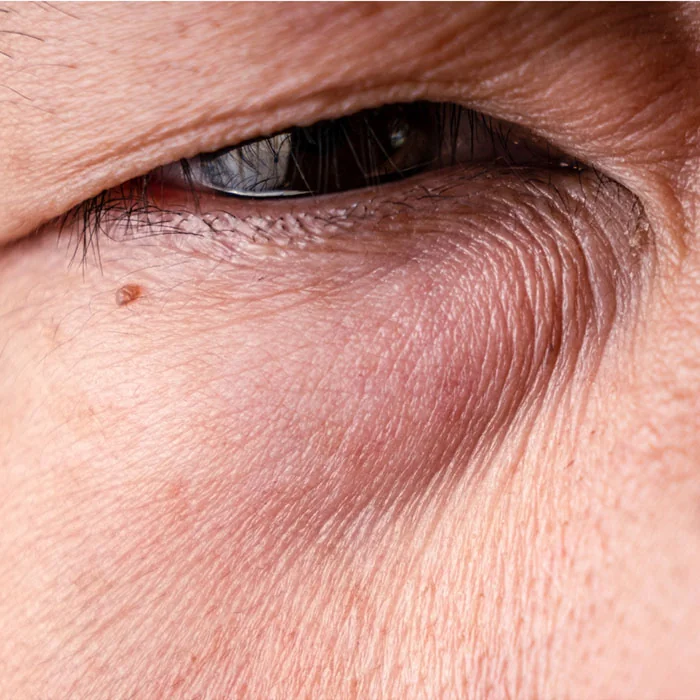
“Eye bags” and “tear troughs” often appear together but are two different problems. Eye bags are caused by fat pads in the lower eyelid bulging or protruding forward: a weakening of the membrane that normally holds them in place, and/or the fat pads themselves expanding. Interestingly, this isn’t only an ageing change: documented cases of prominent lower-eyelid fat pads have been seen in people as young as 14, suggesting a strong hereditary or constitutional element for some people, independent of age.
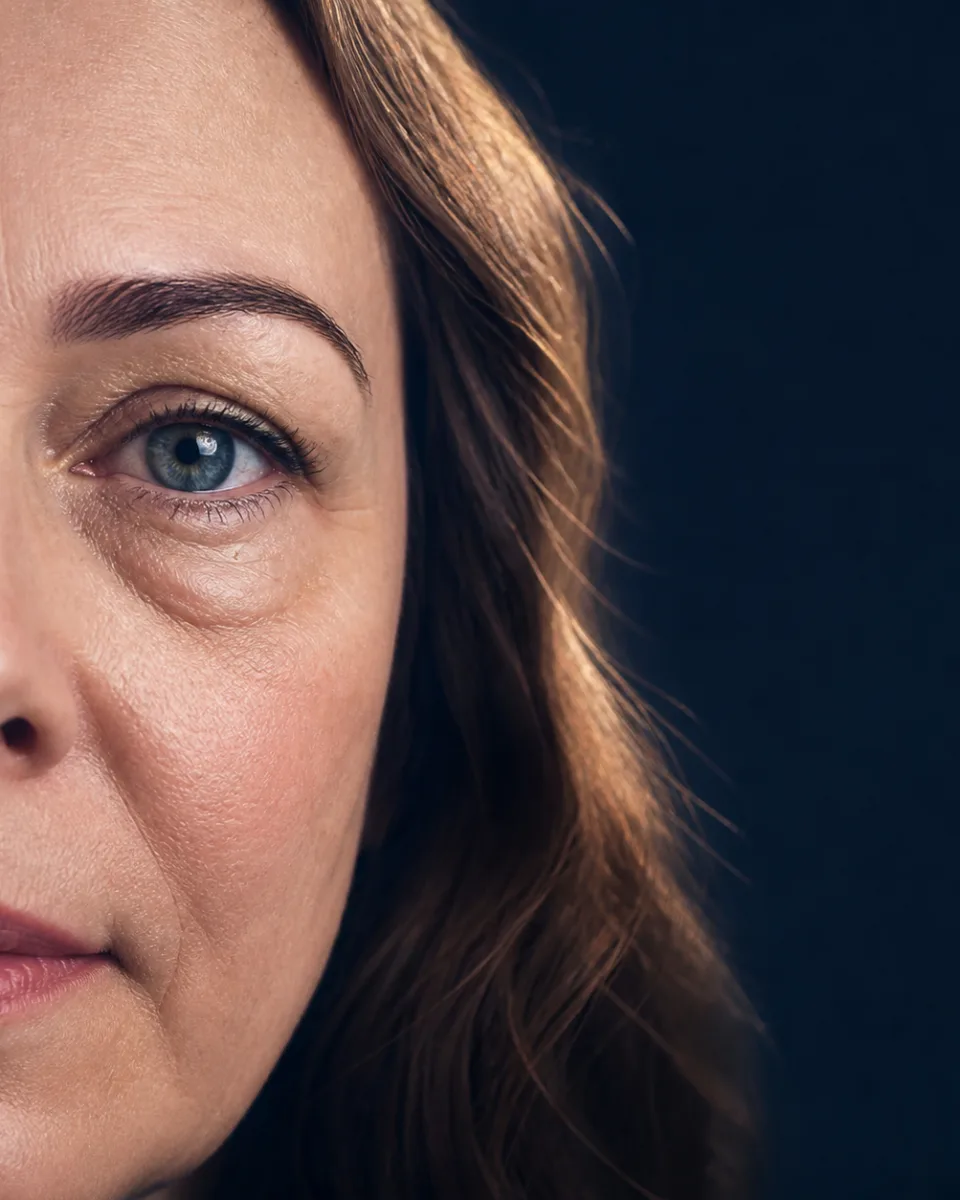
The tear trough is the hollow running from the inner corner of the lower eyelid toward the cheek. It forms through a different mechanism: loss of deeper cheek fat, descent of the cheek’s fat pad, and thinning of the overlying skin. In many people the two problems sit side by side: a bulging fat pad above, and a hollowed trough below, creating a visible step or shadow.
What causes eye bags?
Structural fat herniation (the fixed, gradual bulge described above) is the most common cause, and is cosmetic rather than medical. But puffiness under the eyes can have other, quite different causes that are worth knowing apart:
- Fluid retention: allergies such as hay fever cause itchy, red or watery eyes, and can contribute to under-eye swelling that fluctuates with allergen exposure, tiredness or diet, unlike a fixed structural bulge.
- Genetics: eye bags can run strongly in families and appear decades before any other sign of facial ageing.
- Skin laxity: thinning, less elastic lower-eyelid skin makes both fat bulging and trough shadowing more visible.
None of this is medically concerning on its own. The next section covers the presentations that genuinely are.
When puffy eyes need a doctor, not a clinic
Thyroid eye disease is the differential that matters most. Eye problems, also called Graves’ ophthalmopathy, affect around 1 in 4 people with an overactive thyroid caused by Graves’ disease. The symptoms can look deceptively like ordinary eye bags: red, swollen or pulled-back eyelids, and bulging eyes, alongside dry or gritty eyes, light sensitivity, watering, and blurred or double vision. In severe cases it can threaten vision.
This is managed by referral to an eye specialist for treatment such as eye drops, steroid medicine or surgery, not by a cosmetic consultation. Graves’ disease mostly affects young or middle-aged women and often runs in families, so a woman with new puffy eyes and other thyroid symptoms (a fast heart rate, tremor, unexplained weight loss, or a swelling in the neck) should see her GP first.
Sudden, one-sided, painful or feverish swelling needs urgent assessment. Ordinary eye bags are gradual, bilateral and painless. Swelling that comes on suddenly, affects one eye, is red, warm, painful to move, or comes with a fever, can point to an infection around the eye and needs same-day medical attention, not a booking for filler.
Tear-trough filler carries a real risk of vision loss, and this needs to be said plainly. The tear trough sits close to blood vessels (the infraorbital and angular arteries) that connect directly to the arteries supplying the retina. Injecting filler into this vascular network, rather than the surrounding tissue, carries a documented risk of vascular occlusion and blindness. This is why tear-trough filler should only ever be performed by an appropriately trained injector with sound anatomical knowledge, using techniques (blunt cannulas, limited volumes, deep placement) that reduce (though never fully eliminate) the risk.
Are eye bags treated on the NHS?
No, not for cosmetic reasons. The NHS position is direct: “cosmetic surgery is not routinely provided on the NHS,” and eyelid surgery (blepharoplasty) for eye bags is described throughout as a private cosmetic procedure.
Where a genuine medical cause is identified, it is managed through an entirely different NHS route. Thyroid eye disease goes through ophthalmology and endocrinology referral. Infection around the eye is treated with antibiotics via your GP or urgent care. Neither of these is a cosmetic pathway, and neither should be treated as one.
So the honest summary is this. If your eyes are bulging, your eyelids look pulled back, you have double vision, or you have other thyroid symptoms, start with your GP. If your eye bags are the ordinary, gradual, structural kind, that is a private, cosmetic consultation.
At Rejuvena, under-eye treatment is planned around what’s actually causing your specific concern (fat, volume loss, skin laxity or a combination) using options such as tear trough filler, Cool Bleph non-surgical eyelid tightening, skin injectables or laser resurfacing. Because the right approach and number of sessions vary from person to person, your cost is confirmed at your consultation.
If your presentation suggests a medical cause rather than cosmetic eye bags, we will say so and point you to your GP rather than treat it cosmetically.
How eye bags & tear troughs are treated at Rejuvena
Dr Nick assesses the under-eye area first, distinguishing structural fat bulging from volume loss, skin laxity or a cause that needs medical referral, before recommending anything. Suitable cases can then be treated with tear-trough filler for hollowing, Cool Bleph laser eyelid tightening for mild-to-moderate laxity and puffiness, or a combination: always with the vascular risks of filler explained clearly first.
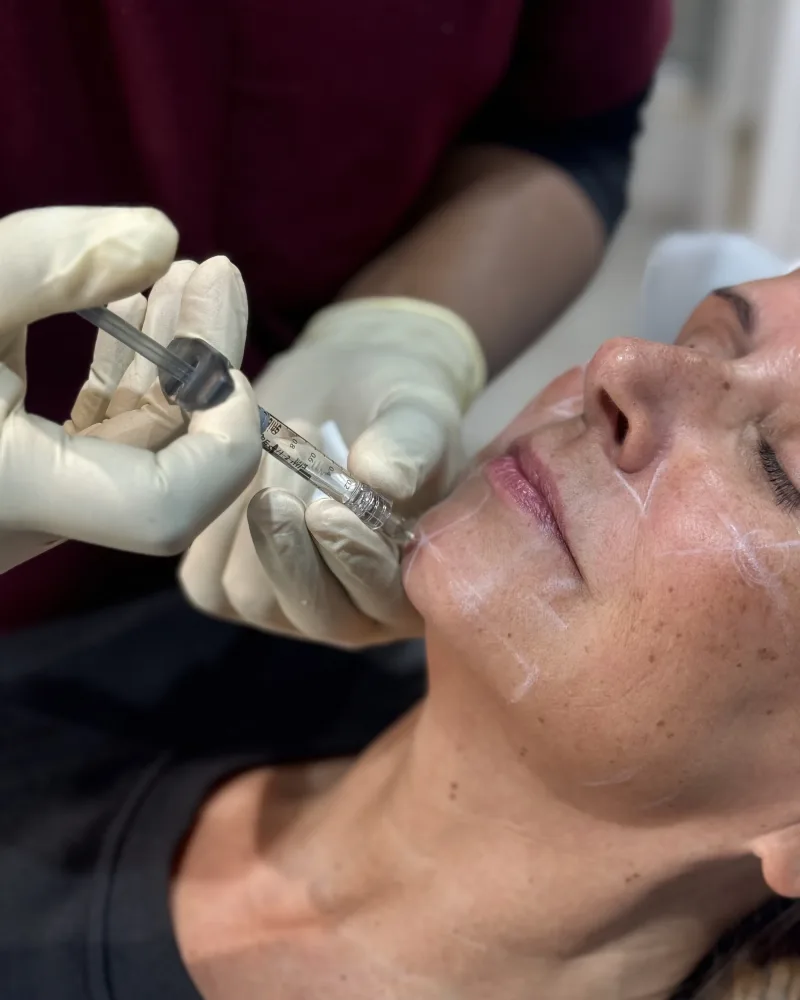
Under-Eye Treatment in Bedford
Our hub for dark circles, tear troughs, pigmentation and eye bags.
Learn more →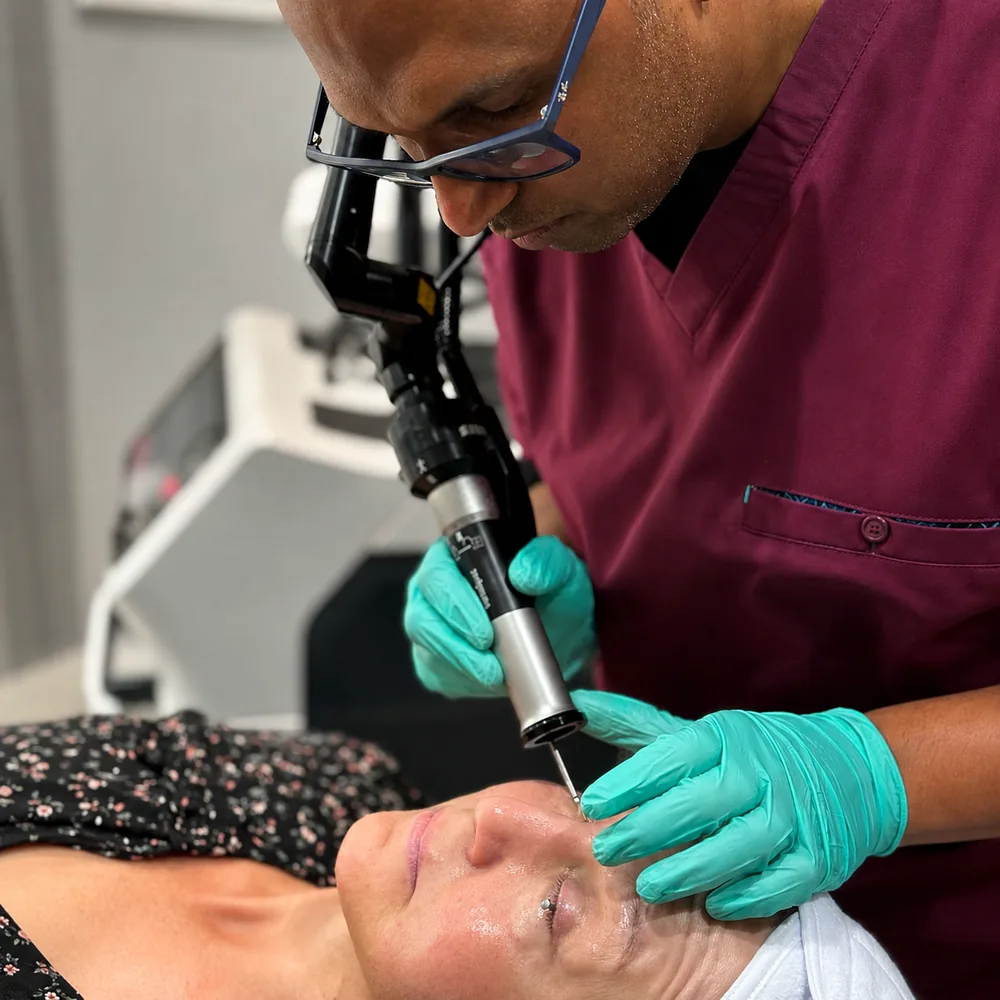
Cool Bleph Non-Surgical Blepharoplasty
Laser eyelid tightening for mild-to-moderate laxity and puffiness.
Learn more →Want the fuller picture on the groove, hollowing and wrinkles that make up a tear trough? See tear troughs in Bedford.
Why choose Rejuvena for eye bag assessment in Bedford?
We check the cause first
Structural eye bags, thyroid eye disease and infection all look different up close; we tell them apart before treating anything.
Diploma in Dermatology
Assessed by Dr Nick, a GMC-registered doctor, not a beauty therapist or nurse.
Vascular safety taken seriously
Tear-trough filler is performed with the anatomical risks explained plainly, not glossed over.
Local & welcoming
Based at 52 Thor Drive, Bedford, we care for patients from Kempston, Biddenham, Bromham and across Bedfordshire.
Verified Google reviews
What our patients say
5.0from 161 Google reviews
Great experience, Dr Nick tailored the treatment and the results were brilliant
Rejuvena repliedThank you very much for your kind review Rachel. I am glad to know you are pleased with the results ☺️🙏
Read this review on Google (opens in a new tab)I would recommend this clinic with confidence. I've had set of treatments completed to very high standard with great results. Thank you Nick & Lana for your professionalism and advice!
Rejuvena repliedThank you very much for your kind review Tina. 🙏😊
Read this review on Google (opens in a new tab)I had the absolute pleasure of receiving a KLaser fractional non-ablative full face treatment today at Rejuvena Clinic in Bedford with Nick Nosina and Lana. From start to finish, their hospitality was phenomenal. Both Nick and Lana were incredibly thorough, professional, and genuinely kind. I felt truly cared for, and it was clear I was in expert hands. It was an honor to be surrounded by such skilled professionals, including the director, and I’m extremely grateful for the experience. Nick uses some of the most advanced technology available and doesn’t scrimp or cut corners when it comes to achieving the best results for his clients. He’s an absolute perfectionist, and his attention to detail is matched only by his exceptional hygiene and clinical standards. Everything was carried out with the utmost precision and care. Without a doubt, I’ll be a returning client. When people have that level of expertise and dedication, it builds complete trust. It’s so important for others to understand that laser treatments should always be performed by qualified professionals—if anything were to go wrong, someone like Nick would know exactly how to manage and resolve it. That kind of knowledge and responsibility makes all the difference. I couldn’t recommend them more highly.
Rejuvena repliedAww! Thank you so much for your detailed kind review Kerry. Truly grateful for your comments 🙏☺️
Read this review on Google (opens in a new tab)What a lovely Aesthetic Clinic I visited today and had some treatments at- both Nick and Lana are so welcoming and knowledgeable about all procedures. Definitely will be going back in the future.
Rejuvena repliedThank you very much Stephen. We are very glad to hear you liked our treatments ☺️🙏
Read this review on Google (opens in a new tab)A very quick procedure ,it is working already after one session ,so I am pleased so far ,and everything is properly explained and talked about if any worries . Will defo be doing lots of other areas . The room is nice and welcoming as well .
Rejuvena repliedThank you Kelly 😊 We are looking forward to seeing you again ☺️
Read this review on Google (opens in a new tab)"I had a consultation today with Svetlana and I’m very pleased with the experience! She was very professional, attentive, and took the time to listen to my concerns. She provided detailed explanations about my skin condition and gave me helpful recommendations for skincare. The atmosphere was comfortable, and I truly appreciated her expertise and care. I will definitely be coming back! Thank you for your great service!"☺️
Rejuvena repliedThank you very much for your kind review ☺️🙏 I am glad you liked the service I offered you today.
Read this review on Google (opens in a new tab)Every review above is published on Google. Tap any card to read it there.
Eye Bags FAQs in Bedford
Could my eye bags be a thyroid problem?
Is tear-trough filler safe?
Are eye bags treated on the NHS?
What is the difference between eye bags and tear troughs?
Can eye bags be caused by allergies or tiredness?
How much does eye bag treatment cost in Bedford?
Book your eye bag assessment in Bedford
Speak with Dr Nick’s team at Rejuvena Bedford for an honest assessment of your under-eye area. Book online or call us.