Hyperpigmentation: Causes, Safety & Honest Evidence
What hyperpigmentation covers, why the treatment evidence is genuinely thin, why treatment itself can cause more pigmentation (especially on darker skin) and why a new or changing patch should never be assumed harmless.
“Hyperpigmentation” is an umbrella term, not one diagnosis, and the evidence behind treating it is genuinely thin. Treatment itself can cause more pigmentation, especially on darker skin, and a new or changing patch should never be assumed harmless without a proper look.
What is hyperpigmentation?
“Hyperpigmentation” describes any area of skin that is darker than the surrounding skin due to excess melanin; it is a description, not a single diagnosis. This page covers two of the most common causes: post-inflammatory hyperpigmentation (PIH) and solar lentigines (“age spots” or “liver spots”). A third major cause, melasma, is genuinely different enough (hormonally driven, with its own distinct risks) that we cover it on its own dedicated page.
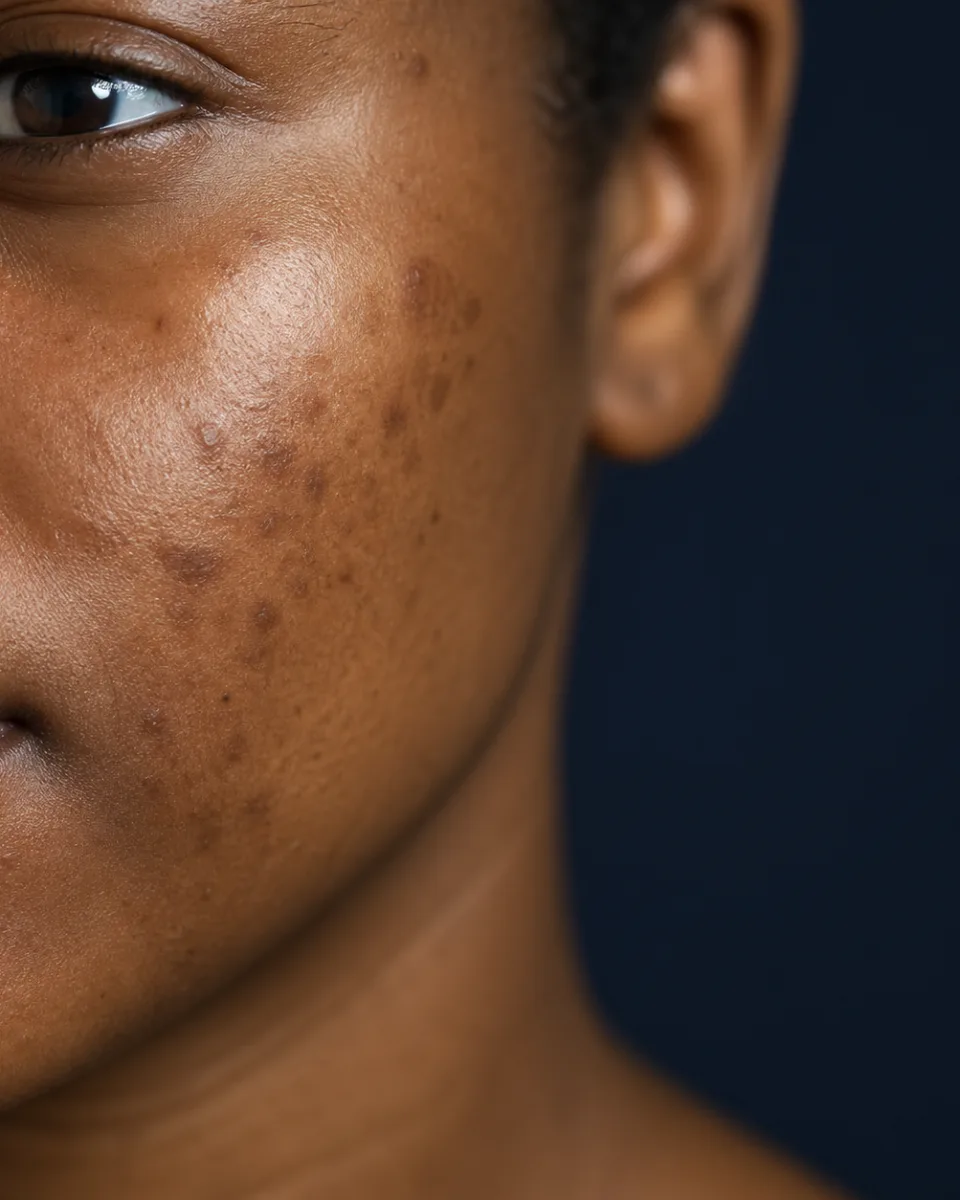
Post-inflammatory hyperpigmentation is “a common acquired disorder that occurs following skin inflammation or injury,” per US clinical reference guidance (StatPearls). The pigment can sit in the upper skin layer (epidermal, which fades faster) or deeper in the dermis (which is far more persistent and harder to treat). It is more prevalent in darker skin tones (particularly Fitzpatrick types IV to VI) and one clinical reference notes that in people with darker skin and acne, the incidence “can be as high as 65%.” Epidermal PIH typically resolves within 6–12 months; dermal PIH improves slowly and may be permanent.
Solar lentigines are “a common, benign, flat, pigmented lesion found predominantly on sun-exposed skin,” caused by chronic UV exposure. They may be found in up to 90% of Caucasians over the age of 60, and affect roughly 10–15% of people by age 35. Unlike freckles, solar lentigines do not darken further with sun exposure and (unlike freckles) do not fade in winter; they persist year-round.
What causes hyperpigmentation?
PIH is triggered by inflammation of any kind, which stimulates the pigment-producing cells to overproduce melanin. In darker skin specifically, the most common triggers are acne, atopic dermatitis (eczema) and impetigo. But the trigger list is wider than skin conditions alone; it also includes infections, allergic reactions, psoriasis, lichen planus, certain medications, thermal burns, and, importantly, cosmetic procedures themselves: laser therapy, chemical peels and cryotherapy are all recognised triggers of PIH, not just causes people arrive with. That last point matters, because it means the very treatments used to fade pigmentation can also cause it.
Solar lentigines are driven by chronic ultraviolet exposure over years, which causes changes that increase melanin production and retention within skin cells. Interestingly, the number of pigment-producing cells is normal or only slightly increased; it is more melanin per cell, not necessarily more cells. Several gene variants have been linked to solar lentigo formation, and fair Fitzpatrick skin types (I–II), a history of sunburn and sunbed use are the main risk factors, alongside cumulative age-related sun exposure.
Not every dark patch is benign and treatment can cause more
A pigmented patch should not be assumed benign by appearance alone
The UK primary-care referral system for suspected skin cancer applies to any pigmented lesion, not only lesions that look like a classic mole. UK clinical guidance is direct that a suspicious pigmented lesion scoring three or more on the weighted seven-point checklist: a change in size, an irregular shape or border, and irregular colour scoring two points each; diameter of 7mm or more, inflammation, oozing or a change in sensation scoring one point each: should be referred on the two-week urgent suspected-cancer pathway.
In practical terms: a patch that is new, changing, asymmetric, irregularly coloured, or growing should be assessed by a clinician before being assumed to be PIH, a lentigo, or ordinary pigmentation. It should not be self-diagnosed from a description on a website.
This distinction matters because solar lentigines sit on a spectrum with more serious lesions. Melanoma in situ and lentigo maligna are listed in the differential diagnosis for solar lentigo, and require dermoscopy and biopsy to tell apart from a benign lentigo. Lentigo maligna specifically is a pre-cancerous condition, with approximately 5% converting to melanoma: a figure that rises to around 50% in lesions larger than 4cm. Some lesions that look like an ordinary “age spot” to a patient are a genuinely different, higher-risk entity that needs proper clinical assessment, not patient self-assessment.
The treatment itself can cause the problem it is meant to fix
This is the single most important point for a cosmetic clinic to state plainly, and we would rather you know it before booking than after. A systematic review of 46 studies covering 1,356 participants with skin of colour states it directly: “Treating PIH poses challenges and can potentially worsen the condition.” On chemical peels specifically, the same review found people with skin of colour have “a well-documented elevated risk of developing PIH transiently after peels compared to the general population.”
On laser treatment: “Laser poses an increased rate of inducing PIH with repeated procedures (11%-17%), especially in darker skin types”, even though laser also produced the review’s best complete-resolution rate (26% of a subgroup), it also produced documented cases of PIH getting worse after treatment. The practical implication: pigmentation treatment plans need to be conservative and patch-tested in darker skin types, and you should be told plainly that treatment carries a real risk of worsening pigmentation, not only a chance of it not working.
Does the NHS treat hyperpigmentation?
By default, no, hyperpigmentation from PIH or solar lentigines is treated by the NHS as a cosmetic concern, not as a condition warranting funded treatment, unless red-flag or symptomatic features are present. A local NHS Integrated Care Board commissioning policy sets out the actual referral criteria for facial hyperpigmentation: referral to secondary care is supported only where the patient is symptomatic (burning, itching or soreness), the condition is progressive, or the pattern is atypical or asymmetric. Cosmetic cases that are asymptomatic, static and symmetrically distributed are, by clear implication, not supported for NHS referral. UK clinical guidance confirms the same principle for solar lentigines specifically: “any treatment which has a purely cosmetic aim may not be available on the NHS.”
The dividing line is genuinely useful to understand: pigmentation that is asymptomatic, static, symmetrical and diagnostically unambiguous is a cosmetic issue and privately funded. Pigmentation that is new, changing, asymmetric, symptomatic, or otherwise meets the suspected-cancer referral criteria above is investigated and treated on the NHS via the routine two-week-wait pathway: a genuinely different pathway with a genuinely different funding basis, not simply a matter of degree.
Medical-grade chemical peel: from £120
Lumecca Peak™ IPL — face (single session): £250
Lumecca Peak™ IPL — face, neck & chest: £450
Laser Lesion Removal (raised, benign lesions): from £250
Lumecca Peak™ IPL — face & neck: £350
Cosmelan® depigmentation protocol: confirmed at consultation
Given the treatment-risk points above, your plan is confirmed after a proper diagnosis, not booked from a price list alone.
How hyperpigmentation is treated at Rejuvena
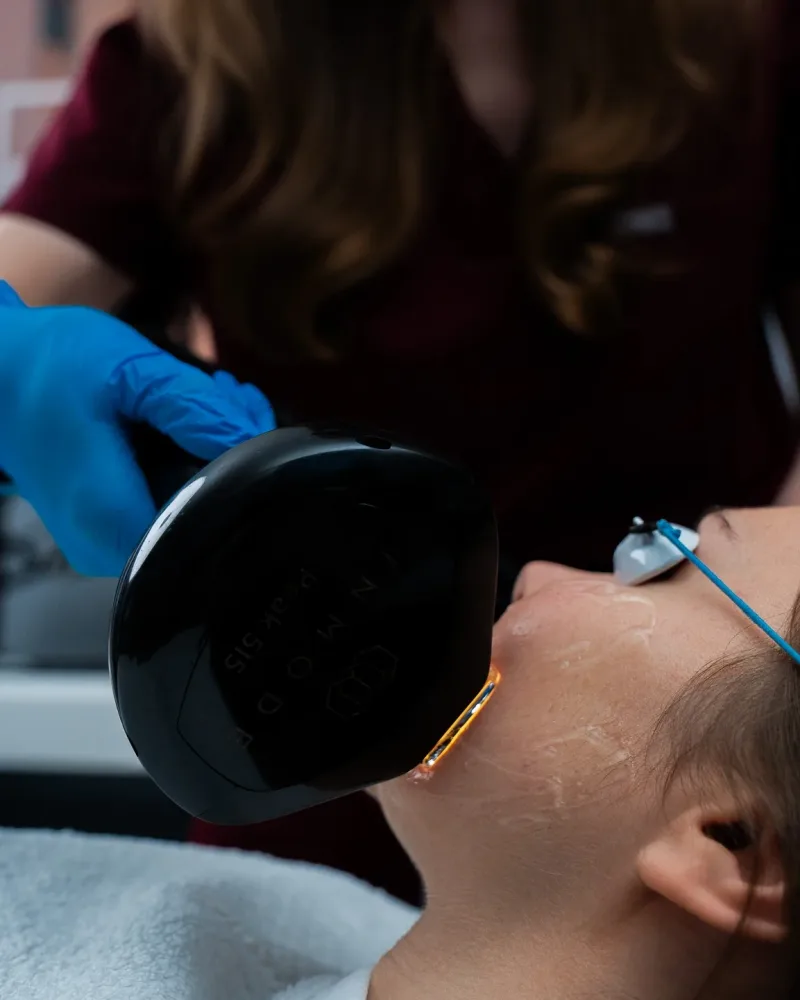
Dr Nick identifies the specific type and cause of your pigmentation first, because PIH, solar lentigines and melasma respond to different approaches and carry different risks. Lumecca Peak™ IPL, the Cosmelan® protocol, medical-grade peels and Cool Laser™ are then matched to your diagnosis and skin tone: conservatively, with a test area where appropriate, rather than a one-size-fits-all package.
Why choose Rejuvena for hyperpigmentation in Bedford?
Diagnosis before treatment
PIH, solar lentigines and melasma need different approaches. Dr Nick identifies which you have before treating anything.
Honest about the evidence
We tell you plainly where the research is thin and where treatment itself carries a real risk of worsening pigmentation.
GMC-registered
Assessed by Dr Nick, a GP with a Diploma in Dermatology, with new or atypical patches referred appropriately.
Local & welcoming
Based at 52 Thor Drive, Bedford, we care for patients from Kempston, Biddenham, Bromham and across Bedfordshire.
Verified Google reviews
What our patients say
5.0from 161 Google reviews
I have been receiving treatment for Malasma and Hyperpigmentation at the Rejuvena Clinic. I felt in safe hands from my first consultation. Dr. Nick was very understanding of my concerns and very knowledgable about the treatments that would be suitable for me. He also offered advice outside of the treatments available at the clinic, advising on lifestyle and medication changes I could implement to complement my treatment. I liked the holistic approach. My appointments never feel rushed. Dr. Nick and Lana take the time to listen and I feel comfortable enough to ask multiple questions. They are also very responsive to messages and emails, even outside of office hours. Rejuvena Clinic will be my go-to for any treatments in the future.
Rejuvena repliedThank you very much for your kind words Nadia. We are glad to have helped you and that you liked our services. It really means the world to us ☺️🙏
Read this review on Google (opens in a new tab)I recently had a lesion removed from my cheek. The pigmented lesion had bothered me for years. I’m glad I finally decided to do something about it. I was quite nervous on the day, but Dr. Nick and Lana were so careful and reassuring — they really put me at ease. The procedure was quick and comfortable, and I feel so much better for having it done. I did a lot of research before I chose this clinic for my treatment. The clinic’s medical dermatology focus made me feel confident I would be in the right hands. I’m really grateful for the care I received and I would definitely recommend this clinic.
Rejuvena repliedThank you so much for your skin review Dupinder 🙏
Read this review on Google (opens in a new tab)Throughout my Lumecca experience Nick & Lana have been nothing but exceptional. Their knowledge and experience mixed with personal customer service can’t be matched. They put your mind and rest and explain everything from the start. The results speak for themselves! For years I have managed Rosecea, Pigmentation and Thread Veins. After just one treatment I could see clearer, dewy skin. Thanks to Nick and Lana my confidence has grown to be able to go out with minimal make up on. A Randall
Rejuvena repliedHi Aisling, thank you for your kind review. We are so happy that we managed to help you feel confident in your skin again. It means a lot to us, so thank you once again. ☺️🙏
Read this review on Google (opens in a new tab)I’ve been seeing Dr Nick and Lana for almost a year now. They have provided me with such a comforting experience and given exceptional results. Their Salon isn’t local for me, but I chose to keep seeing Dr Nick because of his professionalism and extra care he takes to my individual needs. I’m always provided with a detailed, realistic outcome before and after any treatment, by being explained any possible risks or benefits, which helped me a lot in making decisions. Seeing Dr Nick has helped changed my skin and I’m grateful for how attentive and skilled he was during my treatment. After any treatment i’ve always been followed up with the recovery, aftercare advice or any worries I had, which helped me feel at ease. I was understandably nervous for my treatment before seeing Dr Nick and Lana, but it was a great joy seeing them as they are always the most genuine and welcoming towards me, anytime I visit I feel very safe in the hands of Dr Nick.
Rejuvena repliedAww Ruby, thank you very much for your kind review. It made us emotional reading it. We are glad to hear you feel you have received good service from us. It’s always a pleasure see
Read this review on Google (opens in a new tab)I have been visiting Lana’s clinic for approximately one year, and each experience has been exceptional. I always leave feeling happy, confident, and fully satisfied with the quality of her work. Lana is highly skilled, attentive, and genuinely cares about her clients, ensuring that every detail is addressed with great care. I wholeheartedly recommend her services. If you are considering booking an appointment, do not hesitate—you will be in excellent hands!
Rejuvena repliedThank you very much for your sweetest review Roxana. It means a lot to me that you like our services ☺️🙏🤗🥺
Read this review on Google (opens in a new tab)Very very good! Clean. Can’t wait to start my journey here Non judgmental
Rejuvena repliedAww! Thank you very much Peter ☺️🙏 for leaving us a 5 star review. Really appreciate your kindness. We can’t wait to help you in getting your confidence back! 🤗
Read this review on Google (opens in a new tab)Every review above is published on Google. Tap any card to read it there.
Hyperpigmentation FAQs in Bedford
Is hyperpigmentation dangerous?
Can treatment make my pigmentation worse?
Will the NHS treat my hyperpigmentation?
How much does hyperpigmentation treatment cost in Bedford?
How good is the evidence for hyperpigmentation treatments?
Is pigmentation treatment safe for darker skin tones?
How do I know if a dark patch is just pigmentation or something else?
Book your hyperpigmentation assessment in Bedford
Speak with Dr Nick’s team at Rejuvena Bedford for a proper diagnosis before any treatment. Book online or call us.