Syringoma: Causes, Diagnosis & Honest Treatment Expectations
What syringoma is, why diagnosis can be uncertain, why it is notoriously hard to clear permanently, whether the NHS treats it, and what treatment costs in Bedford.
Syringomas are small, firm, skin-coloured to yellow bumps caused by an overgrowth of sweat-duct cells, most often clustered under the eyes. They are benign and lifelong once established. Treatment can flatten them, but every method (laser included) has a real chance of only partial improvement and recurrence, so realistic expectations matter more than the technique chosen.
What is a syringoma?
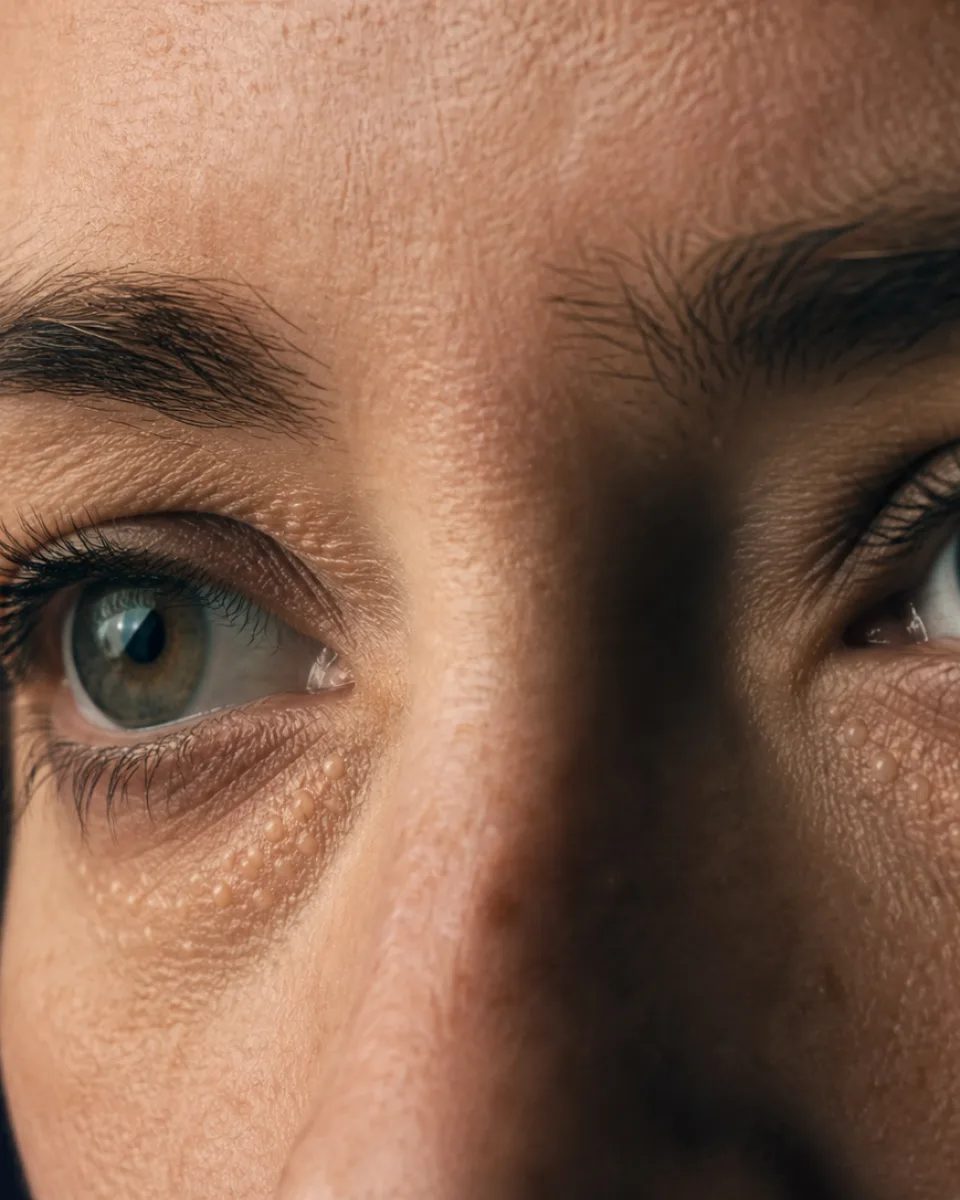
A syringoma is a benign adnexal (skin appendage) tumour that arises from eccrine sweat duct cells. Under the microscope it has a characteristic comma or “tadpole” shape, formed by small, dilated ducts. It presents as multiple discrete, firm, skin-coloured to slightly yellow papules, typically 1–4mm, most often on the lower eyelids and periorbital skin, though the forehead, cheeks, chest, abdomen and genital skin can also be affected.
A 50-patient case series found a strong female predominance (72% of cases) and a median age of onset of 23, with most people first noticing lesions between the ages of 10 and 20. In that same series, the eyelid was the most common site, affecting 40% of cases. There is also a less common “eruptive” variant, presenting as widespread, smaller papules, most often on the trunk in younger patients.
Why syringomas cluster around the eyes
Syringomas are benign growths derived from eccrine sweat ducts. They commonly form small, symmetrical clusters on the lower eyelids and cheeks.

- Surface view
Firm, rounded 1–3 mm papules, often in symmetrical clusters.
- Skin-layer view
A simplified view of small sweat ducts and epithelial cords in the dermis.
What causes syringomas?
The precise cause is not fully understood. Hormonal factors are suspected, given the typical age of onset around adolescence and early adulthood, and a genetic component is likely: familial cases with autosomal-dominant inheritance have been documented, though most cases are sporadic (not inherited). Associations reported in the literature include Down syndrome, where increased incidence is well established, and diabetes, particularly linked to a specific “clear cell” variant. One systematic review cautions that some other syndrome links repeated in textbooks are “rarely documented in peer-reviewed literature”: worth knowing if you’ve read claims online that go further than the evidence supports.
Is a syringoma dangerous? When to get it checked
Syringomas are benign and do not carry a meaningful malignancy risk. The real safety issue here is diagnostic accuracy, not danger.
In a 50-case clinicopathological series, only 42 of the 50 lesions clinically diagnosed as syringoma (84%) were confirmed as syringoma on histology: six turned out to be xanthoma, and two were viral warts. A common diagnostic shortcut, fine-needle aspiration, was unreliable, matching the eventual histology in only 16 of 50 cases. In plain terms: even an experienced clinician’s eye gets this wrong around one time in six, because syringoma looks similar to several other periocular bumps, including xanthelasma, milia and sebaceous hyperplasia.
See a doctor for assessment before booking cosmetic treatment: multiple new eyelid papules should be properly examined rather than assumed to be syringoma, both to rule out those look-alikes and, rarely, other adnexal lesions that need different management.
Can you get a syringoma treated on the NHS?
Not for cosmetic reasons. No dedicated NHS.uk page or NICE guidance on syringoma exists, but a live NHS Integrated Care Board policy (Birmingham and Solihull ICB) sets out the general position that applies: “Removal or treatment of non-cancerous skin lesions are not routinely funded by the patient’s local NHS commissioning organisation,” and “All removal of these skin lesions, that do not meet the patient criteria are considered to be a cosmetic procedure.”
NHS funding is only available where cancer is suspected, the lesion causes functional loss, or it obstructs vision or a body orifice: none of which typical syringomas do. Outside those criteria, only an Individual Funding Request demonstrating exceptional clinical need can unlock NHS funding, and that is a high bar.
There is no single fixed price. Rejuvena’s syringoma removal page states: “pricing is confirmed at your consultation with Dr Nick, with a clear plan and price before treatment begins,” because the number of lesions and sessions needed varies from person to person.
For context, the clinic’s general laser skin lesion removal page states pricing “From £150, priced by lesion size and number, with a cosmetic skin lesion assessment at £50”: a starting reference point for the wider service, not a syringoma-specific quote.
How syringoma treatment works at Rejuvena and what to honestly expect
Syringoma is one of the most recurrence-prone lesions in aesthetic dermatology, whatever technique is used. StatPearls is blunt about it: comparing recurrence rates across treatments is “hindered by the scarcity of histopathologic confirmation before treatment,” and reviews show “a broad spectrum of success rates” across methods.
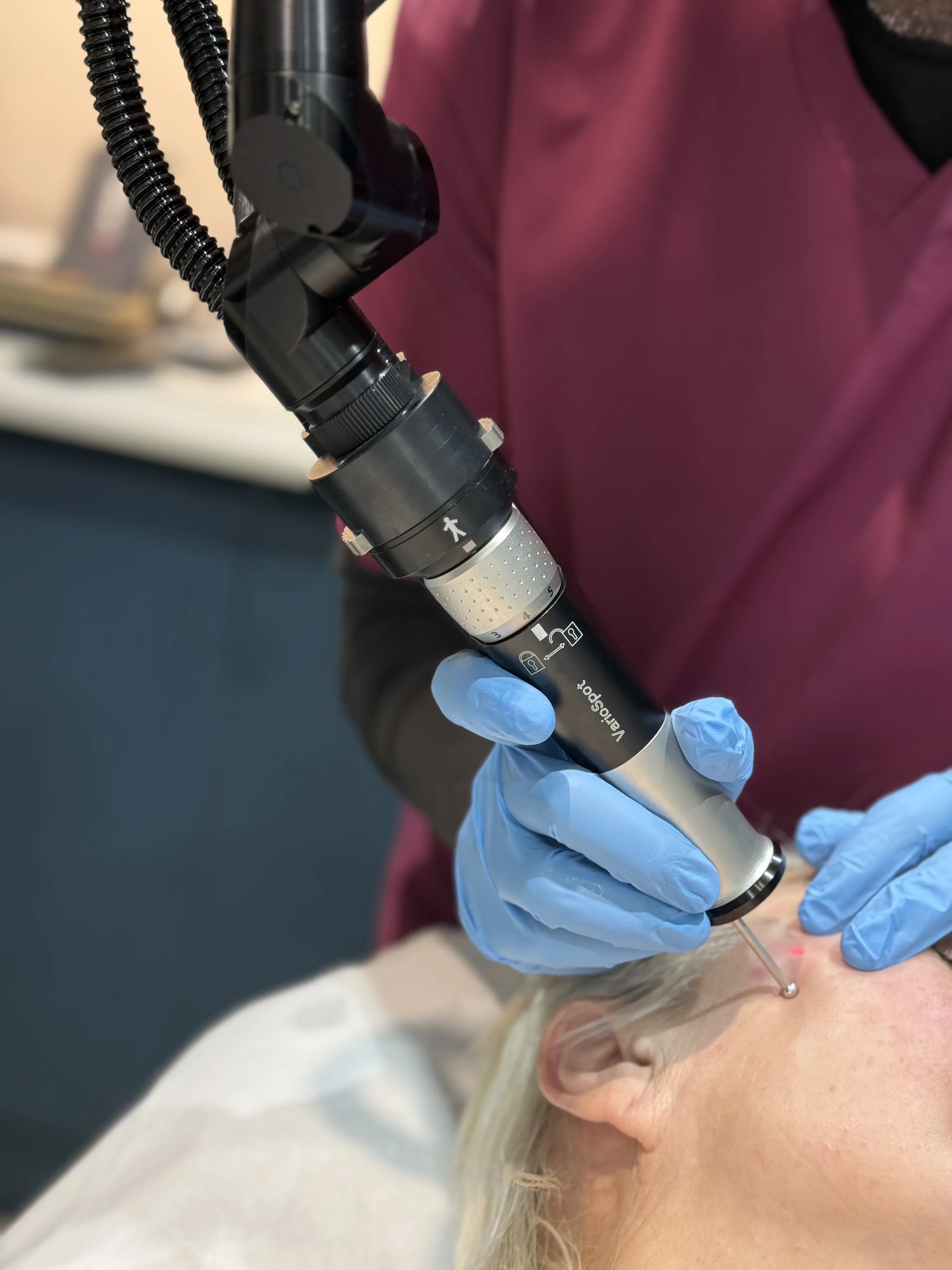
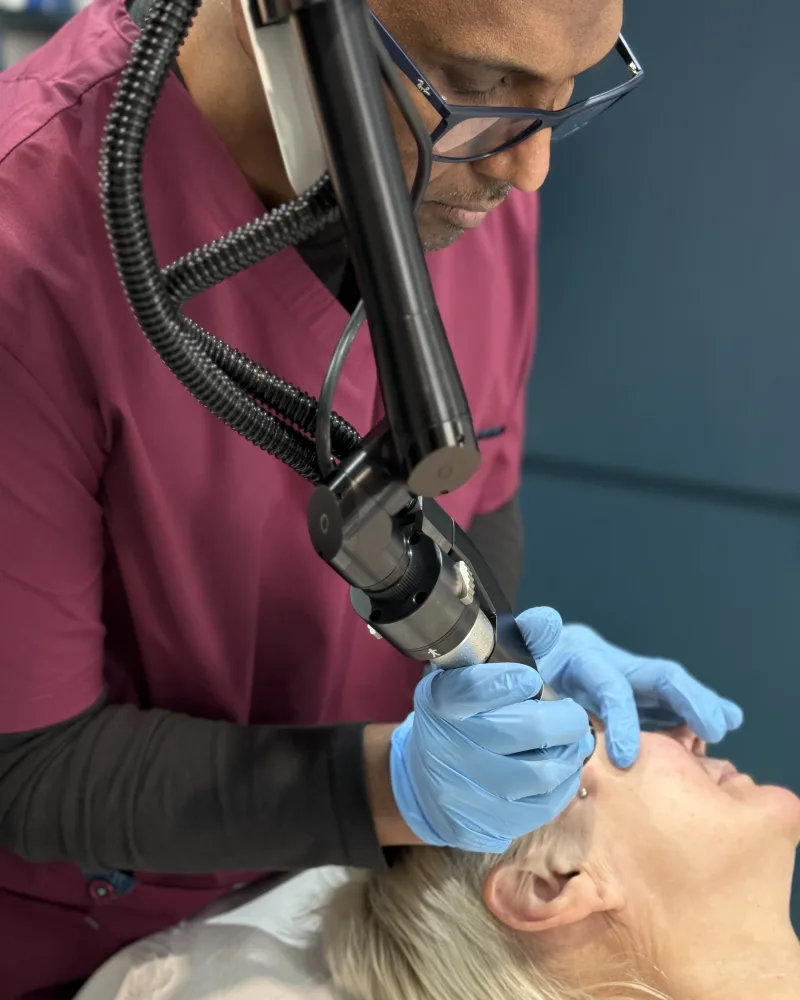
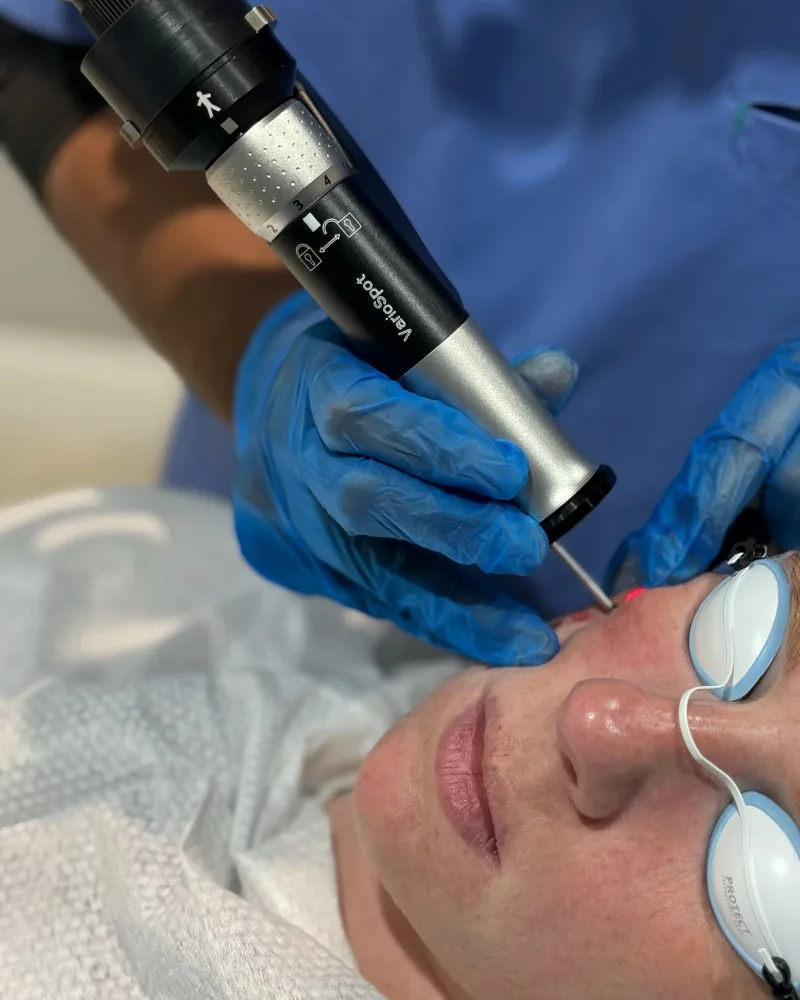
The best-quality data available on laser (a prospective study of 35 patients treated with ablative CO2 fractional laser) found only 3 patients (8.6%) achieved near-total clearance; most people got moderate-to-marked partial improvement, not a clean result. At Rejuvena, syringomas are treated with the Dermablate Cool Laser™ (Er:YAG, 2940nm) after Dr Nick has confirmed the diagnosis, because syringomas extend into the deeper skin layer, and the realistic goal is to flatten and improve their appearance, not guarantee they never return.
Why choose Rejuvena for syringoma assessment in Bedford?
Diagnosis first
Confirmed before treatment, since roughly 1 in 6 lesions thought to be syringoma turn out to be something else.
Diploma in Dermatology
Assessed by Dr Nick, a GMC-registered doctor, not a beauty therapist or nurse.
Honest about outcomes
We tell you upfront that results are usually partial improvement, not guaranteed permanent clearance.
Local & welcoming
Based at 52 Thor Drive, Bedford, we care for patients from Kempston, Biddenham, Bromham and across Bedfordshire.
Verified Google reviews
What our patients say
5.0from 161 Google reviews
I recently had a lesion removed from my cheek. The pigmented lesion had bothered me for years. I’m glad I finally decided to do something about it. I was quite nervous on the day, but Dr. Nick and Lana were so careful and reassuring — they really put me at ease. The procedure was quick and comfortable, and I feel so much better for having it done. I did a lot of research before I chose this clinic for my treatment. The clinic’s medical dermatology focus made me feel confident I would be in the right hands. I’m really grateful for the care I received and I would definitely recommend this clinic.
Rejuvena repliedThank you so much for your skin review Dupinder 🙏
Read this review on Google (opens in a new tab)I had lots of skin lesions on both hands and Dr Nick and Lana have been great treating me.I will definitely be returning for any future treatments and highly recommend seeing Dr Nick.Great service and facilities thanks again.
Rejuvena repliedAww! Thank you Gavin for your kind review. It was a great pleasure having you in our clinic and we look forward to seeing you in the future too. 😊🙏
Read this review on Google (opens in a new tab)Lana is a complete professional and wonderful at what she does! I always feel in safe hands knowing her attention to detail is spot on and she genuinely cares about doing a great job for her clients.
Rejuvena repliedThank you very much Daisy for your kind words. ☺️🙏
Read this review on Google (opens in a new tab)I met with DR Nick and Lana for a consultation last week. I was blown away by their professionalism and expertise. They were extremely attentive , I felt completely relaxed and assured I had chosen the right clinic for treatments. Dr Nick and Lana have since put together 2 treatment plans. I am so impressed and highly recommend . I'm looking forward to starting treatments.
Rejuvena repliedAww! Thank you Louise for your kind review. We are very happy to hear you liked our services ☺️🙏
Read this review on Google (opens in a new tab)Started my laser journey a couple months ago, with Lana and yesterday I had car issues which led to me missing my appointment slot. I thought I had contacted Lana to inform her and realised I didn’t, when she messaged me. She still made time for me and managed to fit in my session! She was incredibly understanding and made me feel much better about the situation. The treatment has been going so well, and the service is incredible!! On top of that, the price for my sessions are honestly so low compared to other places and you really do get a 10/10 experience!! Thanks so much Lana! Will definitely be considering the other treatments you guys offer 🫶🏼
Rejuvena repliedAww! Thank you for your kind words Shazmin. x
Read this review on Google (opens in a new tab)Excellent experience with Dr Nick, I was really put at ease and everything was explained fully before treatment, the aftercare was exemplary and I’m so pleased with the results. I would not hesitate to use again and have recommended to friends. Results shown are after 4.5 weeks
Rejuvena repliedThank you very much for your valuable feedback Leanne. Very happy to hear you are pleased with the results 😊🙏🤗
Read this review on Google (opens in a new tab)Every review above is published on Google. Tap any card to read it there.
Syringoma FAQs in Bedford
How do I permanently remove syringoma?
Can I remove syringomas at home?
Should I see a doctor for syringomas?
What are the risks of syringoma removal?
Book your syringoma assessment in Bedford
Speak with Dr Nick’s team at Rejuvena Bedford for a doctor-led syringoma assessment, with honest expectations from the start. Book online or call us.