Warts: Causes & How Well Treatments Really Work
What warts are, an honest look at how well pharmacy and GP treatments actually work, and what private removal costs in Bedford.
Warts are small, rough lumps caused by a common skin virus (HPV), and most people get one at some point. Many clear on their own within months or a couple of years, but some are stubborn, and the honest evidence on treatments, including at pharmacies and GP surgeries, shows they work modestly rather than reliably.
What are warts?
Warts are small, firm, rough lumps on the skin caused by infection with human papillomavirus (HPV). The NHS describes them simply: “Warts and verrucas are small lumps on the skin that most people have at some point in their life,” and they “feel firm and rough.” A verruca is the same thing on the sole of the foot. Warts can appear anywhere but are most common on the hands and fingers.
They are genuinely common. A study of over 1,400 children found prevalence rising from 15% at age 4 to 44% at age 11, and they’re described as “unusual before the age of 4.” Warts spread by direct skin-to-skin contact or by touching contaminated surfaces, with risk higher when skin is wet or broken, and interestingly, one study found that barefoot activity and swimming pool visits did not increase risk, countering a common assumption.
Why a common wart feels rough
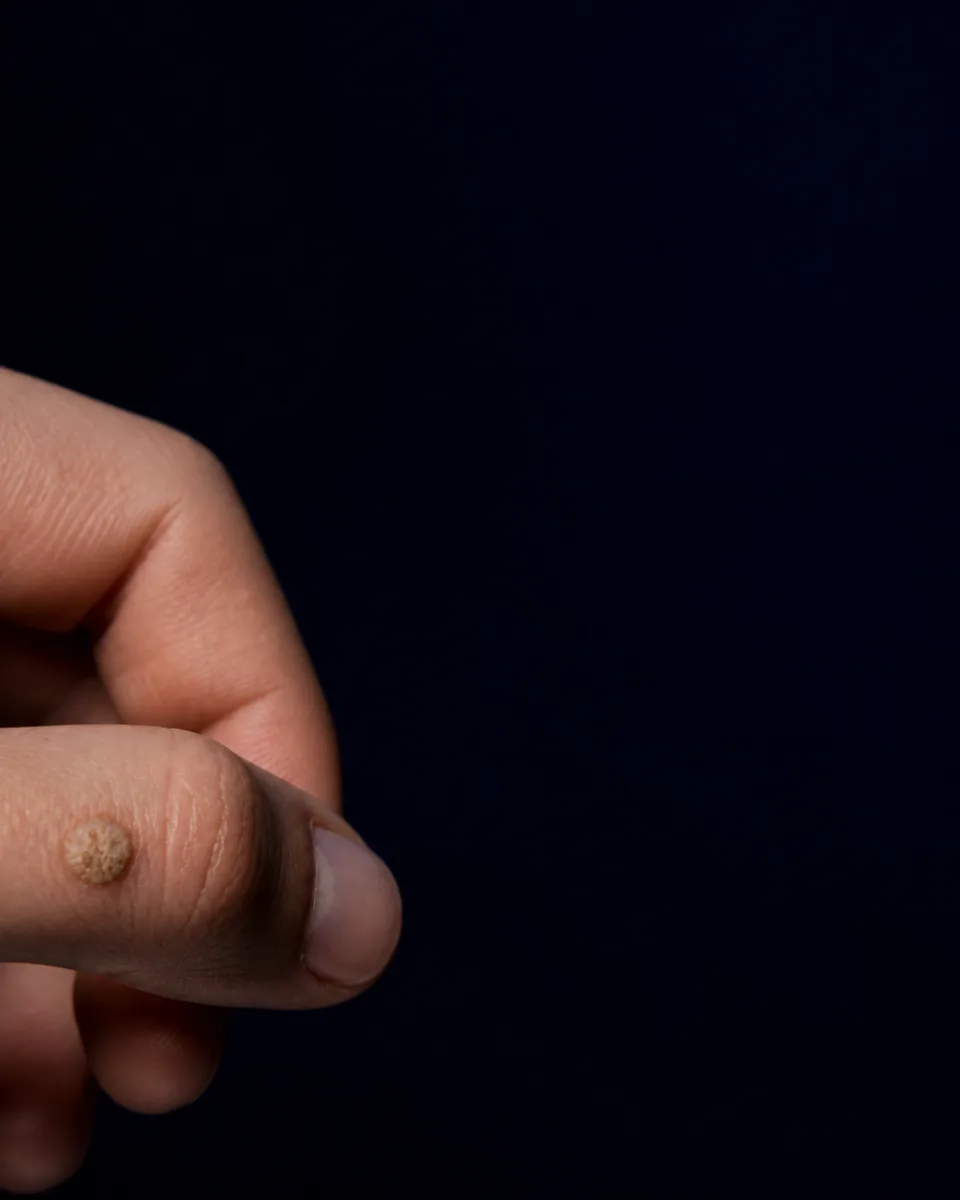
This close clinical view shows the thick keratin surface of a common wart. Tiny dark dots can be small capillaries within the wart rather than “roots”.

- Surface texture
A hard, rough and papillomatous keratin surface.
- Pinpoint dots
Small red-brown or black dots can be capillaries within the wart.
What causes warts?
HPV infects the keratinocytes (the main cells of the outer skin layer), causing them to multiply and thicken into the rough bump you see. There are several HPV types involved; in children, HPV 1a is the most common overall, and different types behave differently once they take hold.
That last point matters for what to expect. Resolution speed depends heavily on which HPV type is involved: one study found 58% of HPV type 1 warts cleared spontaneously, compared with only 7% for types 2, 27 or 57. In other words, some warts really are just more stubborn than others regardless of what you do to them, and that isn’t a reflection of anything you’ve done wrong.
Left alone, most warts do eventually go. The NHS states they “usually go away on their own but may take months or even years.” More precisely: roughly half of warts in children clear within six months and 90% within two years, and a UK follow-up study found a 93% regression rate by age 16 in children who’d had warts at 11.
Are warts dangerous? When to get one checked
Ordinary warts are benign, and turning cancerous is rare. The main reasons to get one properly assessed are diagnostic uncertainty and your immune status, not cancer risk for most people.
See a GP if
The NHS advises seeing a GP if:
- you’re worried about a growth on your skin
- the wart keeps coming back
- it’s causing severe pain or bleeding
- a wart appears on your face or genitals (genital warts are managed through sexual health services, not a cosmetic clinic, and are outside the scope of this page)
Specialist referral is generally reserved for people who are immunocompromised, where the diagnosis isn’t certain, where a lesion is unusually large, or where it hasn’t responded to at least three months of treatment.
Can I get warts treated on the NHS?
It’s genuinely mixed, and more complicated than for moles or skin tags: the NHS runs a tiered pathway rather than a blanket refusal to fund cosmetic-only removal.
First-line treatment is over-the-counter: “You can buy creams, plasters and sprays from pharmacies,” though the NHS is upfront that these “can take up to 3 months to complete, may irritate your skin and do not always work.” Beyond that, “a GP may be able to freeze a wart or verruca so it falls off a few weeks later,” and resistant cases may be referred on for stronger treatments, cryotherapy or surgical removal.
Funding is where it gets genuinely variable. The NHS’s own guidance says plainly: “Check with the GP if the NHS pays for this treatment in your area.” Unlike skin tags, warts aren’t automatically excluded as cosmetic, but provision differs by local commissioning area, so there’s no single UK-wide answer. If you’d rather not wait to find out, or your GP’s area doesn’t fund it, private treatment is the alternative.
Being honest about how well wart treatments work
This is worth saying plainly, because it’s easy to assume any treatment “just works.” The best available evidence (a Cochrane systematic review of 85 randomised trials and nearly 9,000 participants) found:
- Salicylic acid (the main pharmacy treatment) has “a definite but modest beneficial effect” over placebo, with warts about 1.5 times more likely to clear than with no treatment. It works better on hand warts specifically than on the whole body average.
- Cryotherapy (freezing), despite being the most familiar GP and clinic treatment, was not statistically significantly better than placebo across the pooled trial data: the review states the results “favoured neither intervention nor placebo.” Freezing harder (more aggressively) does work better than freezing gently, but causes more pain and blistering.
- Combining salicylic acid with cryotherapy performs better than either alone.
Some clinical-reference sources quote higher standalone success rates for cryotherapy (in the region of 70%), but those figures come from single clinical estimates rather than the pooled, placebo-controlled trial data above, and the two don’t fully agree. We think the more conservative, trial-based figures are the honest ones to quote, even though they’re less flattering than the marketing version of “freeze it and it’s gone.” Given the high rate of warts that clear by themselves regardless of treatment, no treatment at all is also a reasonable choice for many people: the case for active removal is usually about wanting it gone faster, or it being somewhere uncomfortable or embarrassing, not because doing nothing is unsafe.
Single wart: laser (Nd:YAG or Er:YAG): from £150
2–3 warts, same session: from £220
4+ warts, same session: from £295
Follow-up laser session: from £100
Freezepen cryotherapy is also available, priced by size and number of lesions with a £50 cosmetic assessment.
How we treat warts at Rejuvena
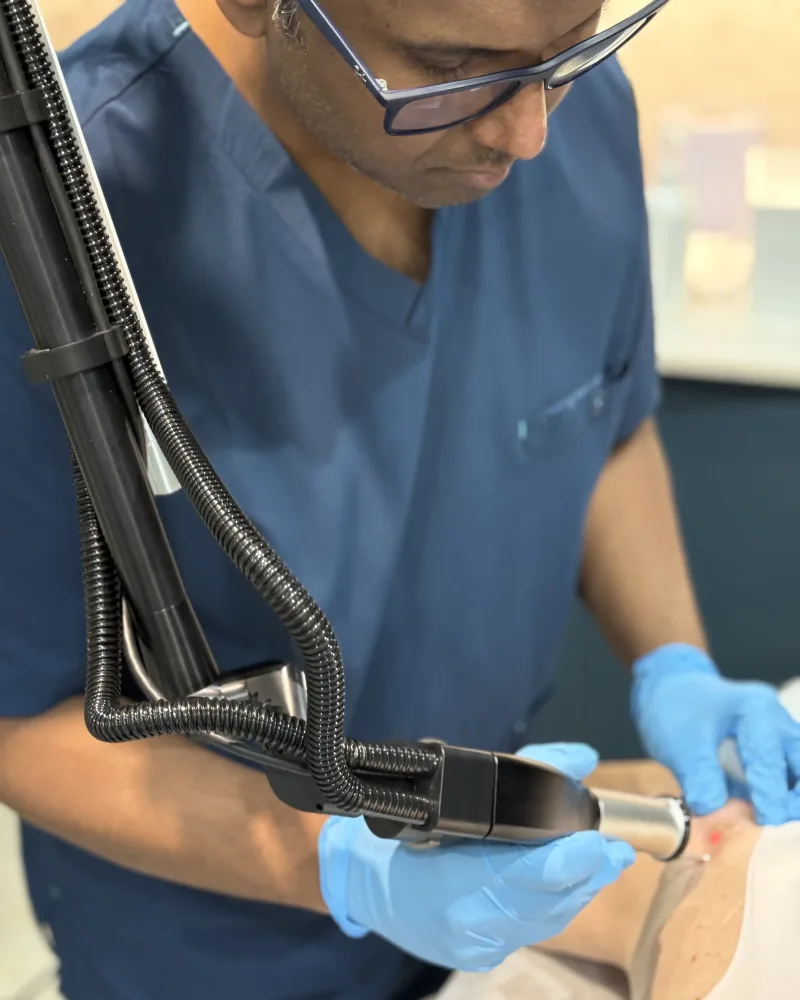
Dr Nick or the clinical team assess the wart(s), confirm the diagnosis, and choose between laser (Nd:YAG or Er:YAG) or Freezepen cryotherapy depending on location, size and how the wart has responded to anything tried previously. Most warts need one to three sessions to clear.
Why choose Rejuvena for wart removal in Bedford?
Assessed by a doctor first
Dr Nick or the clinical team confirm the diagnosis before choosing a treatment.
Two medical-grade lasers
Nd:YAG and Er:YAG, matched to the wart’s location and how it has responded before.
Honesty over hype
We quote the real trial evidence on what works, not the marketing version of “freeze it and it’s gone.”
Local & welcoming
Based at 52 Thor Drive, Bedford, we care for patients from Kempston, Biddenham, Bromham and across Bedfordshire.
Verified Google reviews
What our patients say
5.0from 161 Google reviews
Doctor Nick and Lana are the most professional people you could possibly wish to meet. I have been having treatments for a couple of months now and what a difference it has made. From the moment you arrive at the clinic to the moment you leave you are made to feel at ease. The clinic is immaculate and Doctor Nick is so knowledgeable. Lana is fantastic at her treatments and is one of the loveliest people you could wish to meet. I can honestly say they have made a massive difference to me since the treatments. Thank you you so much.
Rejuvena repliedAww Jackie! Thank you very much for your kind feedback, it really means a lot to us. We are so glad to have helped you with your skin and you are also one of the most loveliest peo
Read this review on Google (opens in a new tab)I am quite new to visiting this clinic but so far only good emotions about it. I am undergoing laser treatment at the moment. Lana is such a nice girl, very friendly and supportive. I had to change few times my appointments and she never made me feel bad about it! The clinic - atmosphere feels calming and welcoming. It is very clean, modern and warm. I have met Dr Nick as well for consultation and he is incredibly professional, knowledgeable, and attentive, like Lana. They both make sure you understand the entire process. I am definitely recommending this Clinic!
Rejuvena repliedThank you very much Reda for your kind words and for placing your trust in us! We’re delighted to hear that you have a positive experience with our team, and we look forward to wel
Read this review on Google (opens in a new tab)Thank you so much for your help, I cannot fault Lana and Dr Nick at all, the services offered were excellent and they are clearly both very caring, professional and passionate in what they do. The venue is perfect, very clean, calming and peaceful. I would highly recommend to friends and family.
Rejuvena repliedThank you for your kind words Clara. Glad we could help with your skin concerns. 😊🙏
Read this review on Google (opens in a new tab)Lana is very knowledgeable and professional and makes you feel like you are in safe hands. I am happy I chose to have my treatment at Rejuvena and would highly recommend the clinic.
Rejuvena repliedThank you very much Bobbie 🤗🙏
Read this review on Google (opens in a new tab)Very good and reassuring place to book your next or target any problem. This is where you want to be.
Rejuvena repliedAww! Thank you Peter. That means a lot to us 😊🙏
Read this review on Google (opens in a new tab)Lana is a complete professional and wonderful at what she does! I always feel in safe hands knowing her attention to detail is spot on and she genuinely cares about doing a great job for her clients.
Rejuvena repliedThank you very much Daisy for your kind words. ☺️🙏
Read this review on Google (opens in a new tab)Every review above is published on Google. Tap any card to read it there.
Warts FAQs in Bedford
How much does wart removal cost in the UK?
Will the NHS remove a wart for free?
Do warts always go away on their own?
Does freezing actually work for warts?
Are warts contagious?
Book your wart removal in Bedford
Speak with Dr Nick’s team at Rejuvena Bedford for a doctor-led assessment and honest treatment plan. Book online or call us.