Dermatosis Papulosa Nigra (DPN) Removal in Bedford
A common, benign condition causing small, dark, raised bumps on the cheeks, temples and under the eyes: most common in richer skin tones. Assessed first by Dr Nick and treated with melanin-aware, conservative settings, because removal carries a real and well-documented risk of temporary skin darkening.
Dermatosis papulosa nigra (DPN) is a common, benign skin condition causing small, smooth, dark raised bumps on the face: most often the cheekbones, temples and under the eyes. It carries no cancer risk and is not caused by sun damage. The one thing worth knowing before treatment is that removal carries a real, well-documented risk of temporary skin darkening, and it affects mainly the skin tones where that risk matters most.
What is dermatosis papulosa nigra?
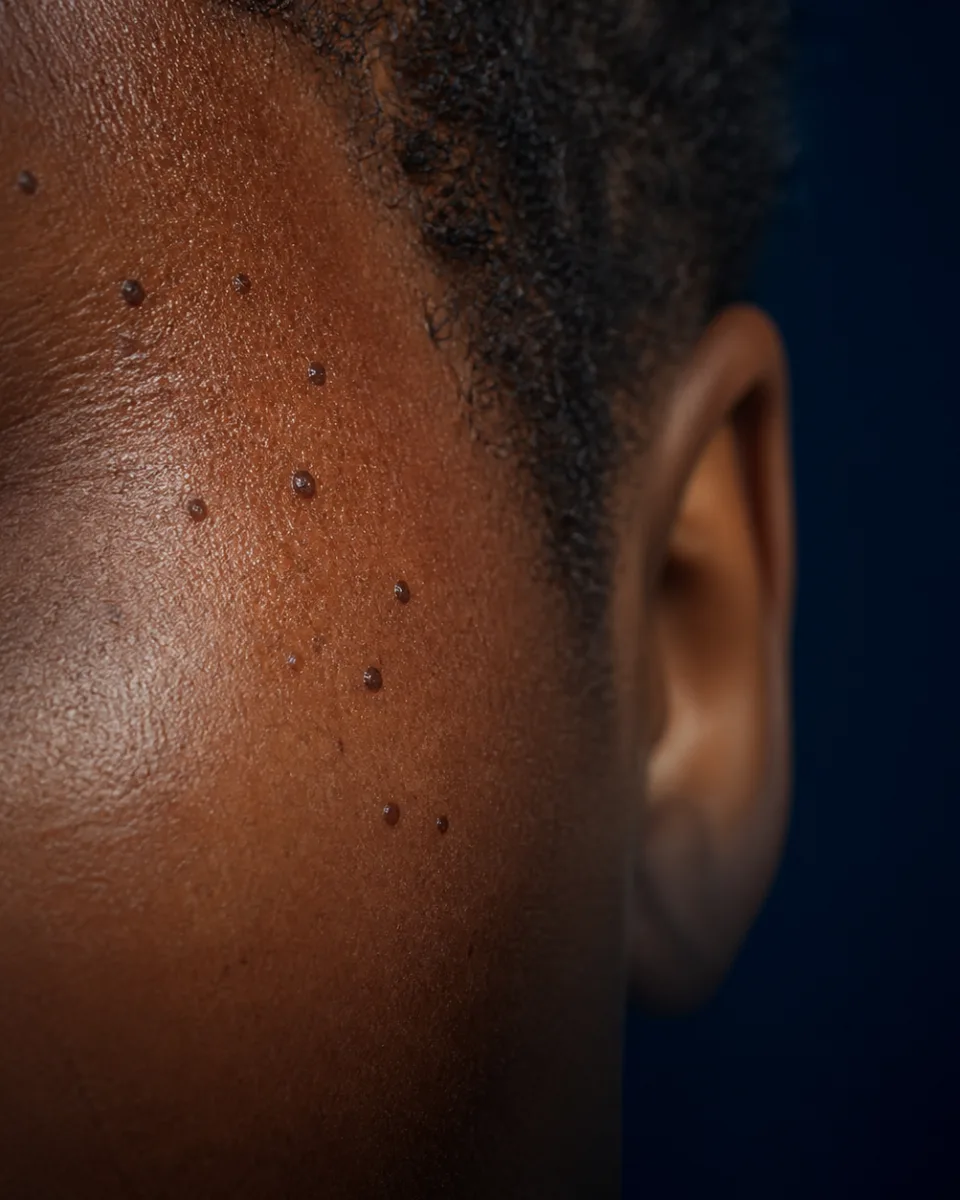
DPN is a common, benign skin condition causing multiple small (1–5mm), smooth, dome-shaped, dark-brown to black raised papules: most often on the cheekbones, temples, under-eye area and neck. Histologically, it is a close relative of seborrhoeic keratosis: DermNetNZ describes the lesions as “identical to small seborrhoeic keratoses” on biopsy. The bumps are usually symptomless, though they can occasionally itch or catch on jewellery.
DPN is genuinely and substantially more common in skin of colour, though exact prevalence figures vary noticeably between studies. DermNetNZ reports it affects “up to 35% of Black Americans”; StatPearls cites a broader reported range of “10% to 75%” depending on the population studied. It is also seen in South Asian, mixed-heritage and other darker-skinned individuals. DPN is strongly hereditary (family-history figures range from 40–50% (DermNetNZ) to 77–93% (StatPearls) across different studies) and women are affected roughly twice as often as men. The exact cause isn’t fully understood: DermNetNZ describes it as related to “a naevoid developmental defect of the hair follicle”, and it is not caused by sun damage on its own, poor hygiene or diet.
How DPN appears on the skin
Dermatosis papulosa nigra usually appears as small, smooth dark papules on the face and neck of people with richly pigmented skin. The pattern and history guide assessment.

- Surface view
Small smooth brown-to-black papules, often scattered across the cheeks or temples.
- Skin-layer view
The visual shows small benign epidermal growths above healthy dermis.
Is DPN dangerous? What to know before treatment
DPN itself carries no cancer risk. StatPearls is explicit: it is “a benign and asymptomatic cutaneous condition without the risk of malignant neoplasm.” The genuine safety question with DPN is diagnostic, not oncological, making sure a pigmented facial papule really is DPN and not something else. A doctor should confirm the diagnosis rather than assuming it from appearance alone, especially if a papule is new, changing, bleeding, asymmetric or growing.
The safety point that matters most for DPN, though, is not about the condition; it’s about treatment. Removing DPN is a genuinely elective, cosmetic choice, and it carries a real and well-documented risk of temporary skin darkening (post-inflammatory hyperpigmentation, or PIH) in the exact skin tones that most commonly get DPN. This isn’t a small-print caveat: in one published study of 137 patients treated with a low-intensity electrodesiccation device, all participants (100%) experienced PIH one month after treatment, resolving over a mean of roughly 5–6 months. StatPearls puts it plainly: “darker skin types tend to heal with dyspigmentation,” and advises that “all patients should be counselled that removal of DPN lesions may result in dyspigmentation.”
Cryotherapy in particular is specifically discouraged for DPN in the clinical literature “due to hypopigmentation risk” (StatPearls): a notable point since freezing is a mainstay technique for many other benign lesions elsewhere on the body. It is not offered here for DPN. In short: treatment is safe from a medical standpoint and does not carry cancer risk, but it does carry a real chance of temporary (and, less often, longer-lasting) pigment change, and that risk should be part of your decision, not a footnote after you’ve already decided.
Can I get DPN treated on the NHS?
No UK NHS or NICE source names dermatosis papulosa nigra specifically: that’s a genuine gap in the published guidance, not something to paper over. What is verified is the NHS’s general commissioning position on benign skin lesions: local NHS policy (for example, the Leicester, Leicestershire and Rutland ICB’s Policy for Benign Skin Lesions) states plainly that “clinically benign skin lesions should not be removed on purely cosmetic grounds,” and explicitly lists seborrhoeic warts (DPN’s close histological relative) among the lesion types this excludes from NHS funding.
Because DPN is benign, asymptomatic, and histologically a variant of seborrhoeic keratosis, the reasonable reading is that DPN removal falls under this same “not routinely NHS-funded for cosmetic reasons” category, but that’s an inference from the general policy, not a document that names DPN by name, and we’re stating it as such rather than overclaiming an NHS ruling that doesn’t exist.
Every removal starts with a cosmetic skin lesion assessment with Dr Nick: £50, where your papules are confirmed as DPN and your skin’s healing risk is discussed before anything is decided. Treatment itself starts from £150, priced by the size and number of papules and by how many sessions your skin tone needs to be treated conservatively. There are no fixed packages and no obligation to proceed.
How we treat DPN at Rejuvena
Because DPN mostly affects richer skin tones, the priority is protecting your pigment, not just clearing the papules. After assessment, DPN is treated with precise, superficial techniques (commonly fine electrocautery or low-energy laser) using conservative settings and, for darker phototypes, a test patch first to gauge your individual pigmentation response before treating more widely. Cryotherapy and aggressive curettage are not used for facial DPN, for the hypopigmentation-risk reason explained above.
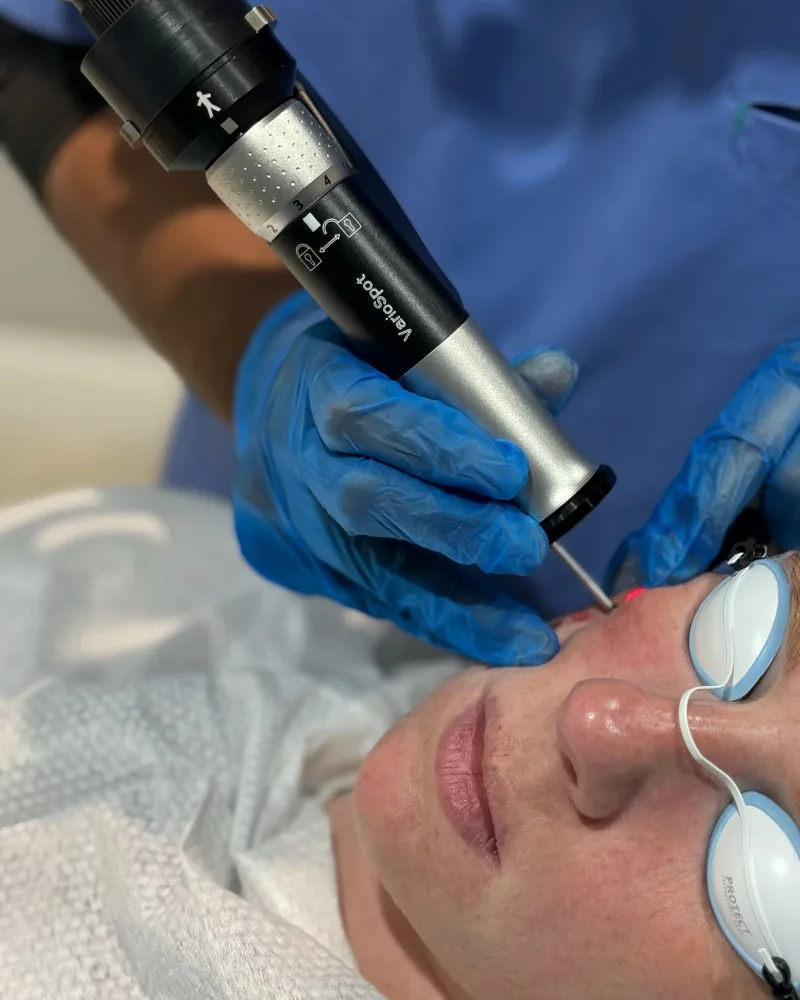
Laser Skin Lesion Removal
Our primary route for removing benign raised lesions, including DPN papules, with precision and care. Full procedure detail and healing timeline.
Learn more →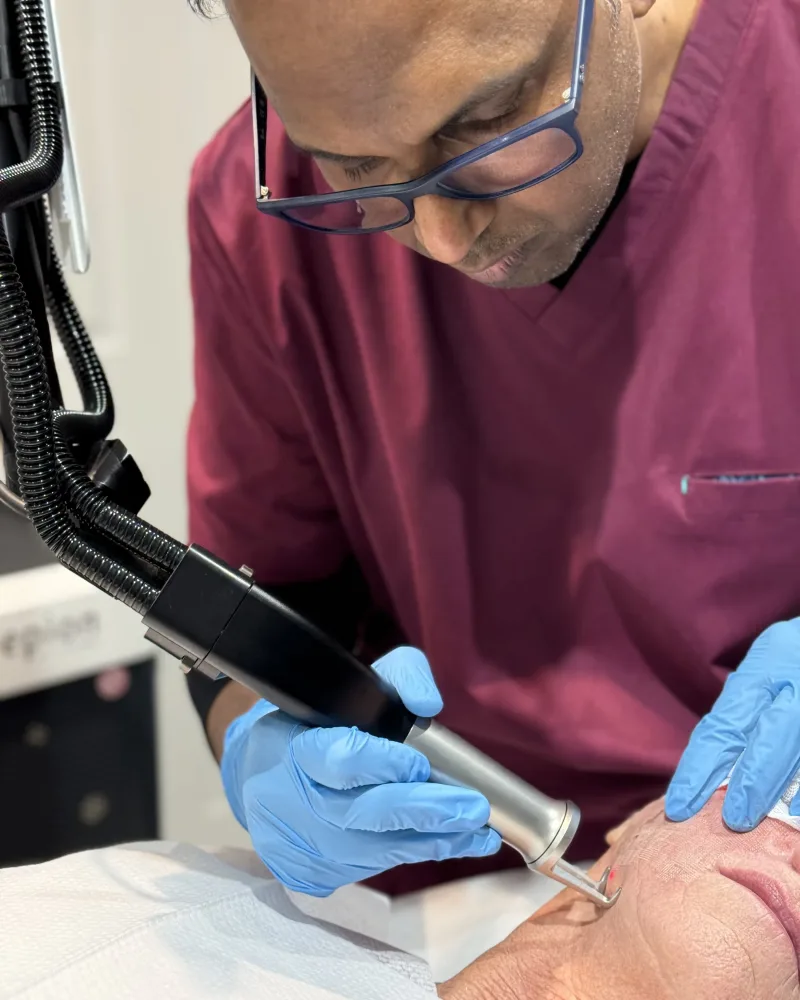
Cool Laser Skin Resurfacing
A gentle resurfacing option for surface lesions, used conservatively on darker phototypes. Full procedure detail and healing timeline.
Learn more →Why choose Rejuvena for DPN removal in Bedford?
Assessed by a doctor first
Dr Nick confirms your papules are benign DPN before any removal, and refers appropriately if a lesion looks atypical.
Skin-of-colour expertise
Conservative, melanin-aware settings and a test patch to protect richer skin tones from post-inflammatory pigment change.
Test patch before wider treatment
We gauge your individual pigmentation response on a small area first, never assume how your skin will heal.
Honest expectations
We clear the papules you have today, and we tell you honestly that DPN is hereditary, so new ones can still form.
Verified Google reviews
What our patients say
5.0from 161 Google reviews
I recently had a lesion removed from my cheek. The pigmented lesion had bothered me for years. I’m glad I finally decided to do something about it. I was quite nervous on the day, but Dr. Nick and Lana were so careful and reassuring — they really put me at ease. The procedure was quick and comfortable, and I feel so much better for having it done. I did a lot of research before I chose this clinic for my treatment. The clinic’s medical dermatology focus made me feel confident I would be in the right hands. I’m really grateful for the care I received and I would definitely recommend this clinic.
Rejuvena repliedThank you so much for your skin review Dupinder 🙏
Read this review on Google (opens in a new tab)I had lots of skin lesions on both hands and Dr Nick and Lana have been great treating me.I will definitely be returning for any future treatments and highly recommend seeing Dr Nick.Great service and facilities thanks again.
Rejuvena repliedAww! Thank you Gavin for your kind review. It was a great pleasure having you in our clinic and we look forward to seeing you in the future too. 😊🙏
Read this review on Google (opens in a new tab)I’ve been seeing Dr Nick and Lana for almost a year now. They have provided me with such a comforting experience and given exceptional results. Their Salon isn’t local for me, but I chose to keep seeing Dr Nick because of his professionalism and extra care he takes to my individual needs. I’m always provided with a detailed, realistic outcome before and after any treatment, by being explained any possible risks or benefits, which helped me a lot in making decisions. Seeing Dr Nick has helped changed my skin and I’m grateful for how attentive and skilled he was during my treatment. After any treatment i’ve always been followed up with the recovery, aftercare advice or any worries I had, which helped me feel at ease. I was understandably nervous for my treatment before seeing Dr Nick and Lana, but it was a great joy seeing them as they are always the most genuine and welcoming towards me, anytime I visit I feel very safe in the hands of Dr Nick.
Rejuvena repliedAww Ruby, thank you very much for your kind review. It made us emotional reading it. We are glad to hear you feel you have received good service from us. It’s always a pleasure see
Read this review on Google (opens in a new tab)I have been visiting Lana’s clinic for approximately one year, and each experience has been exceptional. I always leave feeling happy, confident, and fully satisfied with the quality of her work. Lana is highly skilled, attentive, and genuinely cares about her clients, ensuring that every detail is addressed with great care. I wholeheartedly recommend her services. If you are considering booking an appointment, do not hesitate—you will be in excellent hands!
Rejuvena repliedThank you very much for your sweetest review Roxana. It means a lot to me that you like our services ☺️🙏🤗🥺
Read this review on Google (opens in a new tab)Very very good! Clean. Can’t wait to start my journey here Non judgmental
Rejuvena repliedAww! Thank you very much Peter ☺️🙏 for leaving us a 5 star review. Really appreciate your kindness. We can’t wait to help you in getting your confidence back! 🤗
Read this review on Google (opens in a new tab)I had the most incredible experience with the treatment I recently received from Dr Nick. From the moment I walked into the salon, I felt welcomed. Both Dr Nick and his wife were incredibly professional, attentive, and knowledgeable, ensuring that every detail of the treatment was tailored to my needs. The results were absolutely phenomenal! The products used were of the highest quality, and the technique was flawless. I also appreciated the aftercare advice provided, which showed their commitment to ensuring long-lasting results. For anyone looking for a luxurious, effective and natural treatment, I cannot recommend Rejuvena Laser & Aesthetic Clinic enough. Five stars aren’t enough to express how thrilled I am – I will definitely be returning for more!
Rejuvena repliedDear Viktoria, thank you very much for your kind review. We are very happy to learn that you are very satisfied with your results, and you found us professional and welcoming. We l
Read this review on Google (opens in a new tab)Every review above is published on Google. Tap any card to read it there.
Dermatosis papulosa nigra FAQs
What is dermatosis papulosa nigra and what does it look like?
Is dermatosis papulosa nigra dangerous or cancerous?
What causes DPN and is it hereditary?
Is DPN removal safe for dark skin / skin of colour?
Can DPN be removed permanently will the spots come back?
Does DPN removal hurt and is there downtime?
How much does DPN removal cost in Bedford?
How many treatment sessions will I need?
Book your DPN consultation in Bedford
Turn the worry about scarring or dark marks into a low-risk first step: a doctor-led, skin-of-colour assessment with Dr Nick at Rejuvena Bedford, serving Kempston, Biddenham, Bromham, Clapham and the wider Bedfordshire area.